
Nobody is a lean, viciously entertaining action thriller built around one excellent decision: cast Bob Odenkirk as a man who can fight but cannot make fighting look easy. That distinction gives the movie its bruised personality. Every punch appears to cost Hutch Mansell something, and every victory leaves him looking less like an untouchable assassin than a middle-aged man who has made an extremely painful commitment to a terrible idea.
Our verdict Bob Odenkirk’s battered physicality and Ilya Naishuller’s crisp choreography give Nobody’s familiar revenge machinery real punch. Its violent masculine wish-fulfilment is considerably less convincing, but this lean, darkly funny action thriller remains an easy recommendation for genre fans.
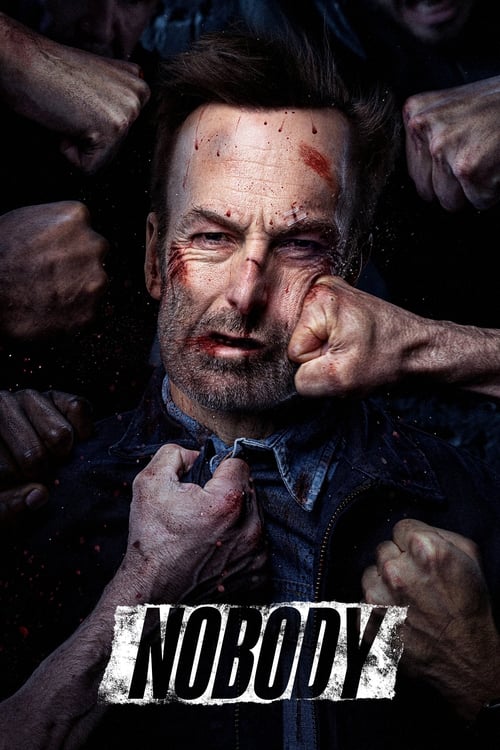
Nobody (2021)
The central argument of this Nobody review is also the source of my main reservation. The film is most persuasive when violence looks like exhausting work rather than effortless heroism. It becomes much less convincing when brutality starts functioning as a cure for domestic frustration, wounded pride and a life drained of purpose. The action has weight; the fantasy surrounding it is considerably flimsier.
Nobody turns an ordinary routine into a pressure cooker
Directed by Ilya Naishuller from a screenplay by Derek Kolstad, Nobody follows Hutch, an overlooked suburban husband and father whose restrained response to a home invasion exposes something dangerous beneath his defeated exterior. Universal lists the film at a brisk 91 minutes, and that compact runtime is one of its greatest advantages. It establishes the family, the frustration and the dormant capacity for violence without pretending this simple revenge machine requires an encyclopedia of criminal lore.
The early routine is essential. Repeated domestic and workplace rituals reduce Hutch’s life to a sequence of missed moments, minor humiliations and accumulated disappointment. Odenkirk does not play him as secretly cool while waiting for the screenplay to release him. He looks tired. His posture appears apologetic. Even his silences suggest a man gradually disappearing inside his own home. That makes the eventual eruption feel less like a superhero reveal and more like a pressure valve blowing off.

It also makes Hutch more interesting than the standard retired-killer archetype. The familiar hidden-past machinery is here, and Kolstad’s involvement inevitably invites comparisons with John Wick, but Odenkirk changes its flavor. He does not have the polished physical authority of a conventional action star. He brings nervous intelligence, dry comic timing and a face that seems capable of registering every regrettable life choice at once.
Odenkirk’s physical strain is the movie’s best special effect
Odenkirk is the reason Nobody works as well as it does. Naishuller said the actor spent roughly two years learning the fight choreography, and that preparation is visible not because Hutch looks invincible, but because the movement has character. The director’s comments in an interview about transforming Odenkirk into an action lead support what the fights themselves communicate: this performance depends on timing, effort and the willingness to look battered rather than glamorous.
The movie’s signature combat is messy, readable and funny without becoming weightless. Hutch gets winded, misjudges distances and absorbs punishment. Objects in the environment matter. Bodies occupy comprehensible positions instead of being shredded into a blur of edits. Naishuller knows when to hold a shot long enough for an impact to register, and he understands that a brief comic pause can sharpen violence rather than cancel it.
That clarity is increasingly precious in action cinema. Nobody is heightened pulp, not a documentary about hand-to-hand combat, but it usually preserves the basic physical questions that make a fight exciting: Where is everyone? What can Hutch reach? How badly has that last hit hurt him? The choreography answers those questions while continuing to escalate. The result is graphic and knowingly excessive, yet it has more tactile personality than action assembled from anonymous close-ups and frantic cutting.
Odenkirk’s unconventional presence also gives the fantasy a useful streak of absurdity. Hutch can be frightening, but the film never entirely loses sight of how strange it is to watch this particular exhausted suburban dad plow through a criminal underworld. For me, that tension is the movie’s defining pleasure. Competence is exciting here precisely because it looks bruising, desperate and faintly ridiculous.

Crisp action keeps familiar machinery moving
Naishuller directs with the confidence of someone who knows the audience did not buy a ticket for a solemn investigation of suburban malaise. Once the premise has been wound tightly enough, the film moves. Montages compress exposition, abrupt jokes puncture macho posturing, and music drives the transitions with an almost cheeky insistence. The movie has no interest in hiding its pulp intentions.
Most of that style works because the pace is so controlled. Nobody escalates rather than sprawls. It introduces a threat, demonstrates Hutch’s abilities and expands the conflict without letting criminal mythology swallow the protagonist. The stakes may become bigger, but the film remains rooted in the immediate pleasure of seeing a resourceful person navigate a violent problem.
There are moments when the swagger becomes too pleased with itself. Conspicuous slow motion and music-driven passages occasionally underline jokes or images that had already landed. A movie this inherently heightened does not need to keep nudging the audience to admire how cool it is. The restraint visible in the clean choreography would have helped some of the decorative flourishes.
The supporting cast helps maintain the peculiar balance between straight-faced danger and comic exaggeration, although most of the surrounding relationships are designed for efficiency. Connie Nielsen, RZA, Christopher Lloyd and Aleksey Serebryakov are among the principal cast, but this remains emphatically Odenkirk’s showcase. The family gives Hutch something to lose and the adversaries give him something to hit; few characters receive enough room to challenge his view of what is happening.
The masculine fantasy is satisfying—and far too convenient
Nobody’s biggest weakness is not incidental to its appeal. Hutch does not merely endure violence. He seems restored by it. His dormant skills return alongside his energy, confidence and sense of purpose, turning bloodshed into a particularly aggressive form of self-care. The movie recognizes the comic absurdity of that transformation, but it does not examine it deeply enough to become a real critique.
In The New Yorker’s critique of the film’s redemptive violence, Richard Brody reads the story as a fantasy in which retaliation restores frustrated masculinity and domestic potency while broader consequences remain out of view. I think that reading identifies the film’s central evasion. Nobody flirts with the idea that Hutch wants an excuse to return to violence, but it is too invested in the pleasure of that return to ask what his renewal costs anyone beyond the men placed in his path.
That does not invalidate the action. Genre movies are allowed to deliver catharsis, and Nobody delivers it with more craft and wit than most. The problem is that Hutch’s domestic unhappiness becomes easier to solve once it can be converted into physical conflict. Emotional distance, failure and resentment are messy; heavily armed criminals are conveniently punchable. The screenplay quietly swaps one category for the other and treats the substitution as a breakthrough.
Compared with the exaggerated masculine image examined in our review of Predator as an action-thriller classic, Nobody begins with a potentially sharper contrast between outward weakness and hidden capability. Yet it ultimately interrogates its fantasy less than it indulges it. Hutch’s body may be vulnerable, but the worldview surrounding him becomes increasingly protective. Once the extent of his competence is clear, danger starts to feel more ceremonial than genuinely threatening.
Nobody review verdict: Familiar, bruising and easy to recommend
Nobody is not a reinvention of the revenge thriller, and its ideas about masculine renewal are far less developed than its action. What it does have is a perfect lead, crisp spatial direction, dry humor and the good sense to finish before its simple premise begins demanding unnecessary reverence.
Genre fans looking for a compact, graphically violent thriller should have a very good time. Odenkirk makes every burst of competence feel earned through effort, and Naishuller gives that effort enough visual clarity to matter. Viewers hoping for a serious family drama or a sustained interrogation of vigilante violence will find the film’s answers glib, but its limitations do not erase its considerable craft.
I recommend Nobody because it understands that Odenkirk’s strain is more entertaining than conventional invincibility. The film may believe too readily that violence can restore a diminished man, but while that fantasy is in motion, it hits hard, moves fast and lands most of its jokes. Hutch looks exhausted by the end of a fight. The movie, wisely, never does.