
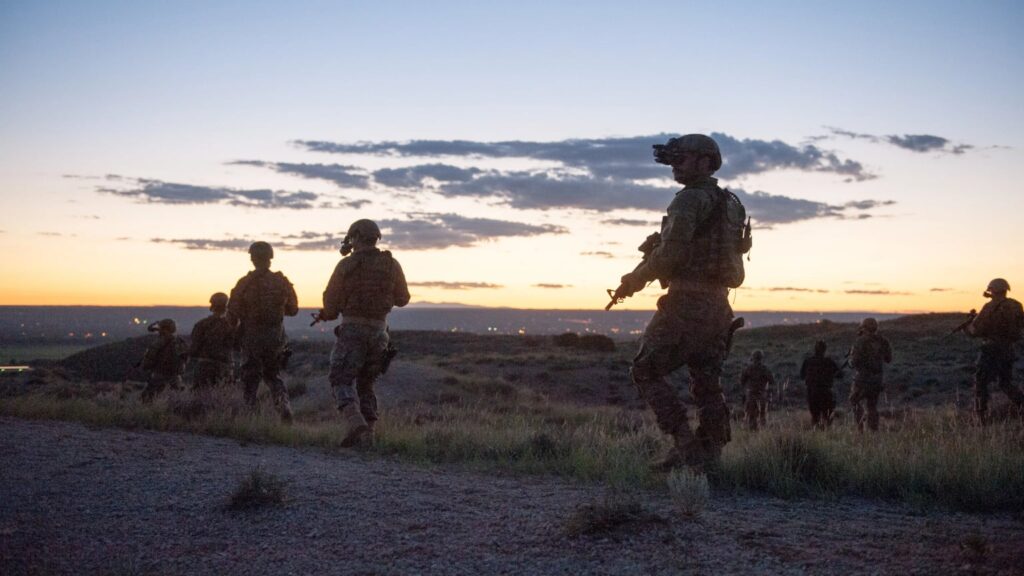
TL;DR: This Sicario 2015 review finds Denis Villeneuve’s film most effective as a nightmare about surrendering control. It traps us beside FBI agent Kate Macer as a covert anti-cartel operation becomes increasingly incompatible with her understanding of legal and moral procedure. The result is a brutally controlled thriller in which uncertainty is more frightening than gunfire, even if that strategy leaves its protagonist frustratingly short of agency.
Our verdict A brutally controlled border thriller that turns uncertainty into suffocating suspense. Emily Blunt gives its compromised moral perspective a human pulse, even when the screenplay sidelines her.
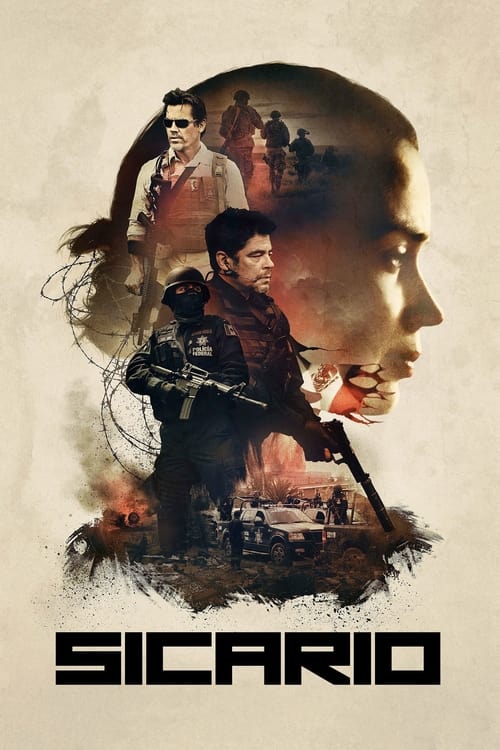
Sicario (2015)
Sicario does not simply ask whether its mission will succeed. It asks what success means once secrecy, vengeance and institutional convenience have replaced any stable idea of justice. Villeneuve makes that question physical: vehicles become traps, distant figures become possible threats, and incomplete instructions make every supposedly professional operation feel one bad decision away from disaster. I find its patient dread far more gripping than a conventional parade of shootouts.
Sicario 2015 review: Uncertainty becomes the real threat
Taylor Sheridan’s screenplay gives Kate enough information to enter the operation but never enough to control it. That restricted viewpoint is the film’s central dramatic weapon. She watches, questions and tries to hold onto procedure while the better-informed men around her behave as though explanations are optional. We do not merely observe her disorientation; the film forces us to share it.
Villeneuve builds suspense through waiting and watching. Traffic, surveillance, confined vehicles and hostile geography are treated as active dangers rather than transitional material. A halted journey can be as unnerving as an exchange of fire because the film keeps directing our attention toward what might happen without providing the relief of certainty. The geography remains readable, but the intentions of the people occupying it do not.
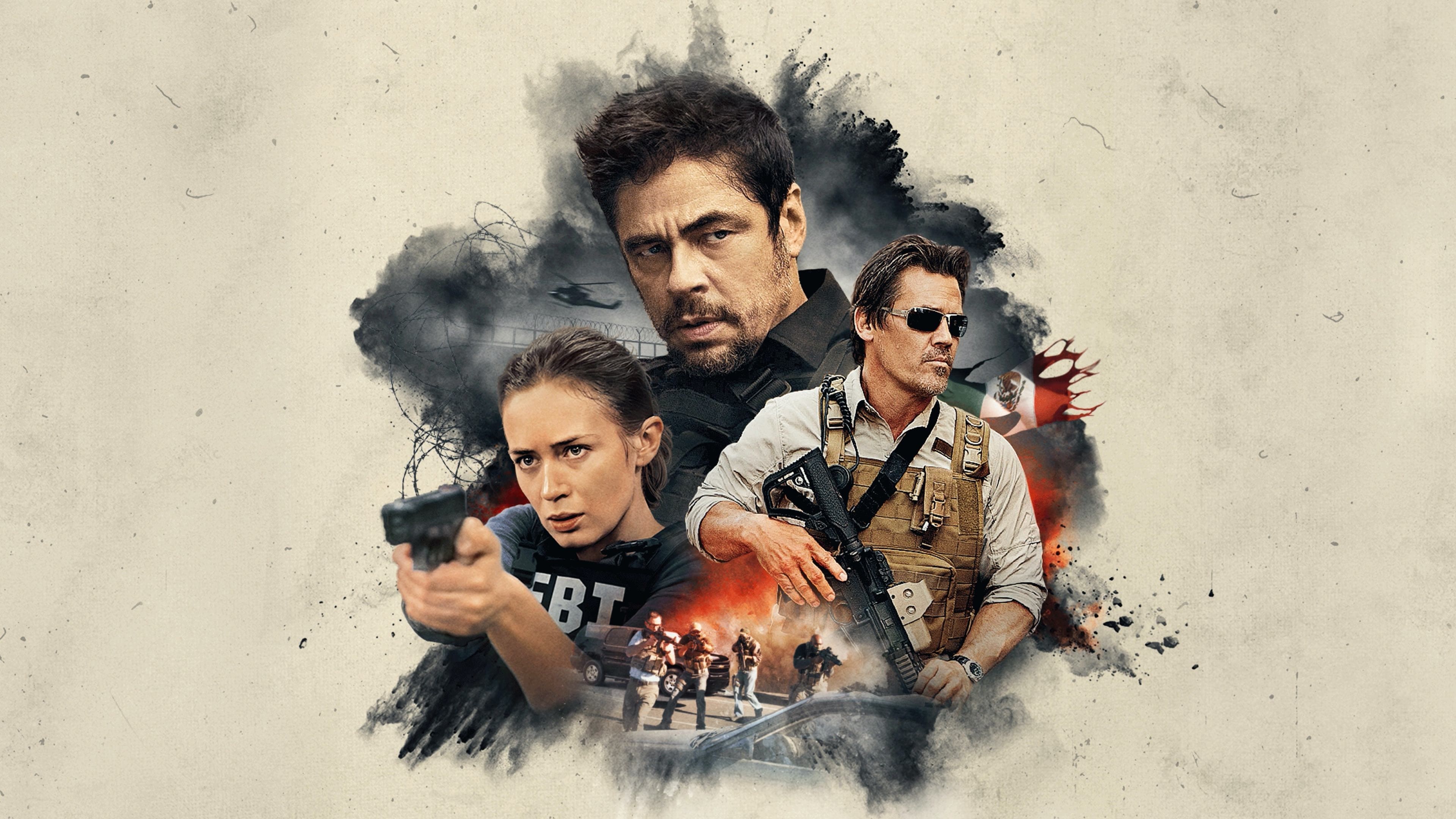
That distinction matters. Plenty of thrillers manufacture confusion by chopping action into visual fragments until nobody can tell where anyone is standing. Sicario does the opposite. It clarifies physical space while withholding motive and authority. We understand the immediate terrain but not the rules governing it, which makes every movement through that terrain feel compromised. The film’s precision is exactly what makes it frightening.
When violence arrives, it is abrupt, grisly and consequential. The film’s R rating covers strong violence and grisly images, but brutality is not presented as a playful reward after a long build-up. It tears through the procedural tension and leaves a moral stain behind. Sicario has no interest in comforting us with a clean cops-and-criminals divide; its deeper horror is the possibility that fighting brutality through extra-legal brutality merely preserves the machinery of violence.
The border landscape becomes a state of mind
For me, the film’s audiovisual control is its greatest achievement. Roger Deakins’ framing, Joe Walker’s editing and Jóhann Jóhannsson’s score do not feel like separate attractions competing for attention. They operate as one tightening mechanism. Deakins gives the landscape scale and texture, Walker preserves the spatial relationships that make each possible threat intelligible, and Jóhannsson supplies a low musical pressure that seems to rise from beneath the ground.
Deakins shot Sicario digitally with an ARRI ALEXA in Open Gate mode, drawing on the color and texture of the Chihuahuan Desert for the film’s visual design. That production detail matters because the images never reduce the setting to attractive travel photography. Wide desert spaces promise visibility but offer little reassurance. Darkness conceals danger, yet daylight can feel just as exposed and hostile. The landscape becomes an expression of Kate’s position: she can see a great deal without understanding who truly controls what she sees.
The aerial imagery reinforces that impression by turning roads, vehicles and buildings into patterns within a much larger system. Human beings look small inside an apparatus they may not fully comprehend. At its best, Sicario does not need dialogue to explain the imbalance of power. A frame can place Kate inside a process that was moving long before her arrival and has no intention of slowing down for her consent.
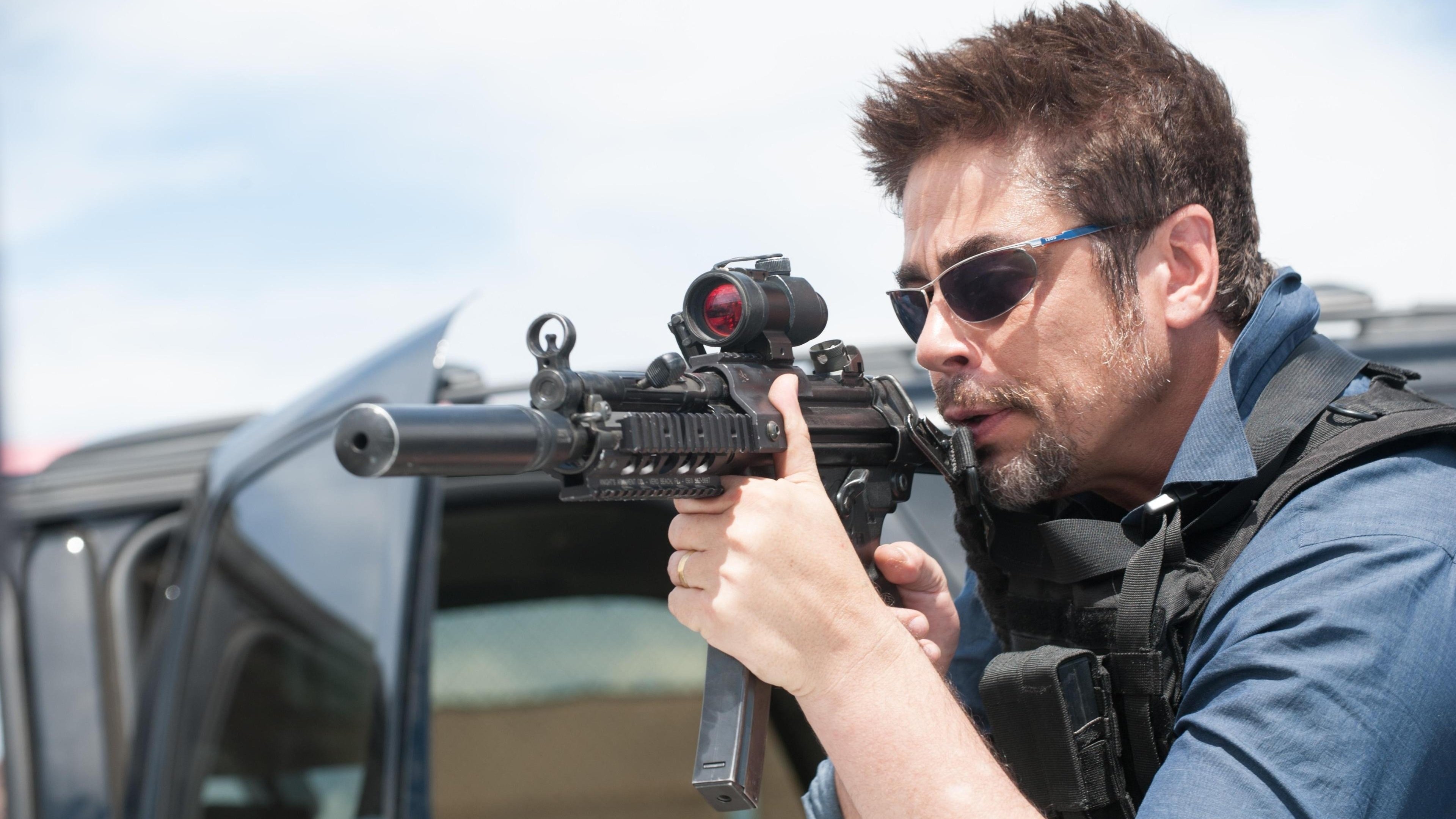
Jóhannsson’s score completes the effect. Its low, ominous pulse does not invite excitement so much as announce an approaching force. Even before a situation becomes violent, the music makes that possibility feel heavy and almost inevitable. The resulting mood is bleak, menacing and paranoid, but the score is most effective when it works beneath the images rather than telling us how intensely to fear them.
Emily Blunt gives the moral crisis a human pulse
Emily Blunt prevents this meticulous filmmaking from becoming a cold technical exercise. Kate begins with professional resolve, but Blunt gradually exposes vulnerability, anger and moral alarm without making the character seem incapable. She gives each evasive answer weight because Kate understands that being denied information is not an administrative inconvenience. It is evidence that the operation regards legality—and perhaps her presence—as useful only when convenient.
Blunt’s physical alertness communicates competence, while her growing unease stops that competence from becoming action-movie invulnerability. Kate is frightened because she understands enough to recognize danger but not enough to determine its source or purpose. That tension makes her an effective ethical anchor. The men around her may treat moral objections as evidence of naivety, but Blunt never allows Kate’s conscience to look foolish.
The film’s guarded conversations deepen that imbalance. Explanations are evasive, intimidation is routine, and flashes of macho sarcasm function as another form of control rather than audience-friendly banter. Sicario is not interested in having its characters joke away the tension. Words are more often used to conceal the rules, establish dominance or remind Kate that she has entered a hierarchy in which knowledge is currency.
Benicio del Toro and Josh Brolin are essential to that closed world. Brolin gives institutional confidence a disarming informality, while del Toro’s withdrawn presence suggests private motives beneath professional cooperation. Yet the film’s emotional access remains with Blunt. Her reactions give the operation its moral dimensions; without her, its ruthless efficiency might become too seductive. Viewers looking for another grim Benicio del Toro crime mystery can continue with our review of Reptile, although Sicario places him inside a far more suffocating institutional structure.
Kate’s powerlessness is both the point and the problem
The strongest reservation is inseparable from what makes Sicario work. By denying Kate information and control, the film makes her disorientation dramatically potent. It also risks reducing her from protagonist to witness. Blunt can communicate the cost of being sidelined, but performance alone cannot give Kate decisions the screenplay has chosen to reserve for better-informed men.
I understand why Kate has so little agency. Her marginalization demonstrates how easily institutional power can absorb, use and discard someone who still believes procedure should matter. The frustration is therefore productive up to a point: we should feel the indignity of watching a capable person treated as a credential, a witness and an obstacle rather than a genuine participant.
But Sicario sometimes crosses the line between depicting Kate’s powerlessness and dramatically surrendering her. The more completely the screenplay turns her into an emblem of compromised legality, the less room she has to exist as a person beyond that function. Her questions become structurally necessary but increasingly predictable, while the men withholding the answers acquire the narrative momentum.
The RogerEbert.com review of Sicario argues that Kate is underdrawn and insufficiently developed. I agree with the diagnosis more than the implied severity. Kate’s restricted role is not simply a screenwriting oversight; it is fundamental to the movie’s argument about opaque power. Even so, intention does not eliminate the dramatic cost. Blunt gives the character more force than the structure ultimately permits her to use.
The film’s control also loosens slightly in its middle stretch. At 121 minutes, Sicario does not always sustain the suffocating momentum of its strongest sequences. A few aerial images and emphatic musical cues continue pushing the dread after the film has already established it perfectly well. Villeneuve is usually confident enough to let stillness and uncertainty do the work; in those moments, the movie underlines an atmosphere nobody could have missed.
A bleak thriller worth entering on its own terms
Sicario works better as a nightmare-thriller about power than as a comprehensive account of the drug war. Its focus is moral and psychological: what happens when an institution decides that rules are obstacles, and what happens to the person who realizes too late that her conscience grants her no meaningful authority. The film does not offer reassuring heroics because reassurance would betray that argument.
That makes it a demanding recommendation rather than an easy one. Viewers looking for nonstop action, a triumphant lead or escapist crime entertainment may find its oppressive mood exhausting. Its violence is grisly, its worldview is corrosive, and its protagonist is deliberately denied the command audiences are trained to expect.
For anyone who wants a serious crime thriller built on patient escalation, precise filmmaking and moral ambiguity, however, Sicario is exceptionally effective. Villeneuve turns restricted knowledge into suspense, Deakins and Walker make geography terrifyingly clear, Jóhannsson makes dread feel almost geological, and Blunt gives the machinery of covert power a recognizably human witness. Kate’s lack of agency remains a genuine dramatic weakness, but it does not erase the film’s achievement. Sicario is a bleak, gripping descent into a system that demands surrender long before anyone admits that control has been lost.
References
- Sicario (2015) | Rotten Tomatoes
- Sicario movie review & film summary
- ARRI Interview: Roger Deakins about "Sicario" – YouTube
- Sicario review – Emily Blunt at the sharp end in war on drugs | Sicario | The Guardian
- Sicario review – Emily Blunt’s star quality lifts Mexican drugs thriller | Sicario | The Guardian
- Dark Manipulations: On The Silence of the Lambs and Sicario
- The 2015 Official Selection – Festival de Cannes