
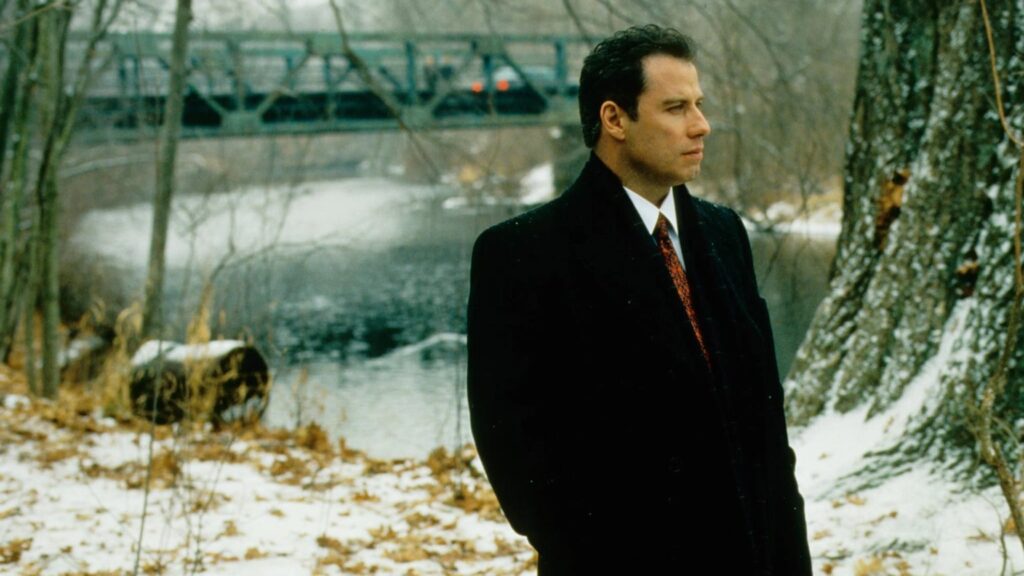
A Civil Action is a legal drama for viewers who find a balance sheet as frightening as a hostile witness. Steven Zaillian turns evidence, causation, negotiation and mounting expenses into gripping suspense, refusing to pretend that justice moves cleanly from righteous speech to triumphant verdict. Its sober intelligence is its greatest strength. The ending cannot quite carry all the emotional weight placed upon it, but the controlled filmmaking and formidable ensemble make this essential viewing for anyone who prefers difficult questions to courtroom victory laps.
Our verdict A sober, unusually intelligent legal drama that turns evidence, money and moral compromise into gripping suspense. Its ending lacks full force, but the controlled filmmaking and formidable ensemble make it essential viewing.
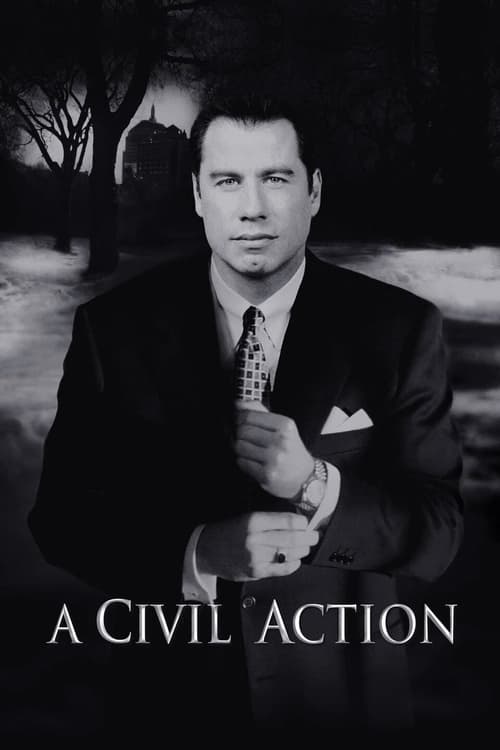
A Civil Action (1998)
Released in 1998, the film was written and directed by Zaillian from Jonathan Harr’s nonfiction book, with Conrad L. Hall serving as cinematographer. The AFI Catalog’s production record credits an ensemble led by John Travolta, Robert Duvall, Kathleen Quinlan, John Lithgow, James Gandolfini, Tony Shalhoub and Dan Hedaya. That collection of talent matters because A Civil Action is not built around one explosive performance. It works through competing personalities, professional pressures and institutions capable of exhausting people without ever raising their voices.
Legal procedure becomes a war of attrition
Travolta plays Jan Schlichtmann, a personal-injury lawyer representing families who allege that corporate pollution contaminated drinking water in Woburn, Massachusetts, contributing to childhood leukemia cases. The litigation threatens to consume his firm financially as well as morally. The case was drawn from a real environmental contamination dispute; an archived Environmental Protection Agency account of the litigation describes the contaminated wells and illnesses behind the film’s central conflict.
Zaillian does not treat those real-world foundations as permission to make a lecture. He understands that procedure becomes dramatic when every choice has a cost. Proof is not simply discovered and presented; it must be pursued, organized, challenged and paid for. A promising lead can become another expense. A negotiation may offer practical relief while falling painfully short of moral accountability. The question is never only whether Schlichtmann believes the families. It is whether belief can survive contact with legal standards, corporate resources and the financial limits of his own firm.

That distinction gives the movie unusual tension. Many courtroom dramas turn the legal system into a stage where the best speech eventually forces truth into the open. A Civil Action sees something colder: truth, responsibility and a legally winnable case may overlap, but they are not interchangeable. Every professional decision therefore carries a moral shadow, and every apparent step forward creates another opportunity for the case to collapse under its own weight.
For me, this controlled approach is considerably more compelling than another fantasy about a crusading lawyer demolishing corruption through eloquence. Zaillian makes the machinery itself suspenseful. The danger comes not only from powerful defendants but from the possibility that pursuing accountability can ruin the people attempting to secure it. Money is not a vulgar distraction from the case. Money determines how long the case is allowed to exist.
Schlichtmann is compromised before he becomes committed
The film’s other intelligent decision is refusing to introduce Schlichtmann as a spotless champion. He begins as a commercially minded operator, assessing cases partly through their potential value before obsession and conscience start pulling him elsewhere. That opportunism gives his transformation necessary friction. A Civil Action is not about a saint discovering injustice; it is about a skilled professional learning that his usual calculations cannot contain the human consequences of this case.
Travolta is persuasive in Schlichtmann’s early mode. His confidence, charm and calculation belong to a lawyer accustomed to controlling a room and understanding what an argument is worth. He can sell certainty even when the ground beneath him is starting to shift, and the performance smartly allows vanity to remain mixed with conviction. His investment in the case never becomes morally tidy, which is exactly right for this story.
The performance becomes less convincing as the character’s internal collapse takes over. Travolta communicates strain, but he does not always reveal the deeper psychological movement needed to make Schlichtmann’s deterioration the film’s emotional center. As Zaillian concentrates more of the adaptation’s burden on that crisis of conscience, the film needs the character’s increasingly private transformation to feel overwhelming. Travolta gets close without entirely closing the distance.
That limitation does not flatten Schlichtmann. If anything, the movie’s refusal to purify him is one reason it remains so interesting. His sacrifice may be sincere without becoming automatically noble, effective or sufficient. The case changes him, but A Civil Action never suggests that one man’s moral awakening can repair an institution—or erase the ego and ambition that helped bring him there.
Robert Duvall turns eccentricity into a weapon
Robert Duvall is the standout as opposing lawyer Jerome Facher. His folksy manner could have become a collection of lovable courtroom quirks. Instead, Duvall makes informality feel tactical. Facher appears relaxed because he understands the terrain, and that ease becomes quietly intimidating. The performance never needs to announce ruthlessness; it lets professional fluency do the damage.
Duvall also gives the film an essential counterweight to Schlichtmann’s growing obsession. Facher does not need to match that emotional intensity because his power comes from refusing to be dragged into it. He understands litigation as process, leverage and endurance. While Schlichtmann increasingly treats the case as a personal moral reckoning, Facher keeps treating it as work. That contrast is more chilling than a conventional villain performance would have been.
The wider ensemble stops the procedural machinery from becoming abstract. Kathleen Quinlan gives the families’ grief and determination a human presence, while John Lithgow brings authority to the judicial process without turning it into simple moral guidance. James Gandolfini, Tony Shalhoub and Dan Hedaya strengthen a cast in which even smaller roles contribute to the sense that the case is a network of competing duties and interests rather than a duel between two stars.
William H. Macy provides especially valuable comic pressure as the firm’s increasingly alarmed financial voice. The humor works because it grows from the same problem driving the drama: conviction does not pay invoices. He does not puncture the grave tone or offer the audience a holiday from the stakes. Instead, his anxiety keeps translating Schlichtmann’s obsession into practical consequences. Every new expense makes the moral mission look a little more like institutional self-destruction.
The filmmaking refuses to glamorize the fight
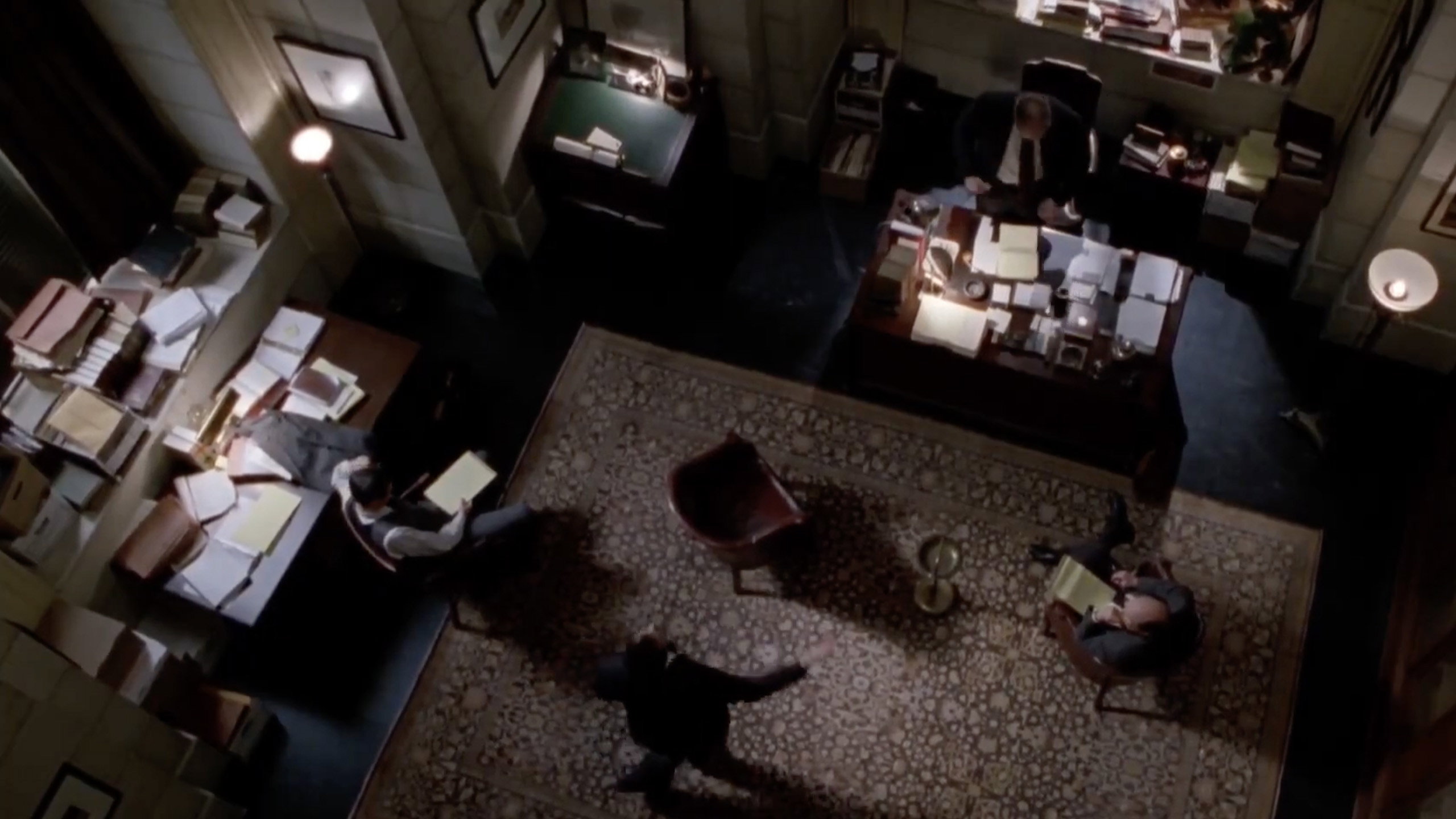
Zaillian’s direction is disciplined, and Hall’s classical, reality-grounded cinematography is perfectly suited to the material. The images are polished without making environmental illness or civil litigation look glamorous. Offices, legal encounters and institutional spaces belong to the same atmosphere of controlled menace. The film does not need flamboyant visual flourishes because its threat comes from systems that appear orderly while producing deeply unsettled outcomes.
That restraint also protects the movie from becoming sentimental. The affected families matter, but Zaillian does not use their suffering as a button to press whenever the legal detail grows complicated. Nor does the presentation constantly instruct us to admire Schlichtmann. The film remains interested in his conscience while preserving skepticism about his motives. It recognizes personal sacrifice without confusing sacrifice with justice.
This is serious adult filmmaking in the best sense: not joyless, but willing to trust attention. The suspense comes from listening to arguments, following strategy and understanding why apparently technical decisions alter the moral shape of the case. Zaillian assumes the audience can remain engaged without a villain delivering a confession or a lawyer turning the courtroom into a revival meeting. He is right.
An honest ending that falls slightly short
The final stretch is where A Civil Action loses some of its force. Its refusal to manufacture complete justice is admirable and thematically necessary. A cleaner resolution would betray everything the film has established about the difference between legal outcomes, truth and moral responsibility. The unsettled quality is not a failure of nerve; it is the point.
Yet thematic honesty does not automatically create emotional power. The complexity of the underlying story and the adaptation’s increasing focus on Schlichtmann leave the conclusion asking more of his inner journey than Travolta can completely supply. The movie arrives at the right kind of frustration, but not every part of that frustration lands with equal force. It finishes thoughtfully rather than devastatingly.
That reservation matters, although it does little to diminish what comes before it. A Civil Action remains unusually sharp about the cost of seeking accountability through institutions built around thresholds of proof, professional strategy and finite resources. It understands that good motives may emerge from bad ones, that sacrifice does not guarantee success, and that a compromised outcome can still contain moral significance.
A demanding legal drama worth seeking out
Viewers looking for a rousing courtroom victory may find the film deliberately withholding. Those who enjoy character-driven legal dramas should find its moral ambiguity, procedural tension and ensemble work deeply rewarding. Readers drawn to fact-based stories about the American legal system may also want our review of Miranda’s Victim, although A Civil Action is the harsher and more structurally skeptical film.
A Civil Action earns its recommendation by recognizing that litigation is not a heroic sprint toward justice. It is an expensive war of endurance in which evidence, money, ego and conscience become inseparable. Zaillian makes that conflict gripping without simplifying it, and Duvall gives the film a quietly formidable center of gravity. The ending may not deliver the full emotional blow it seeks, but the movie’s intelligence and refusal of easy comfort linger long after the arguments stop.