
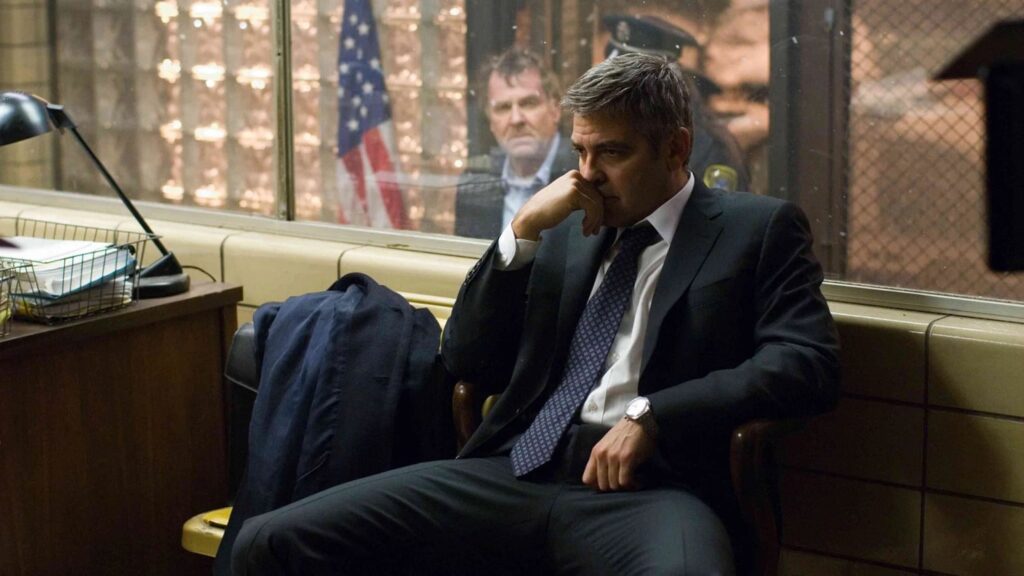
Michael Clayton is an exceptionally intelligent adult thriller built around a quietly vicious idea: being good at your job can become its own form of imprisonment. Tony Gilroy turns corporate law, professional loyalty and moral compromise into gripping combat without dressing them up as conventional action. Every sharp conversation and calculated decision tightens the grip of an institution that values Michael Clayton only while he remains useful to it.
Our verdict Tony Gilroy turns corporate law into gripping moral combat, powered by George Clooney’s weary restraint and a formidable supporting cast. Dense and occasionally airless, Michael Clayton remains an exceptionally intelligent adult thriller.
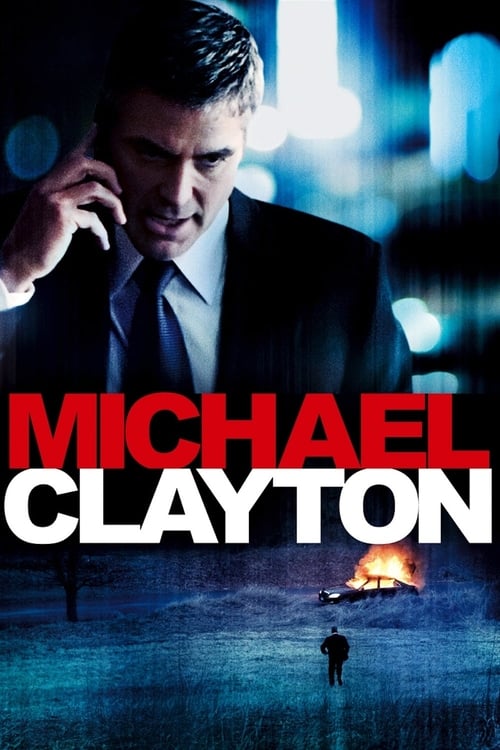
Michael Clayton (2007)
That could have produced a chilly exercise in expensive suits glaring across conference tables. Instead, George Clooney gives the film a bruised human center, while Tom Wilkinson, Tilda Swinton and Sydney Pollack make every competing interest feel personal. The result is tense, severe and occasionally so controlled that it becomes airless, but its confidence is thrilling. This is a film that trusts dialogue, performance and implication to do the work usually assigned to car chases and gunfire.
Professional competence becomes a prison
Clayton is a former prosecutor working as an internal fixer for a powerful New York law firm. He is the person called when a wealthy client creates a problem that cannot be solved by clean legal procedure alone. Financial pressure and exhaustion already have him cornered when Arthur Edens, the lead attorney in a major class-action case, begins acting against the interests of both the firm and its client. The American Film Institute’s account of the film grounds Clayton’s predicament in mounting debt, a failed business venture and professional burnout.
Those details matter because Gilroy never pretends Clayton is a spotless outsider wandering into a corrupt system. He has survived by understanding that system better than almost anyone else. He knows which calls to make, which facts to suppress and how to turn panic into a manageable professional inconvenience. His talent has bought him status, but not freedom. The firm’s dependence on him is inseparable from its power over him.

Clooney plays that contradiction with remarkable restraint. Clayton is charming when charm serves a purpose and forceful when force can close a problem, yet the dominant impression is fatigue. He looks like a man who has spent years converting moral emergencies into administrative tasks and has finally noticed the cost. Clooney never begs for sympathy or reaches for an easy redemption arc. He lets tiny pauses and guarded reactions reveal how much calculation stands between Clayton and an honest response.
That refusal to make Clayton uncomplicated is essential. His remaining scruples do not erase his compromises, just as his compromises do not make those scruples meaningless. The performance belongs among the strongest examples of the controlled star persona considered in our ranking of George Clooney’s best movies. Here, the familiar confidence has curdled into something more interesting: competence without peace.
The dialogue hits like action
Gilroy, making his feature-directing debut from his own screenplay, builds suspense through competing interests and controlled disclosure rather than action-movie noise. The film unfolds across four frantic days, giving its legal maneuvering and personal crises the force of a pressure cooker. A sentence can alter the balance of power. A phone call can make an apparently contained problem spread through an entire institution. People rarely say everything they know because information is the only weapon they can carry into every room.
For me, this is the film’s great pleasure. Michael Clayton understands that a corporate thriller does not need to apologize for being talkative when the talk has consequence. The legal and business language establishes who controls the conversation, who is improvising and who has already prepared three exits. Exposition becomes strategy. Even routine professional exchanges carry an undertow of threat because everyone is listening for the detail that could change their position.
The structure reinforces that tension. Gilroy withholds context, moves between overlapping pressures and asks the audience to catch up rather than stopping to explain every relationship. That approach makes the opening demanding. Names, legal interests and personal obligations arrive quickly, and the initial disorientation can feel chaotic before the design becomes clear. I admire the confidence, although the film requires more immediate concentration than most thrillers are willing to demand.

Once the pieces lock together, the density becomes an advantage. Michael Clayton generates momentum from comprehension: each newly clarified motive makes an earlier exchange more dangerous. It shares with procedural films such as David Fincher’s Zodiac a belief that process can be dramatic when the people performing it are intelligent, obsessive and under pressure. Gilroy’s film is leaner and more morally concentrated, but both understand that watching professionals interpret information can be as gripping as watching them chase someone.
A supporting cast built to seize control
Clooney’s restraint works because the actors around him bring different kinds of volatility. Tom Wilkinson gives Arthur Edens torrents of eloquence that can be persuasive, alarming and darkly funny within the same passage. The character’s behavior destabilizes the case, but Wilkinson refuses to reduce him to a convenient plot mechanism. Arthur’s words have moral force even when his actions create chaos, and that tension prevents Clayton from dismissing him as merely another problem to contain.
Tilda Swinton takes the opposite approach as corporate attorney Karen Crowder. Her performance is defined by control under punishing pressure. She makes professional composure look like something assembled rather than naturally possessed, which gives every assertion of authority a faint tremor of vulnerability. Swinton won the Academy Award for Supporting Actress for the role, and the honor makes sense: she creates a formidable antagonist without relying on theatrical villainy. The Academy records Swinton’s win at the 80th Oscars.
Karen is frightening because she treats terrible choices as problems of management. Swinton shows the labor required to maintain that mindset. Her character belongs to the same corporate machine as Clayton, but their positions inside it produce different responses. He has become exhausted by compromise; she tries to master it through discipline. The film’s moral conflict becomes stronger because neither performance turns institutional corruption into an abstract concept.
Sydney Pollack, meanwhile, gives the law firm imposing human form. His authority feels practiced and socially effortless, the product of someone accustomed to deciding which crisis matters and which subordinate will absorb it. Pollack’s presence also sharpens Clayton’s predicament. This is not a simple struggle between one decent man and a room full of cartoon monsters. It is a hierarchy populated by intelligent people who can explain every compromise as necessary until necessity becomes the entire moral code.
Polished offices with something rotten underneath
Robert Elswit’s cinematography makes this world look controlled without making it glamorous. The offices are orderly, expensive and faintly hostile. Fluorescent interiors, window light and mixed color temperatures create spaces that appear functional rather than seductive. Elswit shot the film anamorphically on Kodak film stocks and discussed the careful management of those competing light sources with ICG Magazine. His account of photographing Michael Clayton also notes that the production removed ultraviolet film from the windows of an empty high-rise floor used for the law-firm headquarters.
That technical control serves the argument. Corporate power in Michael Clayton does not need a gothic fortress; it occupies clean rooms with broad windows and tasteful surfaces. The visual polish cannot conceal the moral sickness underneath, but it can make that sickness look normal. Clayton moves through these spaces as if they are both workplace and habitat. The framing repeatedly emphasizes how thoroughly his identity has been absorbed by the professional world he understands too well.
The film’s severity also distinguishes it from a kinetic conspiracy thriller. There is danger, but Gilroy is more interested in the decisions that produce violence than in turning violence into spectacle. The tension comes from watching a bureaucracy decide what it can justify. That makes the moments of physical threat feel like the logical endpoint of boardroom language rather than a detour into another genre.
Its relentless control can become airless
The same discipline that makes Michael Clayton so effective also creates its main limitation. Gilroy sustains pressure with very little breathing room. The dialogue is dense, the moral atmosphere is heavy and nearly every interaction carries professional or personal consequence. That severity suits the material, but the film sometimes holds tension at such a constant level that individual peaks have less room to rise.
This is not a demand for comic relief or a conventional action payoff. Either would weaken the movie. A few more changes of emotional temperature, however, might have made its hardest turns land with even greater force. The concentrated construction can feel stifling, particularly during the opening stretch when the audience is still sorting through the network of interests. Even contemporary praise acknowledged that Gilroy sometimes keeps the tension too high.
Patient viewers are rewarded because the apparent chaos resolves into a precise structure. Still, this is a film that expects attention and offers little hand-holding. Anyone looking for courtroom theatrics, broad humor or Bourne-style momentum should adjust expectations. Michael Clayton is interested in meetings, calls, debts, loyalties and the exact moment when professional obligation becomes moral surrender.
A corporate thriller with real moral bite
Michael Clayton works because it understands that institutions rarely trap people through force alone. They use salary, debt, reputation, habit and the seductive satisfaction of being needed. Clayton’s ability to solve problems has become the reason he cannot escape them. Gilroy makes that contradiction suspenseful, while Clooney ensures it remains painfully human.
The supporting cast gives the system several compelling faces, and Elswit’s controlled photography makes its polished environment feel increasingly poisonous. The movie is dense and occasionally too airless for its own good, but those reservations barely diminish its achievement. This is essential viewing for anyone who likes dialogue-driven thrillers, morally compromised protagonists and ensemble acting with real bite. Michael Clayton does not merely turn corporate law into drama; it turns professional usefulness into a trap and makes every attempt to escape feel like an act of war.