
Avengers: Endgame is a moving, frequently thrilling and undeniably overstuffed farewell. It works less as an independent superhero movie than as an act of dramatic closure, cashing in years of accumulated affection with unusual emotional force. The franchise machinery is always visible, and sometimes deafeningly so, but Robert Downey Jr., Chris Evans and the rest of the surviving ensemble give that machinery a bruised human pulse.
Our verdict A moving, oversized farewell that turns years of Marvel history into genuine emotional payoff. Its three-hour structure, continuity dependence and reflexive quips blunt the impact, but the central character reckonings earn the spectacle.
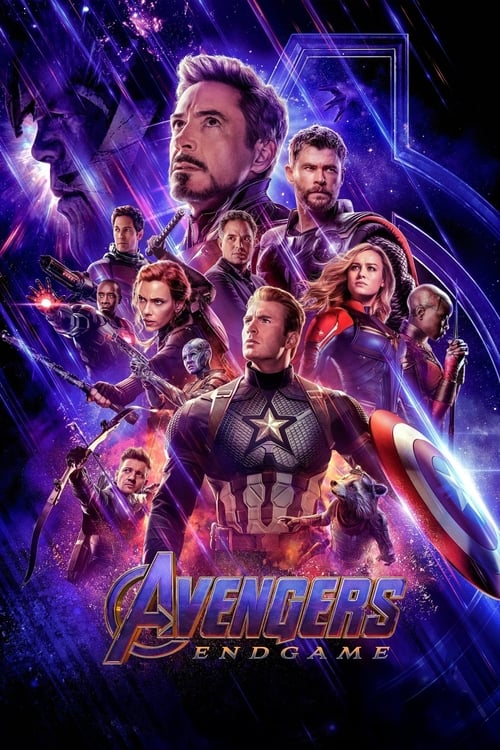
Avengers: Endgame (2019)
That tension defines this Avengers Endgame review. Directors Anthony and Joe Russo are not merely resolving the devastation left by Infinity War; they are concluding what Marvel presented as a 22-film story cycle. The remaining Avengers inhabit a world transformed by loss before undertaking a final attempt to restore what was taken. The history behind that premise gives Endgame its power, but it also becomes a limitation. This is deeply satisfying franchise closure and a considerably less satisfying stand-alone film.
Grief gives the spectacle a human reason to exist
For me, Endgame is strongest before its heroes have a plan. The subdued opening passages let failure linger in a way Marvel movies rarely permit. These characters are exhausted, estranged and uncertain about what usefulness even means after an irreversible defeat. Empty spaces and strained conversations do more work than another immediate burst of computer-generated destruction could have done.
The film understands that surviving is not the same as recovering. Its heroes respond to grief in different ways: some cling to responsibility, some retreat from it, and others turn pain into a mission because action is easier than acceptance. Even the humor initially feels less like obligatory banter than a coping mechanism shared by people who have no idea how to discuss their trauma directly.
That patience transforms the eventual restoration mission from a routine save-the-universe assignment into an emotional necessity. The goal is not merely to defeat a villain or correct a plot problem. It is to repair a world and, more urgently, to give the survivors a reason to believe that their failure does not have to define everything that follows. Endgame is hardly subtle about this, but sincerity matters more than subtlety here.
Downey and Evans make accumulated history feel intimate
A cast this large could easily become an expensive roll call, yet Endgame maintains a sturdy emotional spine by concentrating on a few long-running character reckonings. Downey brings Tony Stark’s familiar intelligence and irritation, but his most important contribution is a newly settled sense of consequence. The performance carries the memory of the impulsive man introduced years earlier without simply repeating him. His confidence now has something vulnerable beneath it: a life he values enough to protect and a conscience that will not let him remain safely removed.
Evans has the less flashy but equally difficult task. His Steve Rogers is defined by endurance, and Evans makes that quality look increasingly costly. Steve remains composed because other people need him to be, not because he has escaped grief. The quiet control of the performance gives the louder heroic moments their weight. When the film asks what these characters owe the world—and what the world has already taken from them—Downey and Evans ensure the question feels personal rather than theoretical.
The wider ensemble is less evenly served, although several characters receive sharp emotional beats. Scarlett Johansson gives Natasha Romanoff a sense of purpose edged with desperation, while Jeremy Renner makes Clint Barton’s anger feel like grief that has curdled into something destructive. Karen Gillan also benefits from material that treats Nebula as more than a severe supporting presence. Her rigid physicality suggests someone trying to hold herself together through discipline alone.
Chris Hemsworth is more complicated. He commits completely to a version of Thor hollowed out by failure, and some of the comedy grows naturally from the character’s attempts to hide. Yet the film too often treats his visible deterioration as a punchline. Hemsworth finds pain underneath the gag, but the screenplay keeps nudging the audience in the ribs when it should trust him to play the damage straight.
The franchise scrapbook has a dramatic purpose—until it does not
The middle section revisits the Marvel Cinematic Universe’s history through an episodic structure that is both Endgame’s cleverest device and its most obvious concession to fandom. Familiar situations are approached from altered perspectives, allowing major characters to confront earlier versions of themselves, old relationships and choices whose consequences they now understand differently.
At its best, this is fan service converted into reflection. Recognition is not the final point; the characters must measure the distance between who they were and who they have become. The film turns continuity into an emotional landscape, with the past functioning as a place of temptation, regret and unfinished business rather than merely a parade of references.
But the device can also resemble an extraordinarily expensive franchise scrapbook. Scenes pause to acknowledge mythology, relationships and previous adventures because Endgame has inherited a colossal list of obligations. The screenplay by Christopher Markus and Stephen McFeely is impressively organized, yet that organization is sometimes too easy to admire from a distance. You can almost hear the continuity boxes being ticked.
This is where the film’s dependence on prior investment becomes impossible to ignore. A newcomer can understand the basic restoration mission, but understanding is not the same as feeling. The biggest emotional rewards rely on remembered relationships and completed arcs. Endgame does not invite uninitiated viewers into the MCU so much as congratulate committed ones for making it this far.
Three hours provide weight as well as drag
At 181 minutes, Endgame earns much of its length but not all of it. Its first act needs room for grief, and the central character reckonings would suffer if hurried. The film’s scale also demands a certain ceremonial pace: this is designed to feel like the closing night of a long theatrical run, complete with bows for the principal players.
Still, the middle detours repeatedly interrupt momentum. The episodic construction creates individual peaks rather than a sustained build, and several comic exchanges continue beyond the point at which they have done their job. Marvel’s reflexive humor remains a mixed blessing. A well-placed joke can reveal affection or deflate heroic posing, but other quips arrive as if a few seconds of silence might violate studio policy. Serious moments are sometimes protected from embarrassment when they should be allowed to hurt.
The result is a film that feels both surprisingly patient and strangely rushed. It takes time to revisit familiar corners of the franchise, then compresses other emotional consequences because another piece of narrative logistics requires attention. The Russos keep the complicated plot intelligible, but clarity is not the same as rhythm.
The final battle is readable but visually conventional
When Endgame finally embraces full-scale action, the Russos preserve enough character motivation to stop the spectacle becoming completely anonymous. Objectives remain clear, personal rivalries survive inside the chaos, and the editing usually lets us understand where attention should be directed. The filmmakers are effective traffic controllers, which sounds like faint praise until one considers how many characters, effects and story obligations are moving at once.
The technical execution is formidable. According to ILM’s production breakdown, the studio’s work included Smart Hulk, time-travel material and elements of the final battle. Its facial-performance process captured pore-level information and gave animators control over more than 200 facial attributes. That detail matters on screen because Smart Hulk registers as a performance rather than a digital mask; expressions retain enough specificity for the character’s intelligence, amusement and discomfort to coexist.
Yet the sheer accumulation of imagery eventually becomes conventional. Rubble, smoke, portals, armies and streaks of energy fill the frame with technically polished urgency, but the visual language rarely becomes as daring as the characters’ circumstances. Compare that approach with the stripped-down physical geography discussed in our review of Predator, where space and vulnerability generate tension before the action starts. Endgame offers scale instead. Its spectacle lands because we care who is standing inside it, not because the imagery itself is especially surprising.
Avengers: Endgame earns its goodbye
Endgame is not the masterpiece its cultural size might suggest, nor is it merely a corporate victory lap. It is a carefully engineered blockbuster that repeatedly breaks through its own formula because the performers have carried these characters long enough for their choices to matter. The best moments are not the loudest reveals or largest digital collisions. They are the pauses in which heroes recognize what failure has changed and decide what they are willing to give in response.
That emotional payoff comes with conditions. Viewers already invested in the Infinity Saga will find an ambitious and often affecting conclusion, especially if character closure matters more than stand-alone elegance. Anyone cold on Marvel continuity, three-hour franchise architecture or drama punctuated by compulsive quips is unlikely to be converted by sheer scale.
I recommend it, but specifically as the ending to a long relationship rather than a self-contained superhero adventure. Avengers: Endgame carries too much history to move gracefully and too many obligations to feel genuinely unpredictable. Even so, its central reckonings earn the farewell. Beneath the franchise engineering is a sincere movie about living after failure—and choosing, despite the cost, to try once more.