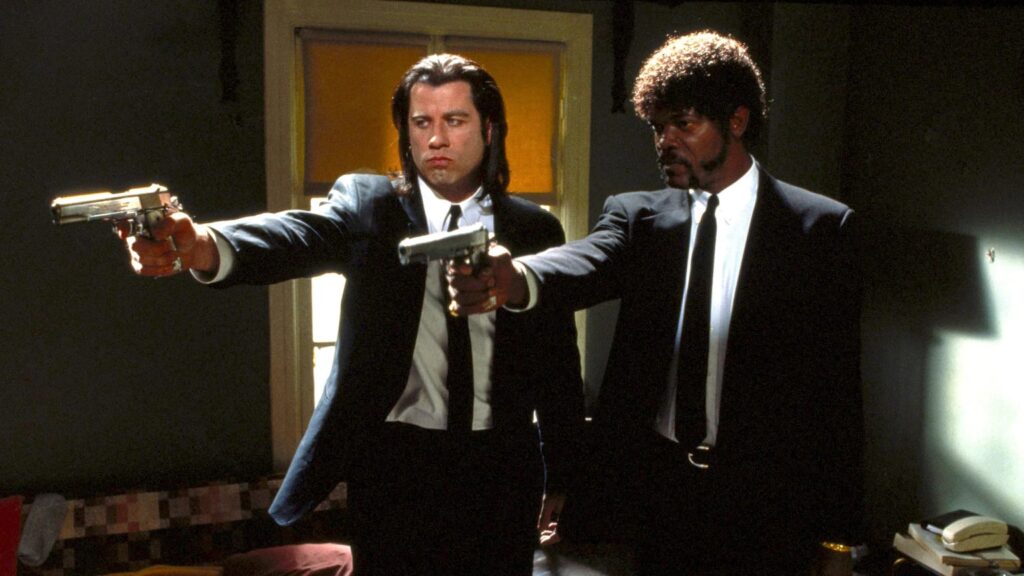
TL;DR: The short version of this Pulp Fiction 1994 review is that Quentin Tarantino’s crime film remains electrifying because it treats conversation as action. Its chronology is scrambled, but its construction is anything but careless: distinctive voices, intersecting stories and rapidly worsening predicaments operate like narrative clockwork. The swagger has an ethical cost, yet the performances, tension and tonal nerve still earn an emphatic recommendation.
Our verdict Pulp Fiction remains an electrifying crime film because its talk carries the force of action and its scrambled stories lock into a precise circle. Its swagger has an ethical cost, but the performances, tension and tonal nerve earn the highest recommendation.
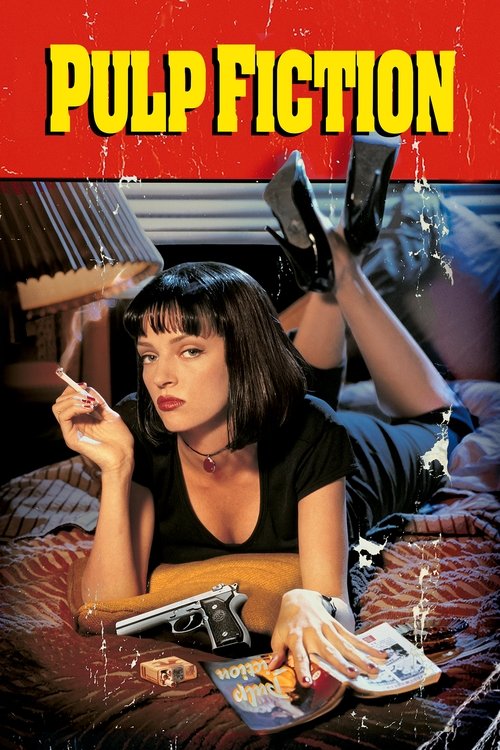
Pulp Fiction (1994)
Pulp Fiction takes familiar crime-film materials—hitmen, a boxer, a gangster’s wife, small-time robbers—and rearranges them into a circular Los Angeles mosaic. Released in 1994, it was directed by Tarantino from writing credited to Tarantino and Roger Avary, with Sally Menke editing and Andrzej Sekuła handling the cinematography. Those credits matter because the movie’s apparent looseness is supported by unusually controlled filmmaking. It talks, wanders and doubles back, but it always knows where the pressure is coming from.
Pulp Fiction 1994 review: The dialogue is the real action
Most crime films use dialogue to carry us from one act of violence to another. Pulp Fiction makes the talking itself dangerous. Its criminals discuss trivial preferences, workplace irritations and personal codes with the concentration other movies reserve for bomb disposal. Every digression seems casual until a shift in tone reveals who holds power, who is nervous and who has misunderstood the room.
That is why the long conversations rarely feel like pauses in the plot. Roger Ebert observed that these characters relish language and possess distinct patterns of speech, which gets to the heart of Tarantino’s method. Vincent Vega’s drifting, faintly bemused rhythm tells us something entirely different from Jules Winnfield’s commanding verbal precision. The words characterize them, but they also establish tempo. A scene can move from funny to threatening because one person stops playing along, changes the subject or allows a silence to hang a little too long.
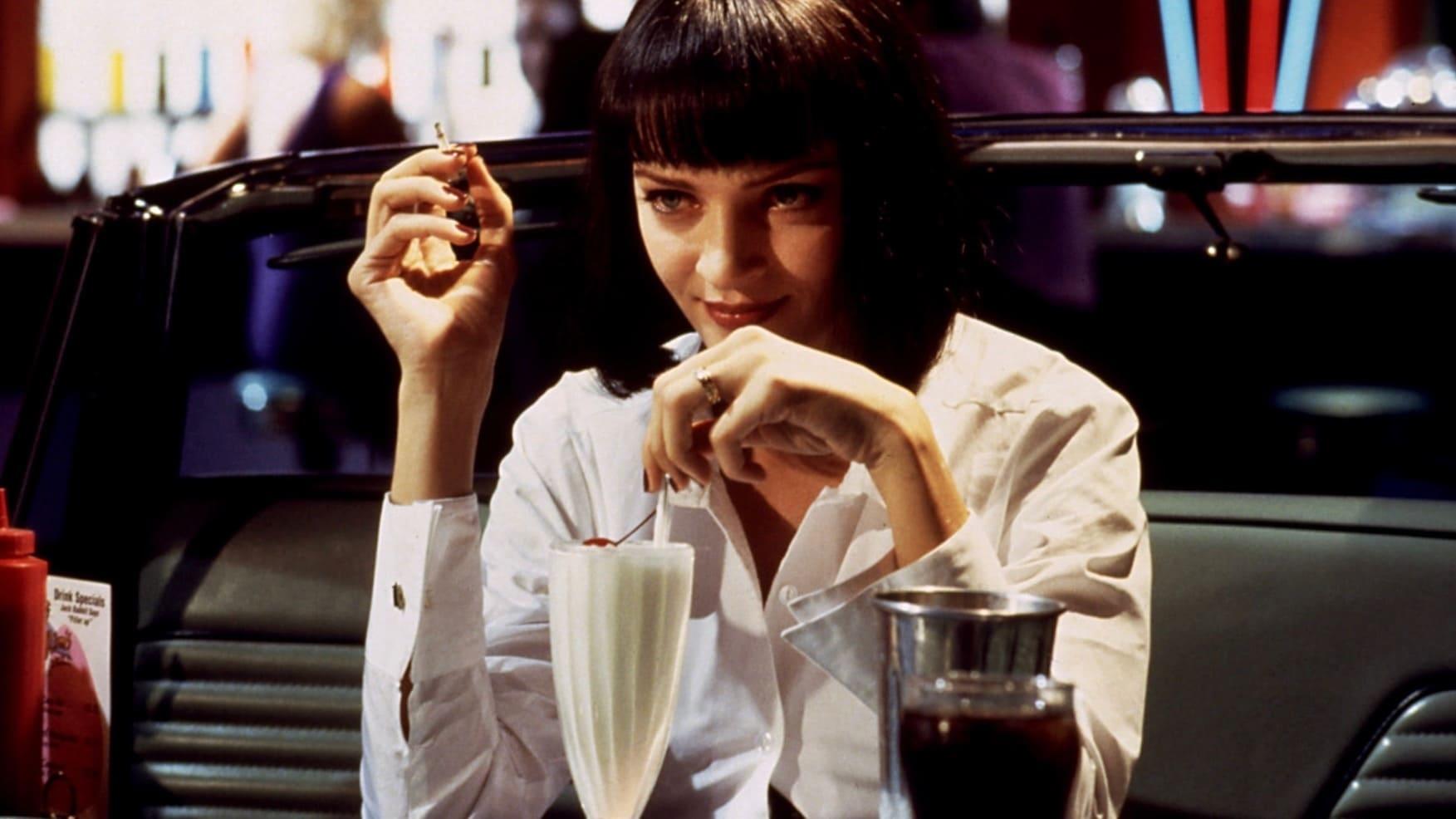
For me, that tension is the film’s greatest achievement. Tarantino understands that suspense is not simply uncertainty about whether a gun will fire. It is uncertainty about whether someone has noticed the insult, understood the warning or decided to abandon the social performance keeping everybody alive. The characters speak as if they can control reality by describing it persuasively. The film’s nastiest joke is that reality keeps refusing to cooperate.
The result is a movie that remains quotable without becoming a collection of isolated catchphrases. Its language has dramatic force. Jokes disclose vanity; anecdotes become contests; moral arguments expose characters who are trying to convince themselves as much as anybody else. Even when the writing is showing off—and it certainly knows how impressed it is with itself—the performance of language keeps altering the stakes.
The scrambled chronology creates a precise circle
Pulp Fiction’s nonlinear structure is often discussed as a stylistic flourish, but the rearrangement does more than manufacture surprise. The intersecting strands form a circle, with the diner material providing a deliberate bookend beneath the apparent disorder. Menke’s editing allows later context to change the emotional temperature of earlier encounters. Characters can return after their apparent narrative endpoint, and that reappearance makes us reassess what their choices mean rather than merely asking what happens next.
The structure also protects the movie from the predictability of its own ingredients. In chronological order, several episodes would resemble recognizable gangster-film situations. Rearranged, they speak to one another across time. A brush with catastrophe in one strand becomes funnier, sadder or more morally charged because another strand has already shown us where a character’s habits lead.
Crucially, the film does not become difficult merely for the pleasure of being difficult. Each individual sequence has a clean immediate objective: complete a job, survive an evening, settle a deal or escape a disaster. Tarantino gives the audience a simple problem to follow inside a complicated overall design. That balance is why the movie feels playful rather than opaque. The chronology invites reconstruction, but the scenes work before the reconstruction is complete.
This structural confidence helped make Pulp Fiction more than a cult curiosity. It screened in competition at Cannes and won the 1994 Palme d’Or, an honor recorded by the Festival de Cannes. The award is not proof of permanent greatness, but it reflects how successfully the film’s genre pleasures and formal games function together. Tarantino did not paste an art-film timeline onto a conventional thriller. He made the timeline part of the thrill.
Travolta and Jackson give the clockwork a pulse
A construction this elaborate could easily reduce its cast to pieces on a board. John Travolta and Samuel L. Jackson prevent that. Travolta gives Vincent a dazed, oddly charming looseness, while Jackson plays Jules with tremendous force and verbal authority—contrasting qualities also singled out in Kenneth Turan’s contemporary assessment. Their rhythms are so different that an ordinary exchange becomes a miniature double act: Vincent drifts through a thought while Jules drives straight through it.
Travolta is especially good at making Vincent seem both experienced and alarmingly unequipped for whatever is happening now. His coolness is not competence so much as a posture maintained through confusion. Jackson, meanwhile, can make a speech sound like entertainment, interrogation and private ritual at once. Jules is frightening because his language feels controlled, but the performance becomes more interesting when that control begins to accommodate doubt.
The wider ensemble complements them without flattening into one shared Tarantino voice. Uma Thurman brings alertness and mystery to Mia Wallace; Bruce Willis gives Butch a stubborn physical directness; Ving Rhames, Harvey Keitel, Tim Roth and Amanda Plummer each arrive with a different relationship to authority and panic. The movie’s cast and character credits establish an ensemble of hitmen, criminals, romantic partners and professional fixers rather than a single conventional protagonist. That distribution of attention makes the world feel larger than any one storyline.
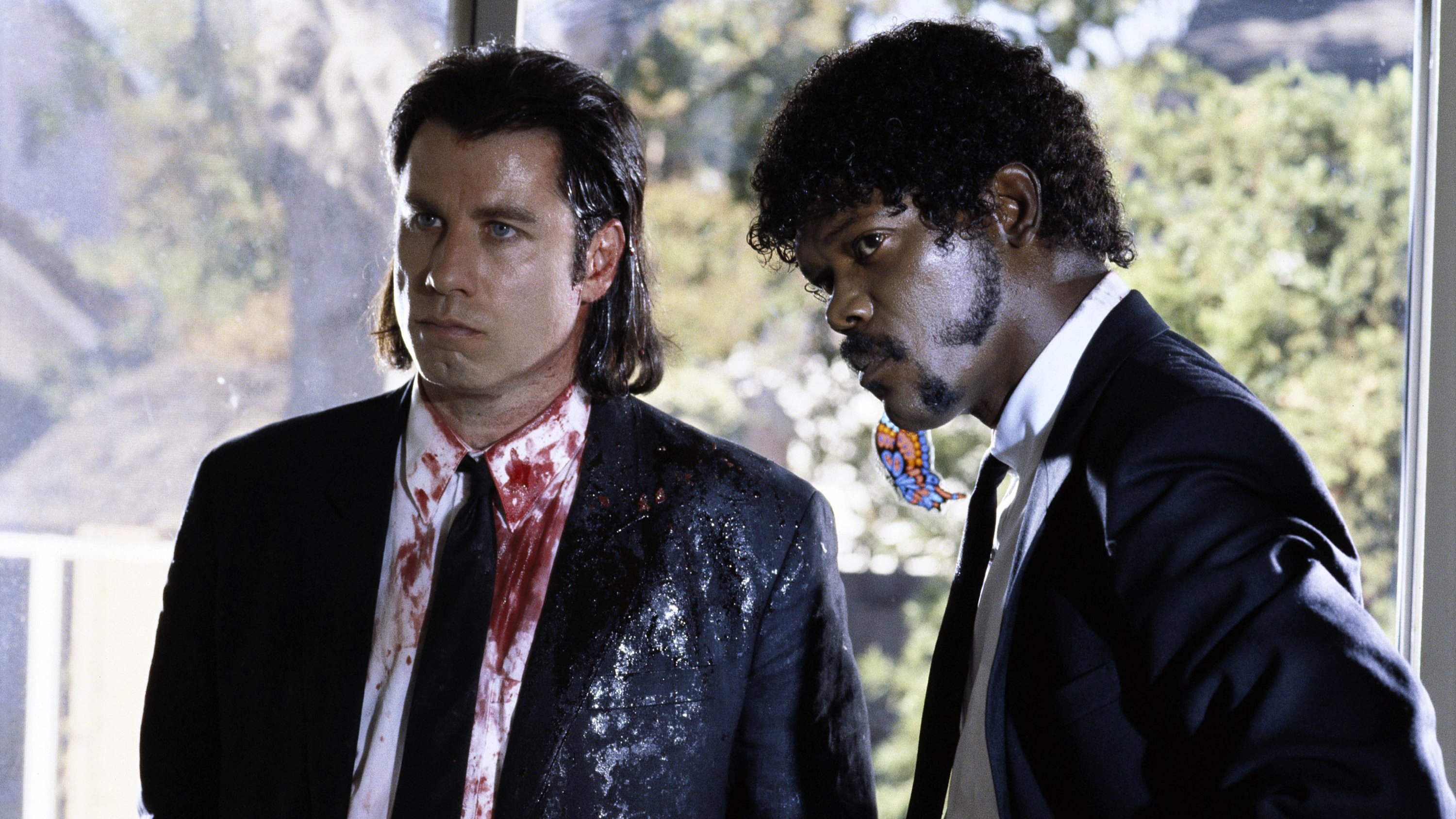
The performances become particularly valuable when manageable trouble turns into frantic damage control. Ebert described much of the film’s momentum as people entering difficult situations and making matters worse while attempting to escape them. That is exactly why the aftermath of violence is often more suspenseful than the violence itself. Tarantino is less interested in heroic choreography than in the humiliating practical consequences of impulsive behavior.
Anyone drawn to crime movies in which personality creates more danger than firepower may also enjoy our review of Sexy Beast and Ben Kingsley’s menacing performance. Pulp Fiction is more sprawling and playful, but both films understand that a voice entering a room can be more destabilizing than an explosion.
The coolness has an ethical cost
The film’s control does not make every provocation defensible. Pulp Fiction contains racial slurs, graphic cruelty, drug use and sexual-violence material, often filtered through comedy or flamboyant genre play. Turan argued that it romanticizes its hitmen and objected to its racist language, violence and shock tactics. I do not think that criticism can be waved away as simple squeamishness. The movie wants us to enjoy spending time with people who do appalling things, and its confidence sometimes turns moral instability into another component of its cool image.
That discomfort is partly productive. Jules’s developing moral argument gains force because it emerges from a world that has treated violence as routine labor. The film is alive to the gap between the grand language its criminals use and the ugly reality of their conduct. Yet it does not always interrogate that gap with equal seriousness. Sometimes the joke lands, the audience laughs and the cruelty remains primarily an accessory to the style.
The writing can also become indulgent. Portions of the boxer strand stretch their digressions until the film appears more interested in hearing itself talk than in sharpening character or suspense, a weakness Turan likewise identified in some extended passages. These moments do not derail the movie, but they expose the risk built into Tarantino’s approach: when every conversational detour is treated as an event, a few begin to feel pleased merely to occupy the room.
Still, the indulgence is limited rather than fatal. At about two and a half hours—the precise runtime differs among major listings—the film has room to wander, but its circular design keeps pulling those wanderings back toward consequence. I can feel it admiring its own performance, yet I am usually admiring the performance too.
Pulp Fiction remains essential, confrontational viewing
Pulp Fiction endures because its surface pleasures are supported by rigorous construction. The quotable dialogue changes power inside scenes. The nonlinear editing changes how choices register. The performances turn genre figures into immediately recognizable personalities, and the crises replace glamorous action with escalating panic. What initially resembles a loose collage gradually reveals itself as a carefully closed circuit.
Its swagger should not be confused with innocence. The racial language, brutality and sexual-violence material remain substantial barriers, while the comic treatment of cruelty sometimes feels self-satisfied rather than probing. Viewers sensitive to that material should approach cautiously. But for adults receptive to nonlinear crime stories, dark comedy and dialogue-driven suspense, this is essential viewing. Pulp Fiction does not merely give criminals memorable things to say; it makes every conversation feel as though somebody may not survive the full stop.
References
- PULP FICTION – Festival de Cannes
- AFI|Catalog
- Pulp Fiction movie review & film summary
- Pulp Fiction movie review & film summary
- www.festival-cannes.com
- MOVIE REVIEW : 'Fiction': Quentin Tarantino's Gangster Rap : Sure, the Director Can Write. But Does He Deserve All the Hype? – Los Angeles Times
- Pulp Fiction | Rotten Tomatoes