
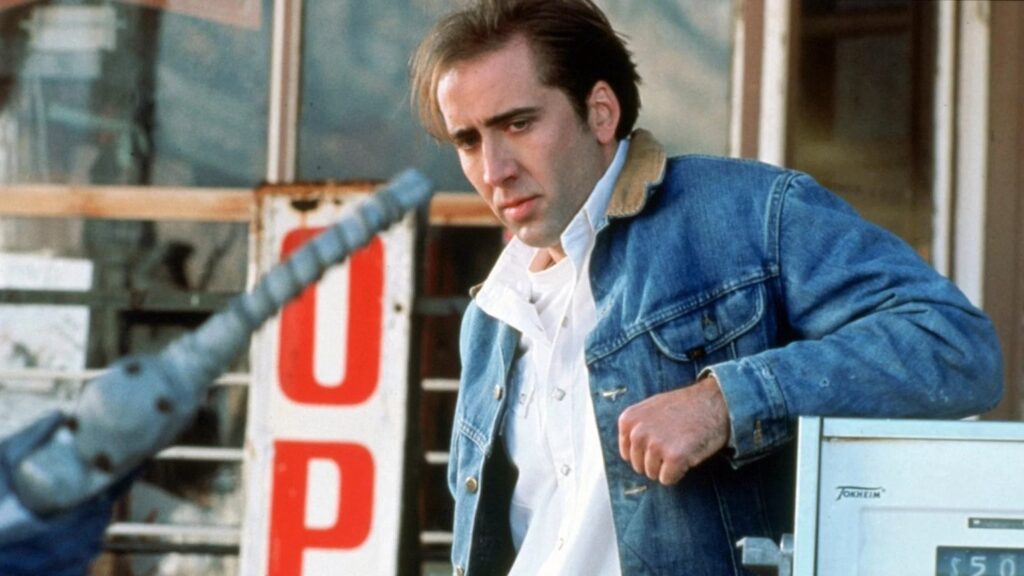
Red Rock West is the kind of thriller that makes economy look effortless. John Dahl takes an unlucky drifter, a murderous misunderstanding and a Wyoming town crowded with competing agendas, then tightens the arrangement until every apparent exit becomes another trap. This Red Rock West review comes down firmly on the side of a superbly controlled Western-noir: it does not reinvent the genre, but it demonstrates how exhilarating familiar machinery can be when every piece clicks into place.
Our verdict A superbly controlled Western-noir that turns mistaken identity, dry humor and familiar criminal archetypes into 98 minutes of tightening suspense, powered by Nicolas Cage’s decency and a wonderfully threatening ensemble.
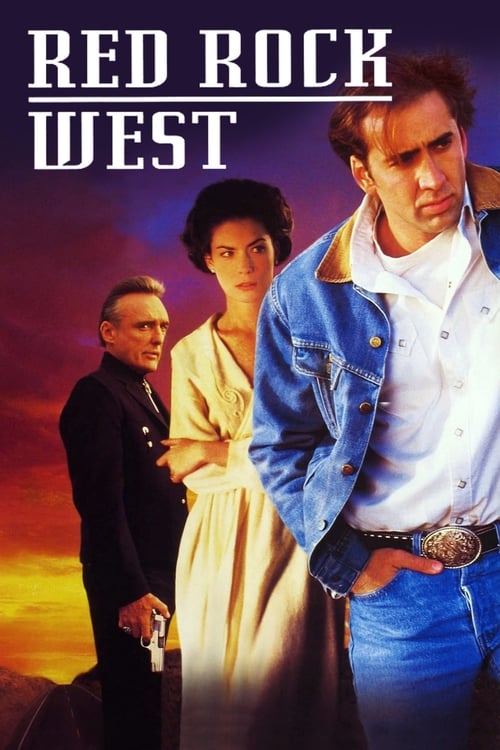
Red Rock West (1993)
Nicolas Cage gives that machinery its essential moral weight. His Michael is an unemployed former Marine who comes looking for work and is mistaken by a bar owner for a contract killer. The intended target complicates matters with a competing offer, and the real hitman eventually enters an already unstable situation. It is an unapologetically elaborate premise, but John Dahl and co-writer Rick Dahl keep its growing complications clear enough that the suspense never collapses into administrative work.
Red Rock West turns one small town into a perfect trap
For me, the atmosphere is the film’s strongest weapon. Red Rock is more than the place where the plot happens; it becomes a closed system governed by money, desperation and catastrophically bad timing. Michael repeatedly tries to put the town behind him, only for another decision or discovery to fold him back into the same mess. The running attention paid to arrival and departure signs turns his struggle into a dry visual joke while making Red Rock feel increasingly inescapable.
In his contemporary review of Red Rock West, Roger Ebert also emphasized those signs and the absurd difficulty of simply leaving town. That period observation remains useful because it identifies what distinguishes Dahl’s direction from routine potboiler efficiency: geography becomes a form of pressure. The movie does not need to make Red Rock look supernatural or overtly nightmarish. It is frightening precisely because the place remains ordinary while Michael’s options steadily disappear.
The Western and noir elements strengthen each other rather than fighting over the movie. Michael has the solitary, economically stranded quality of a Western wanderer, but he enters a noir structure built from concealed motives, hired murder and dangerous bargains. The open-road promise of the Western is present only to be frustrated. Michael can see a way out, but reaching it requires navigating people who all believe they understand the game better than he does.
That contrast gives the film more personality than its stock ingredients might suggest. MovieBunker’s discussion of The Locksmith as a neo-noir redemption story covers another crime film built around a morally pressured protagonist, but Red Rock West is leaner, colder and less sentimental. It treats decency not as a guarantee of redemption but as an inconvenience Michael must keep choosing while surrounded by easier, uglier alternatives.
Cage’s restraint gives every twist a moral cost
A plot this intricately engineered needs a protagonist who feels like more than a token being pushed around the board. Cage supplies exactly that. Michael is outmatched and frequently forced to perform confidence before he understands the situation, but he is not merely a helpless passenger. His attempts to behave ethically give him agency, even when those decisions make his predicament worse.
Cage is impressively restrained here, particularly for viewers who mainly associate him with his most volcanic performances. That control suits Michael. He must project competence to people who might kill him if they detect uncertainty, so Cage keeps shifting between outward assurance and private alarm. We can sense Michael thinking through the next move without the performance becoming a series of showy calculations.
The result is a decent protagonist who never becomes dull. Michael’s morality is active, difficult and frequently impractical. Every new offer tests what he is prepared to do to escape, while every refusal closes another easy route. A less principled lead could simply choose the most profitable betrayal, but Michael’s reluctance gives the criminal mechanism friction. The plot matters because its twists keep becoming decisions.

That is the crucial difference between a clever thriller and one worth caring about. Red Rock West would still be entertaining as a chain of reversals, but Cage makes each reversal carry a human cost. Michael is not interesting because he is innocent in some abstract sense. He is interesting because maintaining that decency requires improvisation in a place where nearly everyone else treats morality as another negotiable price.
Four performances create four different kinds of danger
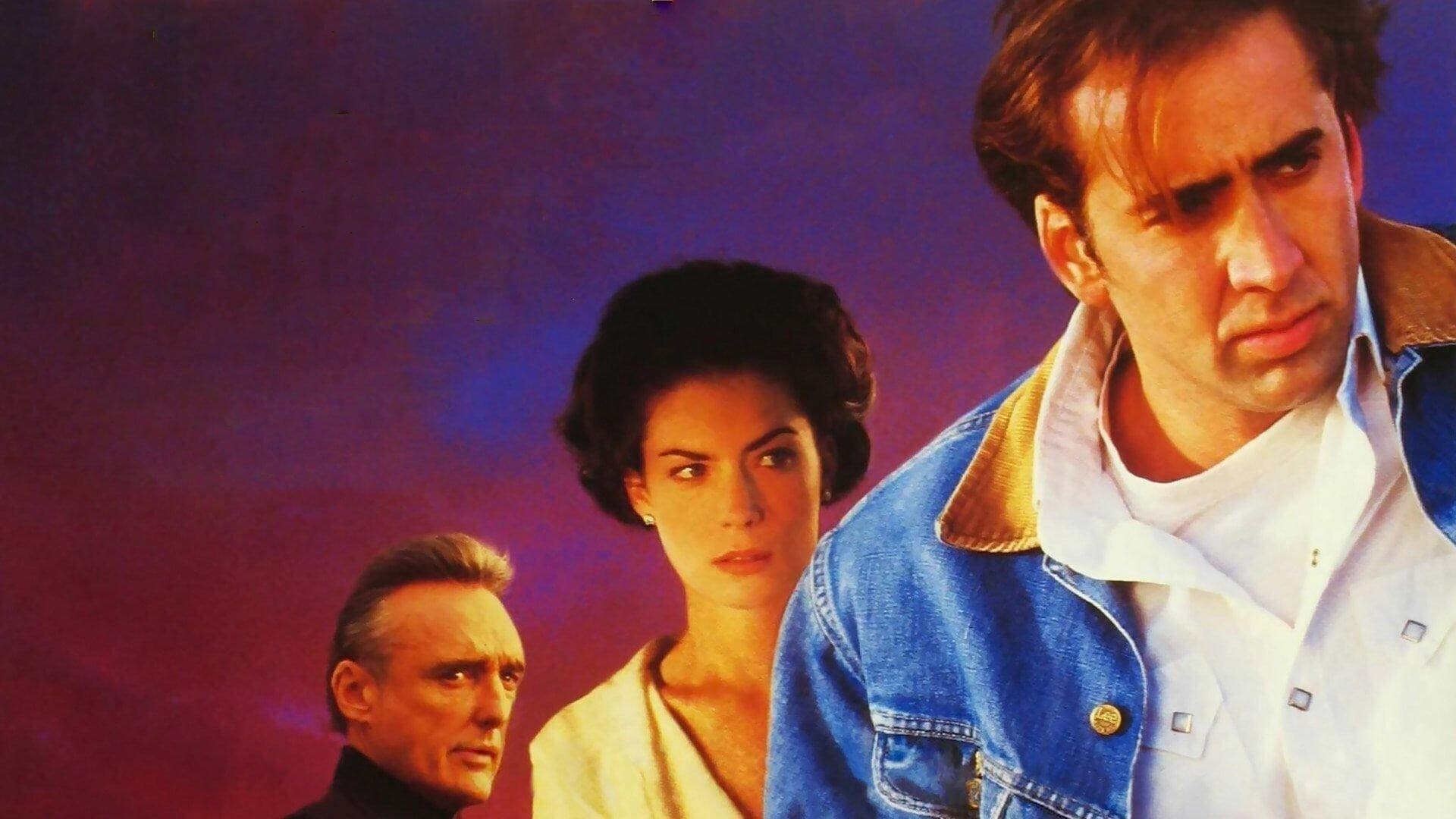
The supporting cast keeps the threat enjoyably unpredictable. J.T. Walsh gives Wayne a reasonable, almost businesslike menace. He rarely needs to advertise villainy when calm certainty is more unnerving. Lara Flynn Boyle keeps Suzanne’s motives difficult to read, allowing vulnerability, calculation and self-preservation to occupy the same space. Dennis Hopper’s Lyle brings smiling instability—the kind of cheerfulness that makes a threat worse because the man delivering it appears delighted to be involved.
These are recognizable noir figures, but the performances prevent them from collapsing into one generic register of treachery. Wayne’s danger is controlled, Suzanne’s is elusive and Lyle’s is volatile. Michael must therefore adjust to a different pressure in each encounter. Rather than disguise its archetypes, the movie finds distinct energies within them, which is exactly the right strategy for a thriller so committed to the pleasures of genre.
Hopper could easily have overwhelmed the picture, but Dahl uses his instability as an accelerant rather than the entire show. Lyle may be the character most likely to seize attention when he appears, yet Cage remains the center because Michael’s responses determine the emotional temperature. Hopper makes the situation more dangerous; Cage makes the consequences matter.
Boyle is strongest when Suzanne remains an uncertain criminal presence. The weaker element is her personal chemistry with Cage. Their shared material does not generate the same charge as the suspicion surrounding Suzanne, leaving Cage to carry more of the connection than the relationship itself does. It is a real limitation, although the film moves too quickly—and Boyle preserves too much ambiguity—for it to do serious damage.
The plot gets tangled without losing its shape
Red Rock West runs for 98 minutes, and that compact length is central to its impact. There is little opportunity for the suspense to dissipate between offers, discoveries and reversals. Dahl introduces another complication whenever Michael appears close to understanding his position, but he never confuses escalation with random noise. Each turn grows from the initial mistaken identity and from characters pursuing clear, incompatible interests.
The pacing is especially satisfying because the movie knows the difference between complexity and bloat. New motives do not arrive merely to extend the story; they alter Michael’s understanding of the danger and force another choice. The screenplay keeps adding moving parts while preserving a clean dramatic line: Michael needs to escape, and every person who might help him has a reason not to.
The black comedy helps maintain that control. This is not a gag-heavy crime comedy, and the movie never pauses to congratulate itself for being clever. Its humor grows from Michael’s worsening circumstances and the ridiculous persistence with which Red Rock pulls him back. The joke is not that the danger is fake. The joke is that leaving town should be the simplest thing in the world, yet it becomes a task of almost mythic difficulty.
Dahl’s discipline makes the film an interesting companion to more overt Western stories about men trapped by obligation. MovieBunker’s review of 3:10 to Yuma considers a larger and more action-driven version of that pressure. Red Rock West operates on a smaller scale, using uncertain identities and competing bargains rather than spectacle. Both understand that suspense becomes stronger when leaving would be easier physically than morally.
Familiar noir machinery is both the pleasure and the limitation
The major reservation cannot be separated from the movie’s appeal: Red Rock West is built from well-worn parts. The unfortunate drifter, femme fatale, hired killing and accumulating double-crosses all belong to an established noir vocabulary. Even a favorable viewer can see the gears moving. Anyone resistant to contrivance or looking for strict psychological naturalism may find the plotting conspicuously mechanical. A contemporary Screen Slate assessment preserved by Rotten Tomatoes similarly described it as a potboiler dependent on the appeal of its twists.
I do not think that familiarity diminishes the film much, because Dahl’s achievement lies in arrangement rather than invention. He understands when to introduce another motive, when to let a threat linger and when to send Michael toward what looks like an exit. The construction is visible, but so is the pleasure of watching it operate with precision. A watch does not become less impressive because you know it contains gears.
More importantly, the genre conventions create expectations that the performances can manipulate. We recognize Wayne, Suzanne and Lyle as types, but their different methods of applying pressure keep Michael—and the audience—from settling into a comfortable rhythm. The screenplay may not offer radical novelty, yet it extracts maximum tension from the question of which familiar danger will strike first.
A compact neo-noir worth seeking out
Red Rock West is essential viewing for fans of compact neo-noir, modern Westerns and crime thrillers that value momentum over sprawl. Its plotting is complicated without becoming shapeless, its humor emerges naturally from desperation, and its ensemble offers several sharply differentiated flavors of menace. Most importantly, Cage gives the film a protagonist whose stubborn decency transforms a clever narrative trap into a moral one.
Viewers demanding realism at every turn may resist the abundance of offers, coincidences and betrayals. Everyone else should enjoy how confidently Dahl winds familiar genre components into a suspense machine. Red Rock West does not reinvent noir, but it proves that reinvention is not always necessary. When the atmosphere is this strong, the performances this well matched and the trap this satisfyingly tight, precision becomes its own kind of originality.