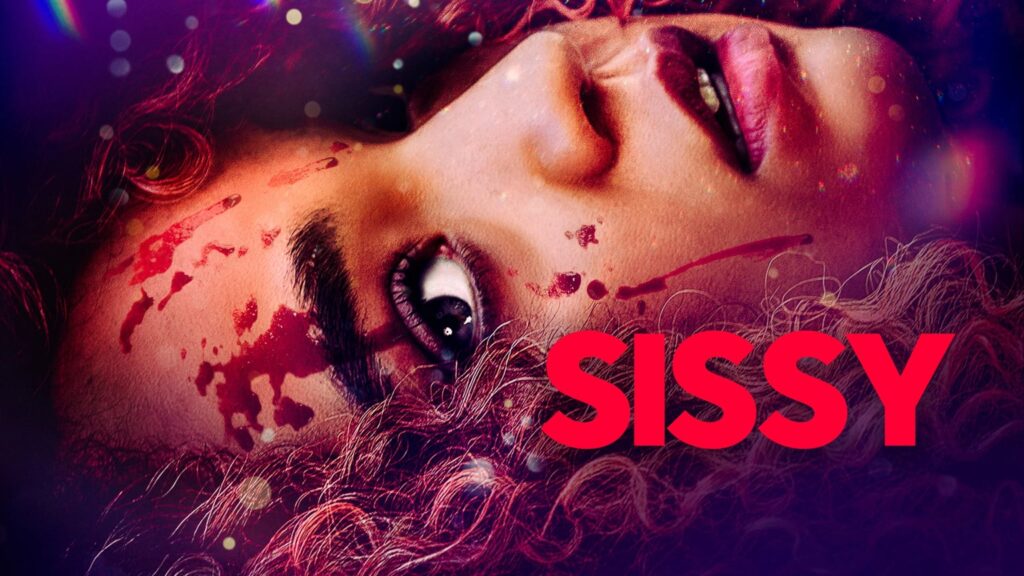
Sissy understands that the language of wellness can conceal almost anything. Confidence mantras, carefully arranged content and reassuring declarations about emotional safety give Cecilia a polished identity, but they cannot contain the humiliation, loneliness and anger underneath. That tension makes this Sissy 2022 review an easy recommendation: Hannah Barlow and Kane Senes have made a viciously funny influencer slasher in which self-care becomes self-deception, social discomfort becomes a weapon and audience identification becomes genuinely dangerous.
Our verdict Aisha Dee anchors a viciously funny, psychologically slippery influencer slasher that turns social discomfort into tactile carnage. Its satire occasionally reaches further than it can develop, but the film’s nerve, ambiguity and grotesque energy make it an easy recommendation.
Sissy (2022)
The film does not work merely because it mocks influencers, although it does that with an enjoyably sharp edge. Its real achievement is Aisha Dee’s performance as Cecilia, a character whose vulnerability and culpability remain locked in constant collision. Dee makes her hurt convincing without turning it into innocence. Just when sympathy begins to feel comfortable, the film adjusts the angle and asks exactly what—or whom—we have decided to excuse.
Aisha Dee makes sympathy feel unsafe
Cecilia is a wellness influencer whose online confidence contrasts with an isolated, insecure offline existence. A chance reunion with childhood friend Emma leads to an invitation to a bachelorette getaway, where Cecilia must again face Alex, a figure bound to painful shared history. Barlow and Senes wrote and directed the 2022 Australian horror comedy, building its remote-weekend setup around a reunion that is loaded long before anyone bleeds.
Dee is the film’s essential weapon because she never settles Cecilia into a convenient category. Her smile can look practiced without becoming entirely false; her need for acceptance can be painfully sincere even when her behavior becomes harder to defend. The filmmakers have said Dee brought additional empathy and ambiguity to the character, and that contribution is visible in the film’s refusal to divide everyone neatly into victim, bully and monster.
That ambiguity matters because Sissy places us unusually close to Cecilia’s unstable point of view. The conventional slasher offers distance from its threat and encourages uncomplicated allegiance with a survivor. Here, identification is part of the trap. We understand why Cecilia feels cornered, but understanding gradually becomes an ethical problem rather than an automatic pardon. The movie keeps asking whether emotional pain explains violence, excuses it or merely gives it a more persuasive story.
This is where Sissy separates itself from a broader field of social-media satires. Like MovieBunker’s review of Not Okay, it recognizes that an online persona is not simply a lie. It can also be an aspirational self-portrait, a coping mechanism and a desperate appeal for validation. Cecilia has built a vocabulary sturdy enough for short videos and fragile enough to collapse under actual confrontation. Every soothing phrase sounds slightly more ominous once the film exposes what it has been holding back.
The awkward build-up cuts deeper than a knife
Before the overt carnage, Sissy weaponizes the misery of being trapped among people who know a version of you that you would rather delete. The early encounters are prickly and claustrophobic, with distancing compositions, unsettling décor and abrasive sound making the getaway feel hostile before the plot openly enters slasher territory. For me, this controlled build-up is the film’s strongest stretch. A pause in conversation can feel like an accusation, while forced friendliness becomes its own grisly endurance test.
The comedy grows from that discomfort rather than from a parade of winking one-liners. Barlow and Senes understand the absurdity of people using therapeutic vocabulary as social ammunition, particularly when everyone involved is protecting a different account of the past. The satire is funny because the language is familiar, but it is also unnerving because the film shows how easily words such as “safe” and “toxic” can become tools for establishing who belongs and who does not.
Brief flashbacks gradually add information to Cecilia’s childhood history rather than delivering a single explanatory speech. Each return revises the emotional balance, complicating what initially looked like a straightforward account of bullying and victimhood. This withholding is not just a structural trick. It reflects the film’s larger argument that memory is edited much like social content: selected, framed and presented until a survivable narrative begins to resemble objective truth.
That psychological slipperiness gives Sissy more staying power than a simple takedown of influencer narcissism. The target is not merely people who film themselves saying empty things. It is the temptation to replace self-examination with branding—to treat identity as a feed that can be moderated until every contradiction disappears. Cecilia’s public language promises control, while the film keeps confronting her with mess, history and other people’s incompatible memories.
The gore is proudly tactile—and gleefully excessive
When Sissy finally lets its violence loose, restraint leaves the building with admirable speed. The bloodshed is tactile, grotesque and pitched to the film’s nasty comic register. Senes said the production aimed to realize the effects as practically as possible with prosthetics artist Larry Van Duynhoven, while at least one major vehicle sequence combined practical work with visual effects. The filmmakers’ discussion of Sissy’s effects and influences helps explain why the damage has such messy physical personality rather than the weightless cleanliness that can flatten digital gore.
The effects are not decorative additions to a sober psychological thriller. They are punchlines, eruptions of suppressed hostility and reminders that the polished surface was always doomed to split. Fans of graphic Australian horror comedy should have a wonderful time. The film shares some genre territory with The Menu, another 2022 horror satire that turns social performance into escalating punishment, but Sissy is more intimate, more emotionally slippery and considerably more interested in making its protagonist difficult to classify.
There is a tradeoff. Once the carnage takes control, visual audacity sometimes displaces the tighter suspense generated by the earlier social unease. The violence remains inventive and entertaining, but not every escalation carries the same emotional pressure as Cecilia entering a room where she knows she is unwanted. Sissy is scariest when a smile might crack. Once everything else starts cracking too, the film becomes a louder and more conventional pleasure.
Sissy’s satire occasionally reaches beyond its grasp
The film is strongest when it concentrates on curated wellness, private insecurity and the stories people tell to survive humiliation. Its wider references to identity, mental health and online safe spaces are not always developed with equal precision. Those ideas sometimes appear as part of the cultural atmosphere without receiving the attention given to Cecilia’s self-fashioned persona and unresolved rage.
That unevenness does not invalidate the satire, but it reveals its limits. Sissy has a wonderfully firm grasp on the way self-care rhetoric can harden into self-justification. It is less comprehensive when it gestures toward every adjacent conversation occurring online. The screenplay occasionally behaves like a feed itself, pulling more issues into view than a 102-minute horror comedy can meaningfully interrogate.
Still, I prefer its messy ambition to a tidier film that merely points at an influencer and waits for applause. Barlow and Senes allow Cecilia’s loneliness to remain real even when her judgment becomes indefensible. That is the source of the movie’s nerve. Compassion is not presented as a verdict of innocence, and culpability does not erase the wounds that helped shape her. Sissy insists on holding both ideas at once, then covers them in blood.
Sissy is an easy recommendation for horror fans with strong stomachs
Sissy is for viewers who enjoy morally compromised protagonists, cringe-inducing social tension and horror comedy willing to get gloriously disgusting. Anyone seeking restrained violence, uncomplicated heroes or a reassuring friendship story should approach carefully. This is not a warm celebration of healing; it is a film about the terrifying distance between performing wellness and confronting what hurts.
Aisha Dee gives that distance a face the audience can pity, distrust and continue watching even after sympathy becomes uncomfortable. Around her, Barlow and Senes build a slasher with enough visual nerve to satisfy gore fans and enough psychological ambiguity to provoke an argument after the credits. Its broader commentary occasionally outruns its focus, and the later spectacle cannot always match the suspense of its social build-up. Even so, Sissy lands its sharpest point: a perfectly curated identity is still a mask, and masks become dangerous when the person underneath starts believing the performance.
References
- SXSW 2022 Festival Slate Release – FINAL
- Sissy: Horror movie from Australian duo is an entertainingly schlocky parody of influencer culture – ABC News
- Interview: Hannah Barlow and Kane Senes on creating horror film Sissy from a deeply personal space – The AU Review
- Sissy review – influencer horror film is a deranged pleasure to watch | Horror films | The Guardian
- Sissy — Hannah Barlow and Kane Senes | In Review Online
- Sissy (2022) directed by Kane Senes, Hannah Barlow • Reviews, film + cast • Letterboxd