
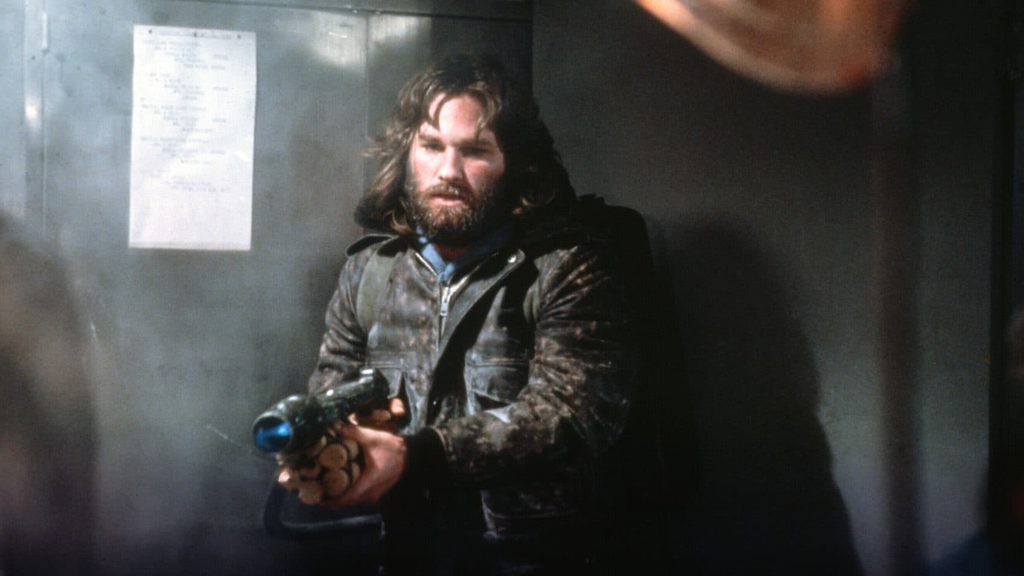
The short version of this The Thing review is simple: John Carpenter’s 1982 film is one of my favorite movies because every part of it feeds the same corrosive fear. Its Antarctic setting closes the exits, its creature destroys confidence in appearances, and its practical craft gives impossible transformations a revolting physical presence. Even its ambiguity feels less like a puzzle waiting to be solved than one final refusal to let the audience relax.
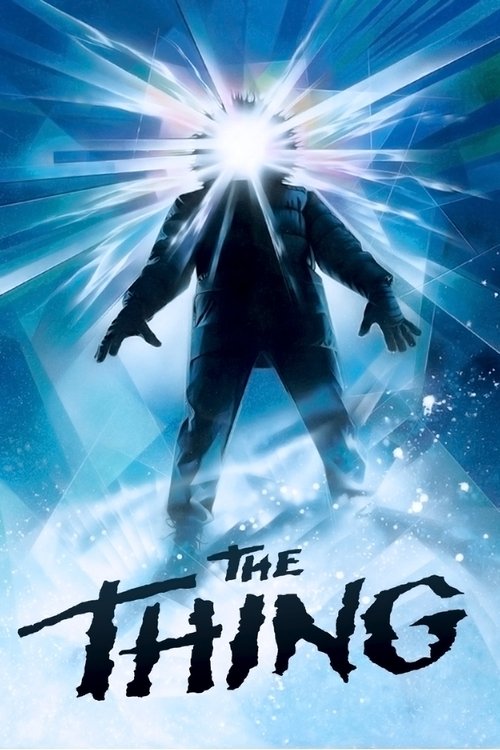
The Thing (1982)
- Runtime
- 109 min
- Genres
- Horror, Mystery, Science Fiction
- TMDB audience score and vote count
- 8.1 / 10 · 8,354 votes
Our verdict
A masterclass in paranoia, practical effects, and slow-building dread.
This is specifically Carpenter’s The Thing, released in the United States on June 25, 1982—not the 1951 film or the 2011 prequel. Universal lists it as a 109-minute, R-rated feature directed by Carpenter, written by Bill Lancaster and led by Kurt Russell. It remains a severe, patient piece of science-fiction horror that trusts atmosphere and mistrust more than easy exposition. For viewers receptive to graphic body horror and emotional coldness, it is essential. For anyone wanting warm character drama or tidy answers, it may feel as welcoming as an Antarctic night.
The Thing review: A monster movie about failed recognition
The spoiler-safe setup is wonderfully efficient. An isolated American research team in Antarctica encounters a hostile organism capable of imitating other living beings. That ability turns a familiar monster-movie question—where is the creature?—into something much nastier: what would count as proof that the person beside you is still a person?
Carpenter understands that imitation is frightening because human cooperation depends on recognition. People need to trust faces, voices and familiar behavior, particularly when confronting a shared threat. The organism contaminates that basic social contract. Every conversation becomes an interrogation, every absence looks suspicious and every attempt to organize the group risks giving an impostor more control.
That is why the film’s paranoia has such staying power. The danger is not limited to creature attacks. It infects the process by which the characters gather evidence and decide what to do. Waiting can be fatal, but acting on incomplete information can be just as destructive. The station therefore becomes a pressure cooker in which cooperation is necessary and increasingly impossible.
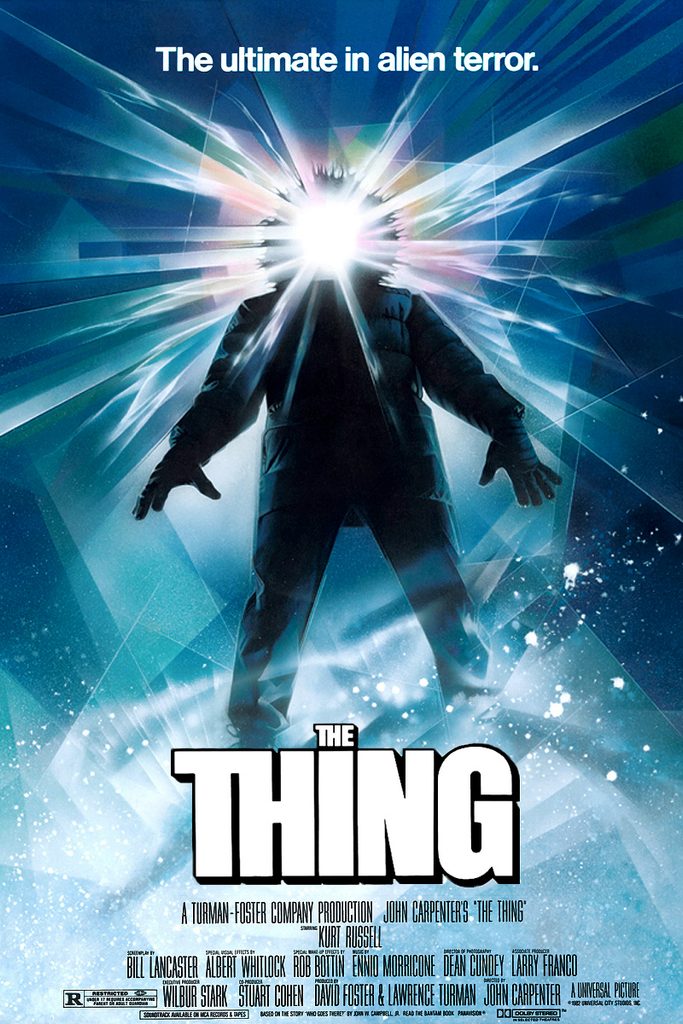
The Antarctic station feels like a real trap
The setting does more than remove the possibility of easy rescue. It gives the film a hostile physical logic. Vast snowfields should suggest openness, yet the weather and distance make them another kind of wall. Inside the station, corridors, doorways and communal rooms repeatedly force the men together. There is nowhere psychologically neutral to stand.
Cinematographer Dean Cundey explained that the production used slow camera movement and unsettling framing to establish unease before overt danger. He also described using anamorphic widescreen compositions to hold multiple characters in the frame while still emphasizing their confinement. Exterior station work near Stewart, British Columbia, and the contrast between cold exterior light and warmer interiors further shaped the environment. Cundey’s detailed American Cinematographer interview offers an unusually useful account of how those choices were made.
That widescreen approach is especially important. Carpenter does not merely isolate characters through close-ups. He often allows the group to occupy the same image, letting viewers inspect everyone while knowing that inspection may prove nothing. Empty space becomes suspicious, but crowded space is worse. A frame full of potential allies is also a frame full of potential threats.
The patient camerawork keeps the film from becoming dependent on shocks. Carpenter lets uncertainty accumulate until ordinary movement carries menace. A character crossing a room or looking toward a doorway can be more unnerving than a conventional jump scare because the film has taught us that information itself is unstable.
Creature effects with weight, texture and purpose
The creature work is famous for good reason, but praising it only as a collection of spectacular practical effects misses its dramatic function. The transformations are frightening because they violently demolish recognizable anatomy. Bodies stop obeying the categories that make them legible. The result is not simply gore; it is the film’s identity crisis made physical.
The production evidence supports specific praise rather than the blanket claim that everything on screen was practical. Rob Bottin’s sculpted creature work was lit to reveal texture while preserving uncertainty, while the film also employed an animatronic contribution from Stan Winston Studio and traditional matte painting by Albert Whitlock. The mixture matters less than the coherent result: flesh appears to possess mass, resistance and moisture, making each violation of the human form feel materially present.
This tactile horror also benefits from restraint around it. The movie does not sustain maximum grotesquerie for its entire runtime. Long periods of watching, arguing and waiting give each eruption more force. The effects become events rather than visual wallpaper. They are not interruptions to the paranoia; they are horrifying confirmation that the characters’ worst suspicions are reasonable.
Viewers interested in a more contemporary, stripped-down form of alien isolation may also enjoy our review of No One Will Save You, while Virus 32 approaches confinement and escalating dread through a very different strain of survival horror.
Kurt Russell leads without turning MacReady into a superhero
Kurt Russell gives the film a center without making it conventionally comforting. MacReady is capable, observant and willing to make decisions, but he is not granted magical certainty. His authority depends on whether frightened people accept his reading of incomplete evidence, and the movie never forgets how fragile that arrangement is.
The wider ensemble is defined primarily through jobs, temperaments and conflicting reactions rather than extensive personal histories. That economy helps the group function as a volatile system: some men challenge, some comply, some panic and others retreat into grim practicality. It keeps the story moving and prevents sentimental backstory from softening the atmosphere.
It is also the film’s clearest limitation. Several characters can be difficult to distinguish beyond their immediate role or response, a concern reflected in parts of the critical reception. The emotional chill serves the premise, but it can reduce attachment. Viewers who need intimate relationships or deep personal arcs to invest in horror may admire the construction without feeling devastated by every loss.
For me, that distance does not make the film empty. It redirects emotion away from individual biography and toward the collapse of the group. The tragedy lies in watching a functioning community lose the ability to recognize itself. Still, this is a deliberate tradeoff rather than a weakness everyone will overlook.
Ambiguity is the point, not missing information
The Thing refuses the reassuring structure in which a sufficiently clever hero identifies the threat, explains every rule and restores order. Its characters can make intelligent choices and still remain trapped by uncertainty. That makes the film unusually honest about its premise: if perfect imitation is possible, absolute reassurance should be difficult or impossible to obtain.
Without entering spoiler territory, the ending preserves that logic. It does not exist merely to launch theories about hidden clues, although the film certainly invites close inspection. Its greater achievement is emotional. It leaves suspicion alive after immediate events have run their course, ensuring the audience carries the same uncertainty that has poisoned the station.
Some viewers will understandably find that lack of closure frustrating. The film is austere, and it offers little cathartic relief from its bleak worldview. Yet explaining everything would diminish the central horror. The Thing lingers because decisive action never becomes synonymous with certainty.
Its divided reception makes sense—even if the film wins the argument
The film’s current reception presents an interesting split. Rotten Tomatoes reports 85% positive reviews from 92 critics and a 92% Popcornmeter from more than 100,000 audience ratings, although the supplied data does not establish whether that audience figure is verified-only or all-audience. Metacritic lists a more divided 57 out of 100 from 13 critic reviews, while IMDb reports 8.2 out of 10 from roughly 536,000 ratings at the time of research.
Those numbers do not settle the film’s quality, but they do capture the fault line around it. The same qualities that make The Thing exceptional—graphic bodily destruction, sparse characterization, a punishing mood and unresolved uncertainty—can also repel viewers. Archived criticism represented on Metacritic includes the objection that gore displaces suspense. I think the opposite is ultimately true: the gruesome imagery gives the suspense consequences, while the long stretches between transformations allow distrust to do most of the work.
Who should watch The Thing?
The Thing is an easy recommendation for viewers who enjoy patient science-fiction horror, confined ensemble tension, physical creature craft and endings that preserve uncertainty. It is particularly effective for anyone who prefers dread built through framing, behavior and incomplete evidence rather than a constant stream of jump scares.
It is a more qualified recommendation for viewers sensitive to graphic transformations or frustrated by emotionally reserved characters. This is not fast, sentimental or interested in explaining its mythology down to the final molecule. Its people are under pressure before they have time to become anyone’s comfortable found family—and the film has no intention of offering a warm group hug afterward.
The final verdict
John Carpenter’s The Thing works because atmosphere, paranoia, creature design and ambiguity are not separate attractions. They are parts of one ruthless argument about what happens when recognition can no longer produce trust. The station becomes a trap, collaboration becomes a gamble and every apparent answer creates another reason for doubt.
Its characterization is spare, its body horror is confrontational and its refusal of neat catharsis will not suit everyone. Those reservations are real, but they also outline the uncompromising creative identity that makes the film endure. Few horror movies align premise and craft this completely. The Thing does not merely place a monster among a group of men; it makes the possibility of a group impossible. That is why its cold never really wears off.