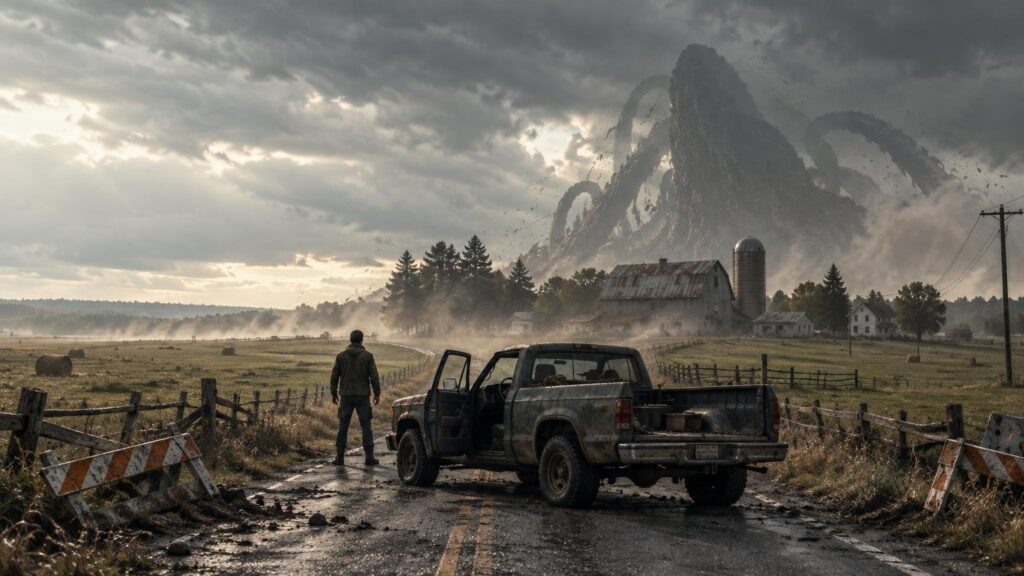
Na Hong-jin’s Hope is most gripping when neither its characters nor its audience can clearly understand what is hunting them. It turns exposed daylight, incomplete information and frightened people with weapons into a formidable suspense machine. When the film eventually trades that uncertainty for a wider science-fiction mythology, it remains exciting but becomes less frightening, less disciplined and much more vulnerable to its uneven visual effects.
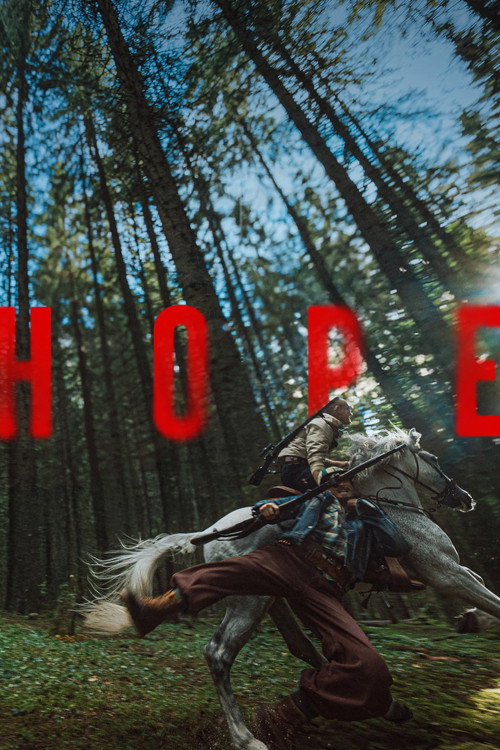
Hope (2026)
- Runtime
- 157 min
- Genres
- Science Fiction, Mystery, Action
- TMDB audience score
- 7.4 / 10 · 88 votes
Our verdict
Na Hong-jin’s Hope is a gripping, unruly collision of creature mystery and science-fiction spectacle. Its daylight dread and muscular action outweigh an overextended final movement and conspicuously uneven digital effects.
That tension defines this Hope 2026 review. I admire the film’s ambition, muscular action and refusal to behave like a tidy monster movie. I also like it considerably more before its mythology catches up with its fear. What begins as an unnerving survival mystery eventually expands into a sprawling genre collision, and not every additional revelation or burst of spectacle improves the experience.
Hope 2026 review: Fear thrives in broad daylight
Written and directed by Na Hong-jin, Hope takes place around Hope Harbor, a fictional South Korean settlement near the DMZ. Police, hunters and residents respond to what initially appears to be an animal attack, only to find themselves caught in a destructive crisis that resists easy explanation. The ensemble includes Hwang Jung-min as police chief Bum-seok, Zo In-sung as hunter Sung-ki and Hoyeon as police officer Sung-ae, alongside Alicia Vikander, Michael Fassbender, Taylor Russell and Cameron Britton.
The setup is effective because Na does not treat uncertainty as empty teasing. The film reportedly withholds a clear view of the threat for nearly an hour, but that delay has a dramatic purpose: pursuit becomes frightening before the pursuer can be neatly categorized. A distant movement, an interrupted response or a character looking toward something the camera will not fully disclose carries more tension than a conventional monster reveal. Hope understands that identification can be comforting. Once the audience knows what it is looking at, fear has boundaries.
Daylight makes that strategy even sharper. Horror often uses darkness to conceal danger, but Hope stages much of its early dread in open rural spaces where visibility should offer reassurance. It does not. Roads, fields and exposed terrain instead make the characters seem easier to track, with few obvious places to hide and no clean separation between safety and danger. The film creates the unpleasant feeling that everyone can see just enough to panic and not enough to make a sensible decision.
That atmosphere is the film’s strongest achievement. Na turns confusion into a shared condition rather than a temporary obstacle for one heroic lead. The result belongs comfortably among MovieBunker’s selection of unforgettable South Korean horror movies and thrillers, but its particular flavor of dread comes from how quickly communal anxiety becomes communal danger. People do not simply flee the crisis. They misread it, escalate it and bring their own assumptions about guilt and protection into every confrontation.
The ensemble makes panic feel communal
Hope’s ensemble structure is crucial because this is not a crisis that can be reduced to one chosen savior. Bum-seok brings persistence and institutional responsibility, while Sung-ae responds with more direct, decisive agency. Their contrasting approaches keep the film attached to questions of competence: who assesses danger clearly, who acts under pressure and who mistakes authority for control?
Hwang Jung-min gives Bum-seok the necessary weight without turning him into an invulnerable action figure. His persistence matters precisely because certainty remains unavailable. Hoyeon’s Sung-ae brings a different energy, cutting through hesitation when the situation demands movement. The characters are not merely waiting for the next effects sequence; their decisions alter the emotional temperature of the chaos.
Na also complicates the audience’s instinct to divide everyone immediately into protectors and threats. The expanding conflict keeps changing the meaning of defensive action. A frightened group can become dangerous while believing it is behaving rationally, and apparent protection can carry its own destructive consequences. Hope does not abandon the pleasures of a creature feature, but it refuses to pretend that the creatures are the only volatile element in the landscape.
That idea gives the film more thematic bite than a straightforward hunt narrative. There are traces of the pressure-cooker masculinity and tactical confidence associated with films such as the original Predator, but Hope is more suspicious of anyone who thinks the crisis can be solved by identifying a target and firing at it. Its people are not foolish because they feel fear. They become frightening when fear hardens into certainty.
The action has weight even when the effects do not
Once Hope accelerates, the action has a welcome physical charge. Production reporting documents police-car chases, horseback movement, gunfights and an array of specialized equipment, including drones, cranes, cable cameras, a camera-arm e-bike and a remote-control camera car. A detailed account of Hope’s chase production shows how much of that momentum was planned around elaborate live-action staging rather than manufactured entirely after the shoot.
That effort registers on screen. Vehicles occupy real roads, bodies move through physical environments, and the camera frequently seems to be fighting to keep up rather than calmly observing from an impossible digital perch. The chases have speed because they retain geography. Even when the film becomes extravagant, there is usually a comprehensible relationship between a moving character, the pursuing danger and the terrain separating them.
For me, this physical conviction is what keeps the larger passages alive. Hope can be unruly, but it rarely feels timid. Gunfire, pursuit and sudden changes in momentum arrive with force, while the mobile camerawork communicates panic without reducing every encounter to visual soup. There is a real difference between frantic action and incoherent action, and Na mostly stays on the right side of it.
The digital creatures are another matter. Vikander and Fassbender’s alien performances were created using motion capture, with visual effects essential to the characters’ final realization and integration. Some of that work is effective, particularly when movement matters more than surface detail. Elsewhere, the creatures sit conspicuously apart from the locations and people around them. Their texture and weight can feel unfinished, breaking the spell at exactly the moments when the film wants its spectacle to become overwhelming.
Rough effects do not automatically sink an ambitious genre film, and Hope has too much personality to be dismissed as a failed polish exercise. Yet the inconsistency matters because the practical chases establish such a convincing physical standard. When a police car tears through a location, the danger has weight. When a digital figure appears insufficiently integrated into that same world, the contrast is difficult to ignore. The movie asks us to fear impact while occasionally showing us an image that barely seems to touch the ground.
Bigger mythology brings diminishing returns
Hope’s shift from creature mystery toward alien science fiction is not a betrayal of its opening. The widening frame is part of the point: the crisis is stranger and morally less convenient than the characters initially assume. I admire Na’s willingness to let one genre infect another rather than delivering the expected sequence of attacks, explanations and final confrontation.
The problem is one of proportion. At approximately 156–157 minutes, Hope demands patience, and its later movement does not consistently reward that investment. Once the threat becomes more explicit, escalation sometimes feels like accumulation rather than deepening. More mythology, more conflict and more destruction do not always produce a richer understanding of the characters or the ideas already in motion.
The controlled opening makes every fragment of information feel dangerous. The later film often explains through expansion: the world grows, the science-fiction framework asserts itself and one large sequence follows another. That approach supplies scale but reduces the anxious negative space that made Hope distinctive. Mystery is not inherently superior to explanation, but here the mystery generates more imaginative pressure than the answers can sustain.
The pacing problem is therefore not simply that Hope is long. Plenty of long films earn their duration by changing emotional register, complicating relationships or allowing consequences to settle. Hope sometimes confuses continued motion with development. Its final stretch still contains strong images and forceful action, but I became more aware of the machinery—another escalation, another layer, another attempt to top what came before.
Even so, I would rather watch Na overreach than settle for a generic creature feature. The genre fusion gives Hope a distinct identity, and its messiness comes from genuine creative appetite rather than franchise bookkeeping. The frustration is that the film has already found something rarer than scale: a way to make bright open spaces feel unsafe. It does not need to keep shouting after that whisper has worked.
Hope is unruly, exhausting and worth the risk
Hope is an ambitious, rough-edged collision of creature horror, survival thriller and alien science fiction. Its best passages transform incomplete information into sustained dread, while its ensemble makes panic feel social rather than conveniently heroic. The action has real momentum because so much of it is attached to physical movement, legible terrain and carefully planned camera work.
Its weaknesses are equally visible. The digital creatures cannot always match the conviction of the location-based action, and the extended final movement dilutes some of the opening’s precision. Viewers looking for a lean monster movie or the seamless finish of a major Hollywood effects production may find the runtime and expanding mythology frustrating.
For viewers willing to embrace a long, volatile genre hybrid, however, Hope is easy to recommend. I prefer the exposed daylight, withheld threat and collective panic of its first movement to the maximalist science fiction that follows, but the film never loses its nerve. Na Hong-jin reaches beyond the cleanest version of his premise and occasionally loses control of it. The result is uneven, yet gripping—and much harder to forget than a safer movie would have been.