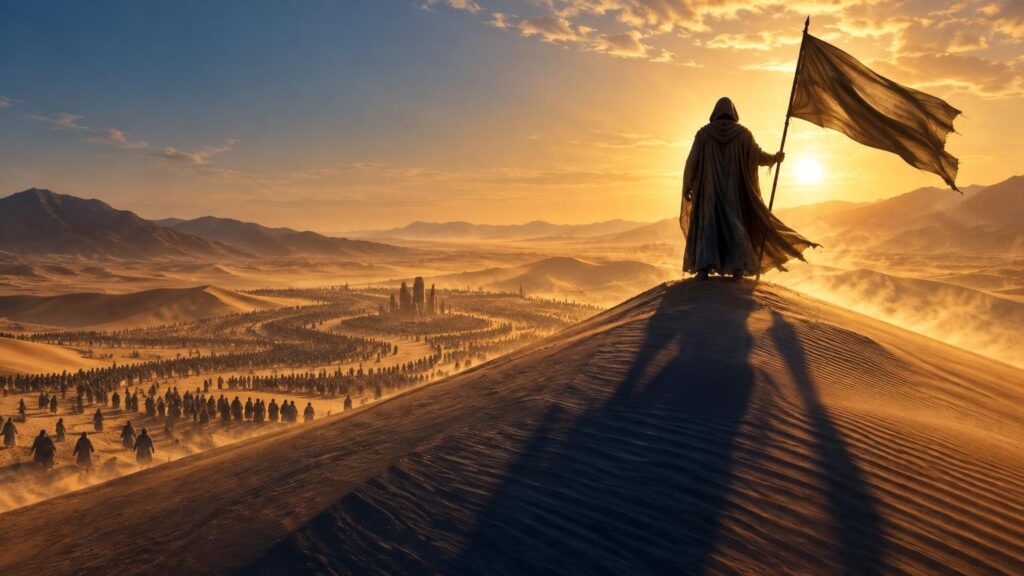
This Dune Part Two review comes down to one unnerving triumph: Denis Villeneuve has made a colossal science-fiction spectacle in which every victory feels increasingly like a warning. The battles are exhilarating, the desert imagery is overwhelming and Paul Atreides’ growing authority can be genuinely thrilling. Yet the film never lets that thrill remain innocent. It understands that a leader’s ability to inspire people can also become his most dangerous weapon.
Our verdict Denis Villeneuve turns monumental spectacle into a troubling study of charisma, revenge and manufactured destiny. The final political rush leaves some characters behind, but the staggering atmosphere, lucid action and central tension between Paul and Chani make this essential science fiction.
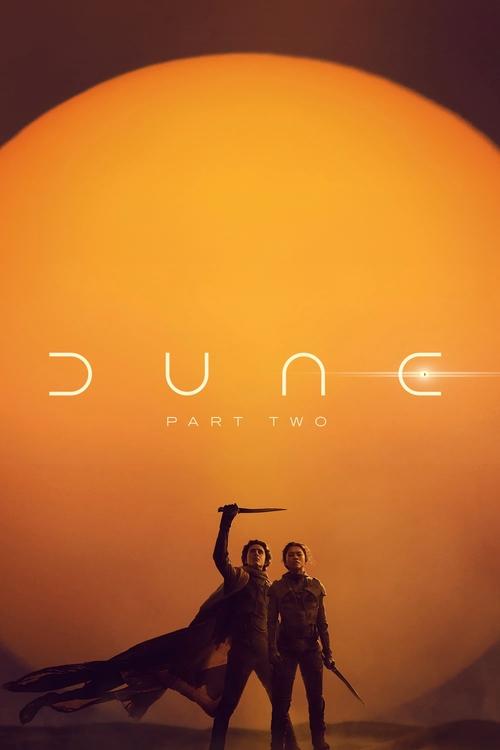
Dune: Part Two (2024)
That tension is why Dune: Part Two earns its intimidating scale. Villeneuve and co-writer Jon Spaihts continue their adaptation of Frank Herbert’s novel with a 166-minute film that follows Paul and Lady Jessica into Fremen society, where grief, revenge, faith and imperial politics begin closing around him. The movie is long, dense and occasionally too hurried when it matters most, but this is essential big-screen science fiction: lucid in its action, intimidating in its atmosphere and deeply suspicious of the heroic mythology it knows how to manufacture.
Dune Part Two review: spectacle with a dangerous purpose
Many blockbusters use size as an argument in itself. Here is the army, here is the explosion, here is the digital skyline that cost more than a small nation’s transport budget. Dune: Part Two is different because its scale has dramatic direction. The expanding images track Paul’s expanding influence, and the louder the film becomes, the less comfortable his ascent feels.
Arrakis does not function as handsome scenery behind the actors. It presses against them. The distances make individuals appear vulnerable, but they also turn gatherings into statements of collective power. Harsh light strips faces and bodies down to silhouettes; enormous machines seem both technologically dominant and absurdly exposed. For me, the atmosphere is the film’s strongest achievement because it gives political power a physical texture. Authority is expressed through who occupies the frame, who is dwarfed by it and who can command the attention of a crowd.
Cinematographer Greig Fraser and Villeneuve designed the film around the taller IMAX 1.43:1 frame while protecting its compositions for other exhibition formats. Their approach also combined digital machinery with practical work on location. For one large harvester sequence, the vehicle was computer-generated, but the crew used cranes, telehandlers and physical solids to cast moving shadows across the real desert light. The American Society of Cinematographers’ production account That hybrid method explains why the film’s largest images retain unusual weight. The effects are not simply pasted over the landscape; light, dust and movement make the machinery feel as though it must obey the same hostile environment as the people.
This is a movie worth seeing on the largest, best-sounding screen available, not because spectacle automatically requires premium projection but because Villeneuve uses sensory scale as part of the argument. The rumbling aircraft, oppressive silence and sudden eruptions of violence make Arrakis feel larger than anyone’s plan for it. Even when the mythology grows complicated, the physical experience remains remarkably clear.
Paul’s transformation is thrilling for all the wrong reasons
Timothée Chalamet has the difficult job of making Paul’s transformation persuasive without reducing it to the familiar blockbuster upgrade from uncertain boy to confident savior. His performance works through controlled shifts. Early hesitation gives way to tactical command, and tactical command gradually becomes an ability to use the expectations surrounding him. Chalamet makes that authority magnetic, but he also allows calculation to harden underneath it.
The crucial point is that Paul does not merely discover a destiny waiting for him. He learns how destiny can be performed, interpreted and weaponized. Revenge gives him emotional momentum, while prophecy supplies a language capable of turning private pain into collective purpose. Villeneuve stages this process with enough grandeur that we understand why people might follow Paul, then introduces enough unease that cheering him feels morally compromised.
That balance is hard to maintain. Make Paul too obviously sinister and the political seduction collapses. Make him a conventional hero and Herbert’s warning disappears beneath the sand. Chalamet finds the productive middle ground. His growing command is exciting because the film allows it to be exciting; the alarm comes from recognizing how quickly competence, charisma and historical grievance can be assembled into permission for almost anything.
Chani gives the prophecy someone to argue with
Zendaya’s Chani is indispensable because she refuses to experience Paul’s rise as uncomplicated fulfillment. She supplies warmth and romantic energy, but she is not confined to being an emotional reward waiting at the end of his transformation. Her skepticism gives the film a perspective from inside the population being asked to surrender political agency to a supposedly exceptional outsider.
Zendaya plays that resistance with directness rather than ceremonial solemnity. Chani can be affectionate, angry, amused and suspicious without any of those qualities cancelling the others. The relationship works because attraction does not erase disagreement. As Paul becomes more fluent in the role others have prepared for him, Chani becomes increasingly important as someone capable of seeing the person and the political symbol at the same time.
The film’s central emotional tension therefore grows from competing versions of Paul. To some, he is evidence that prophecy is becoming history. To Chani, he remains a man making choices, which means he can still be held responsible for them. That distinction prevents the messiah narrative from floating away into abstract lore.
It does not entirely resolve the story’s white-savior tension. Dune: Part Two is clearly suspicious of Paul’s ascent, but its imagery remains powerfully invested in his exceptionalism. He receives the entrances, declarations and monumental compositions of a mythic hero even while the story asks us to fear what that mythology can accomplish. I find the contradiction productive rather than fatal, although skepticism alone does not absolve the film of the fantasy it stages so magnificently.
The action has geography, weight and personality
Dune: Part Two is enormous, but its action rarely becomes anonymous. The guerrilla attacks are built around objectives, movement and readable terrain rather than frantic cutting. We understand where danger is coming from and why a tactical response works. That clarity turns scale into suspense: the larger machinery may possess overwhelming force, but the desert belongs to fighters who understand how to use space.
The intimate violence is equally effective because it preserves bodily danger. Chalamet and Austin Butler trained separately with a Kali instructor for the film’s central late-stage duel, an approach that helped give the two combatants distinct physical styles. Associated Press reporting on the cast’s preparation The result feels like a collision between personalities rather than mandatory franchise swordplay. One fighter’s control meets another’s aggression, and the choreography communicates character before it supplies spectacle.
Butler’s presence also gives the film a sharper, more volatile charge. Where Paul’s danger is increasingly tied to discipline and persuasion, his opponent projects instability and appetite. Villeneuve does not need extended explanation when posture, rhythm and the willingness to absorb pain make the contrast legible.
This visual directness distinguishes Villeneuve’s approach from adaptations that can become trapped in Herbert’s terminology. Readers interested in how earlier screen versions handled the same density can revisit MovieBunker’s reviews of the 2000 Frank Herbert’s Dune miniseries and its follow-up, Children of Dune. Villeneuve’s great advantage is his ability to translate lore into pressure: ritual, romance, combat and political maneuvering all feel like parts of the same tightening mechanism.
The long build earns its time, but the endgame rushes
At two hours and 46 minutes, the film demands concentration, especially from viewers who have not recently seen Dune: Part One. I nevertheless prefer its controlled build-up to a faster version that would treat Fremen life, Paul and Chani’s relationship, or the spread of belief as connective tissue between action scenes. The duration lets gestures become rituals and rituals become political forces. Momentum gathers rather than merely accelerates.
The reservation is that the final movement speeds up precisely when the consequences deserve more room. Major shifts arrive with tremendous force, but several supporting characters begin to feel like pieces being positioned for the next historical turn. The cast includes formidable performers—Rebecca Ferguson, Javier Bardem, Josh Brolin, Florence Pugh, Christopher Walken, Stellan Skarsgård and Dave Bautista among them—but not everyone receives enough space to become more than a sharply drawn political function.
Compression is especially noticeable because the earlier film is so patient. Villeneuve spends much of the runtime teaching us to watch belief accumulate one gesture at a time, then races through some of the emotional and political fallout. The escalation remains coherent, but coherence is not the same thing as dramatic breathing room. A few additional pauses could have made the cost of Paul’s choices land even harder.
Still, the rushed quality does not undo the structure. The destination feels inevitable because the film has spent so long showing how grief, imperial violence, religious manipulation and personal charisma reinforce one another. What arrives at the end is not a sudden corruption of Paul’s journey. It is the frighteningly logical result of tools he has learned to use.
A science-fiction epic worth surrendering to—and questioning
Dune: Part Two succeeds because Villeneuve refuses to choose between spectacle and suspicion. He delivers the sand, steel, thunder and monumental composition expected from a modern epic, then uses those pleasures to show how easily political danger can look like heroic destiny. I love the film’s scale, but I admire even more its willingness to make that scale morally unstable.
The compressed final stretch and underused supporting figures keep it from feeling completely definitive. Its critique of Paul’s exceptionalism also remains deliberately tangled with the visual excitement of watching that exceptionalism grow. Yet those tensions give the movie something worth arguing about after the sensory impact fades.
Watch Dune: Part One first, accept that the mythology requires attention and choose a large, powerful screen if one is available. For viewers who want science fiction with political weight as well as astonishing craft, Dune: Part Two is essential. It gives us a victory designed to raise the pulse—and then makes us wonder why we were so eager to cheer.