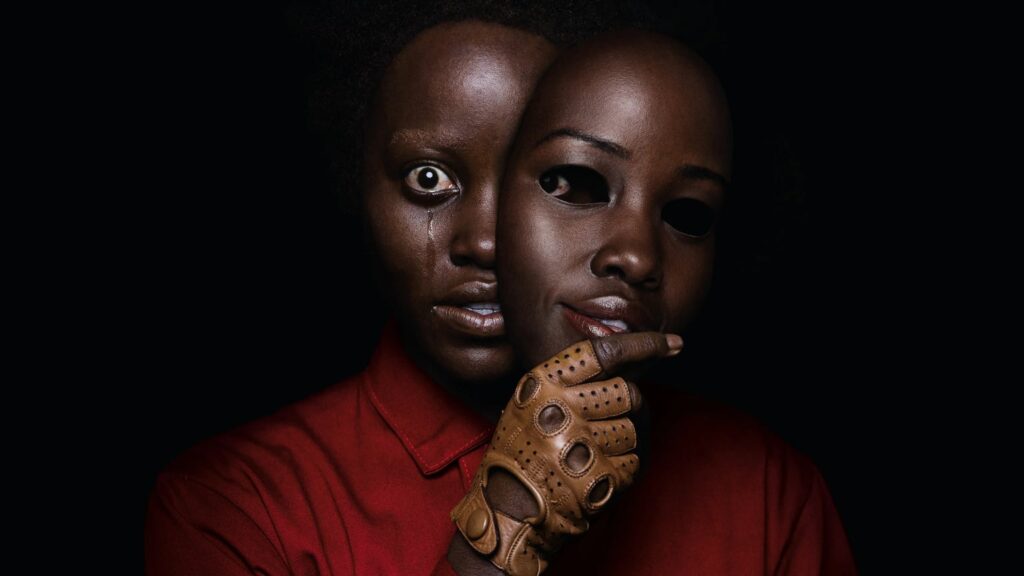
The best thing about Jordan Peele’s Us is also the source of its biggest frustration: it creates a nightmare vivid enough to demand an explanation, then becomes less frightening when it tries to provide one. This Us 2019 review still lands firmly on the side of recommendation because Peele’s control of mood, Lupita Nyong’o’s astonishing dual performance and the Wilson family’s ordinary chemistry all survive the strained literal mechanics of the final movement.
Our verdict Jordan Peele turns a family holiday into a fiercely controlled doppelgänger nightmare. Lupita Nyong’o’s astonishing physical performance and the film’s uncanny imagery outweigh a final stretch that explains too much.
Us (2019)
For me, Us is most frightening before its mythology starts talking. At its peak, this is fiercely controlled psychological horror in which composition, movement and performance turn the familiar into something hostile. It is ambitious, funny in the right places and packed with images that invite interpretation without settling into one tidy answer. Its reach occasionally exceeds its dramatic grasp, but I would rather wrestle with a horror film this strange and provocative than watch a safer one explain nothing because it has nothing to say.
Us builds its nightmare around a believable family
Peele wastes little time establishing the essential setup. Adelaide Wilson returns with her husband and children to a Northern California beach area connected to a childhood trauma. Her unease grows before strangers appear outside the family’s vacation home, only for those intruders to reveal themselves as uncanny doubles of the Wilsons. Written, directed and produced by Peele, the 2019 film runs 1 hour and 56 minutes and positions Adelaide as its psychological center from the beginning.
The setup works because the Wilsons register as a family before they become pieces on Peele’s allegorical board. Their conversational rhythm has the untidy warmth of people who know one another’s habits, irritations and weaknesses. The awkward jokes build affection without turning the movie into a stream of smug punchlines. Production notes describe an ad-lib-friendly approach to these family scenes, while cinematographer Mike Gioulakis cited Jaws as a reference for balancing horror, adventure and comedy.
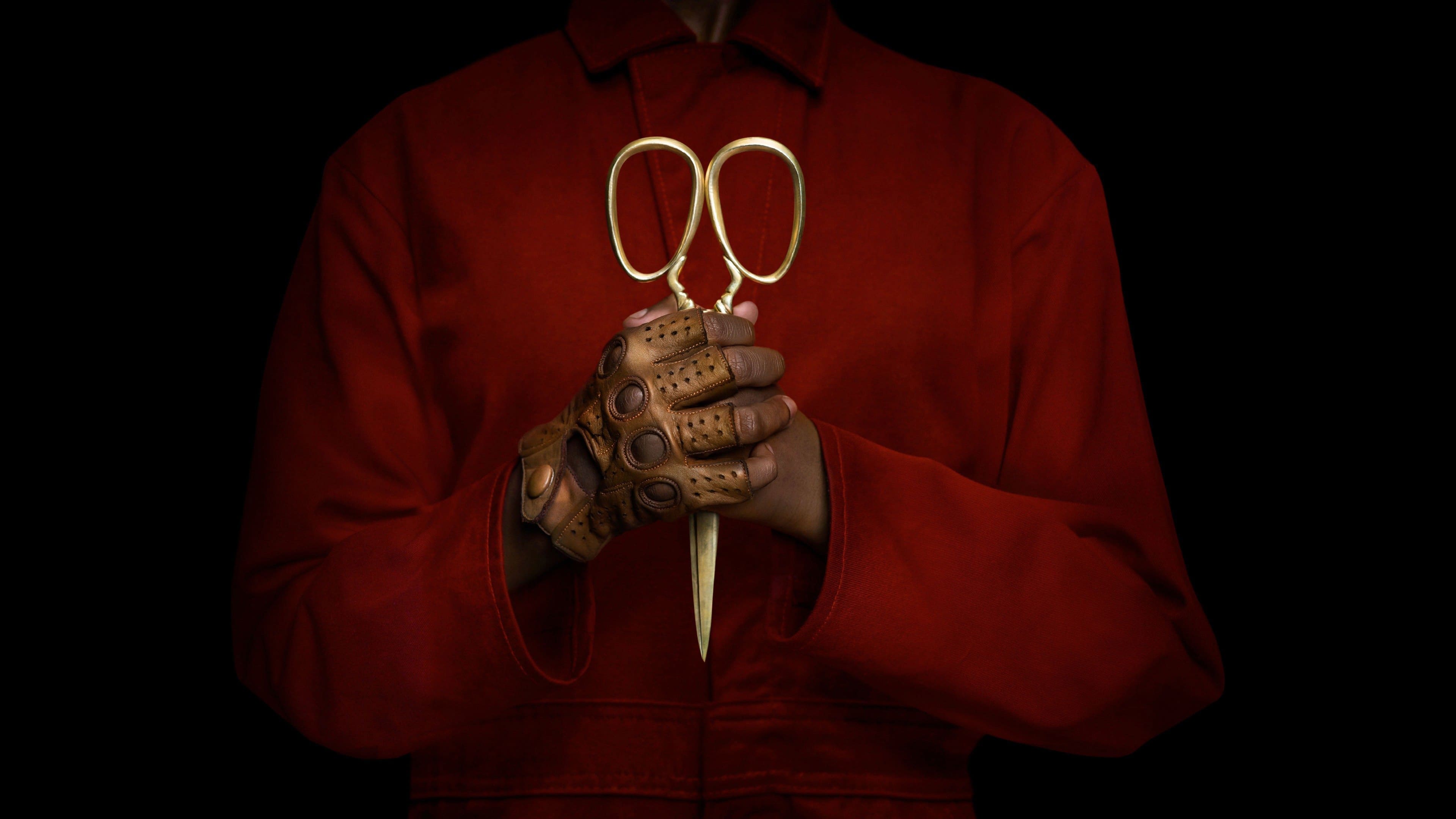
That humor makes the invasion more frightening rather than less serious. Peele gives us a domestic unit worth protecting, so the arrival of the doubles does not feel like an abstract genre exercise. The threat is brutally intimate: the Wilsons are not merely being attacked but confronted by distorted versions of themselves. Every physical contest therefore carries a second anxiety about identity, resentment and the uncomfortable possibility that the enemy understands its target perfectly.
This is where Us distinguishes itself from a conventional home-invasion thriller. The locked doors and immediate danger matter, but Peele keeps widening the emotional meaning of invasion. Viewers drawn to isolated-house suspense may also enjoy the very different approach taken in No One Will Save You, but Us is less interested in escape mechanics than in making recognition itself terrifying.
Lupita Nyong’o makes the doubling frighteningly human
Nyong’o is the film’s center of gravity. Her work as Adelaide and Adelaide’s double is not simply a costume-and-voice trick; she creates two separate physical presences. Posture, vocal control and sharply opposed movement patterns tell us who holds power in a scene before the dialogue does. The antagonist’s strained voice and contorted physicality could have become a collection of horror mannerisms, but Nyong’o gives those choices purpose. She makes the double feel wounded, furious and unnervingly deliberate.
The technical achievement is impressive, but the emotional effect matters more. Nyong’o turns Peele’s sprawling concept into a personal conflict. However elaborate the surrounding mythology becomes, the film remains anchored to two bodies that appear connected yet occupy the world in radically different ways. That contrast makes the premise frighteningly intimate rather than merely clever.
For me, Nyong’o’s embodiment is more persuasive than any verbal explanation the screenplay can offer. She communicates fear, grievance and control through how each character stands, breathes and approaches another person. The screenplay eventually asks language to carry an enormous conceptual burden, but her performance has already expressed the central horror more cleanly: what if the identity you treat as uniquely yours is partly a consequence of circumstance?
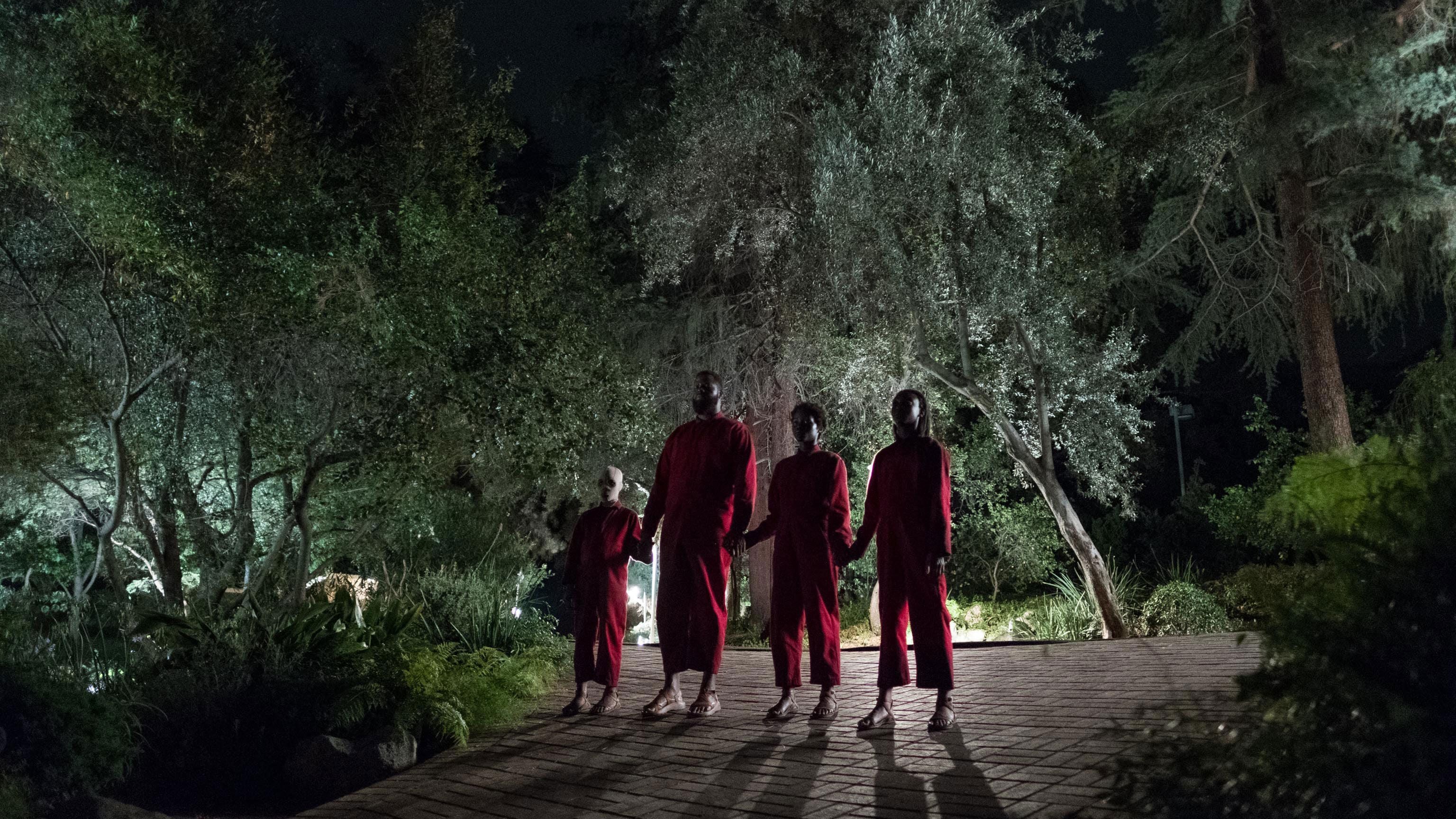
The rest of the Wilson ensemble protects that tension by maintaining the natural family rhythm established earlier. Their reactions keep the film immediate even as its implications expand. Peele understands that doubles are only unsettling when the originals feel specific, and the Wilsons’ recognizable rapport gives every mirrored gesture an extra sting.
The camera makes the doubles feel physically present
Peele and Gioulakis give Us a dark, clean visual language that avoids reducing nighttime scenes to murky confusion. Gioulakis described using lighting and a custom look-up table intended to preserve darker skin tones without introducing an unwanted color cast. The result is darkness with purpose: faces, bodies and spatial relationships remain part of the suspense rather than disappearing into it.
The doppelgänger effect is especially convincing because the production did not treat digital manipulation as the entire solution. According to Gioulakis, the team relied heavily on blocking, doubles, camera placement and locked-off passes, with selective compositing and cleanup used where necessary. Gioulakis’s production interview also describes practical stunt work for a nighttime lake sequence. That performance-and-camera-driven approach gives the confrontations weight. The doubles occupy the frame like people, not visual-effects demonstrations waiting for applause.
Peele’s compositions constantly encourage us to compare figures, positions and movements. A body can be a character, a reflection and a visual clue at once. The discipline of the framing is crucial because Us wants its images to operate on two levels: they must generate immediate suspense while lingering as symbols of division and denied responsibility.
That density makes the film rewarding even when a particular interpretation remains elusive. Like the body-centered identity horror explored in Raw, Us understands that an idea becomes more disturbing when it is expressed through physical behavior rather than delivered as a lecture. Peele sometimes moves away from that principle late in the film, but his strongest images retain their power after the explanations arrive.
The allegory is stronger than the literal mythology
Peele has discussed the title and central conflict across personal, familial and national scales while also framing people as their own worst enemies. Those comments support readings involving social division, resentment and collective responsibility, but Us is better when those ideas remain in tension. The doubles can evoke neglected people, buried selves, inherited inequality or the costs that comfortable lives keep out of sight. No single interpretation needs to flatten all the others.
The film’s ambition becomes a weakness when its nightmare imagery acquires increasingly literal machinery. The later explanation answers enough to encourage practical questions without answering enough to make those mechanics feel airtight. Instead of deepening the fear, some of that information briefly turns the viewer into an auditor of an impossible system. That is not where I want to be during a doppelgänger nightmare, clipboard in hand and wondering how the infrastructure works.
This does not make Us incoherent, and it certainly does not erase its earlier control. The problem is one of emphasis. Peele has already made the doubles emotionally and symbolically legible through performance, staging and repetition. The film does not need every element translated into logistical terms. Its explanation is least convincing when it behaves as though the audience requires a diagram for a nightmare.
The thematic scope can also become diffuse. Us reaches toward individual trauma, family identity, social abandonment and national self-recognition, and not every strand receives equal dramatic force. Yet that excess is also part of what makes the film worth arguing about. Its meanings compete instead of clicking into a single slogan, leaving behind productive unease even when the plot mechanics wobble.
The scares survive the film’s need to explain them
What keeps Us effective is that its best choices do not depend on the mythology being airtight. The Wilsons’ family chemistry establishes what can be lost. Nyong’o gives the conflict a human center. Peele’s blocking and compositions make doubling feel tangible before the screenplay turns it into a system. These elements work together at the level horror needs most: anticipation, recognition and the feeling that something familiar has shifted into the wrong position.
The comedy contributes to that unease because it shows how quickly normal family behavior can persist inside an impossible situation. Peele does not use humor to excuse the danger. He uses it to preserve the Wilsons as recognizable people rather than solemn delivery systems for allegory. Their personalities remain present under pressure, which makes the film more involving than a colder symbolic exercise would have been.
The result is a movie whose imperfections emerge from the same ambition that makes it memorable. Peele wants the immediate terror of a home invasion, the psychological anxiety of encountering the self and the social reach of a national allegory. Us cannot bind every part of that design into an equally convincing whole, but its strongest passages have a precision that the messier ideas cannot undo.
Who should watch Us?
Us is highly recommended for viewers who enjoy psychological horror, doppelgänger stories and allegories that leave room for disagreement. It offers immediate home-invasion suspense, but that is only the doorway into a stranger movie about identity and responsibility. Nyong’o’s performance alone makes it essential viewing for horror fans, while Peele’s visual control ensures that the film’s most unsettling ideas are communicated through bodies and images rather than theme-first dialogue.
Anyone looking for a strictly conventional thriller with rigid, fully explained rules may find the final movement frustrating. The film’s literal answers do not satisfy every question they invite, and its thematic ambition sometimes pulls attention in too many directions. Those reservations are substantial, but they are not fatal.
Us works because its human and cinematic foundations are stronger than its mythology. Peele makes the Wilsons recognizable, turns doubling into a performance challenge rather than a gimmick and composes the threat with unnerving precision. The explanation may strain, but the nightmare remains. Watch it for the family under siege, stay for Nyong’o’s extraordinary physical transformation and expect the argument about what it all means to continue after the credits.
References
- Us | Universal Pictures
- “There’s Something to Be Said for Eliminating Variables and Keeping Things Simplistic”: DP Mike Gioulakis on the Doppelgängers of Us – Filmmaker MagazineFilmmaker Magazine
- Us (2019) Production Notes
- Jordan Peele Explains The ‘We’re Americans’ Line In Us | Movies | Empire
- Jordan Peele on Us: ‘This is a very different movie from Get Out' | Jordan Peele | The Guardian