
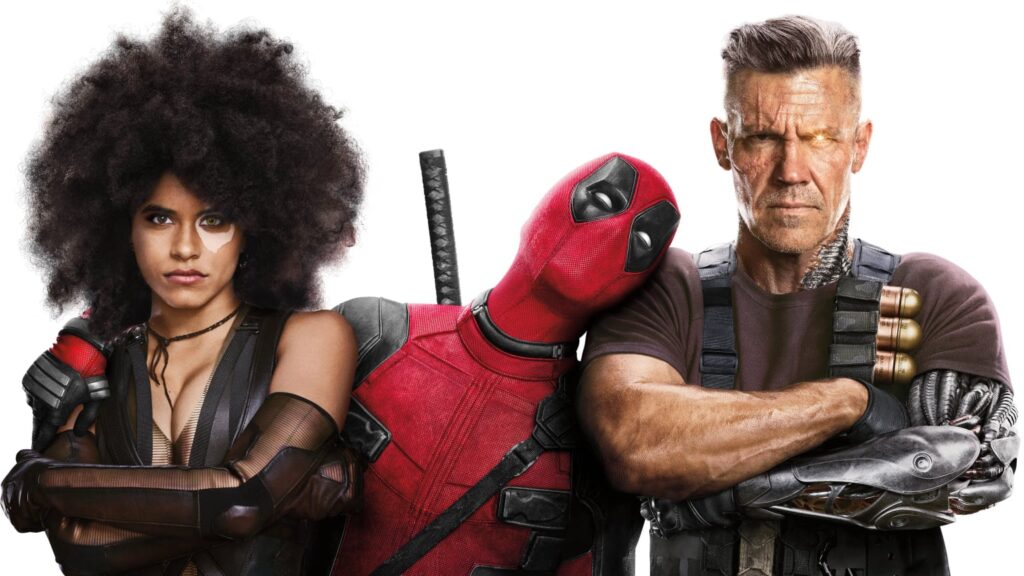
Deadpool 2 is at its best when it admits that Wade Wilson is no longer crashing the superhero party. He is part of the furniture now, admittedly furniture covered in blood and making jokes about the studio budget. This Deadpool 2 2018 review lands on a qualified recommendation: David Leitch’s sequel is lively, funny and unexpectedly sincere, but it also exposes the central joke of the franchise. The anti-superhero rebel has become a reliable superhero formula.
Our verdict Deadpool 2 is an entertaining but overstuffed sequel, lifted by Ryan Reynolds’ comic commitment, strong newcomers and enlarged action. Its emotional ambitions are welcome, though relentless meta-gags too often smother the sincerity they are meant to sharpen.
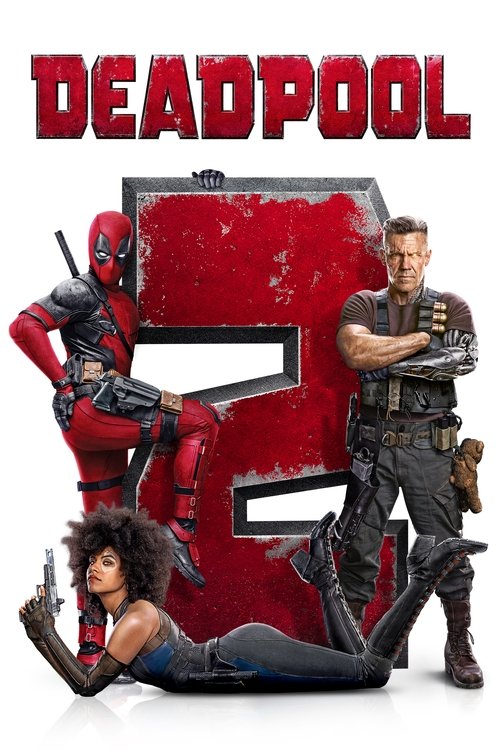
Deadpool 2 (2018)
Ryan Reynolds still gives that formula tremendous momentum, while Josh Brolin and Zazie Beetz prevent the sequel from becoming a one-man sarcasm marathon. The larger action and emotional ambitions are welcome, too. The problem is that almost every promising dramatic beat must fight through another barrage of references, fourth-wall breaks and ironic commentary. I enjoyed Deadpool 2 as vulgar blockbuster entertainment, but I rarely believed it was dismantling the genre it now serves so efficiently.
Deadpool 2 turns rebellion into routine
The first film’s defining trick was to weaponize Wade’s awareness of superhero conventions. Deadpool could address the audience, mock cinematic universes and treat his own story as a product being assembled in real time. The sequel retains that profane, sarcastic and reference-heavy comic style, with Reynolds once again functioning as its essential engine. He delivers the material with such commitment that even a familiar gag can acquire a little extra snap through sheer velocity.
Reynolds also understands that Wade cannot merely be obnoxious. There has to be some charm underneath the aggression, or two hours in his company would feel like being trapped beside the loudest man at a convention. His performance keeps finding that narrow space between smugness and vulnerability. The vulgarity is rarely surprising by this point, but Reynolds sells it as an expression of Wade’s restless personality rather than a collection of jokes pasted onto a conventional hero.
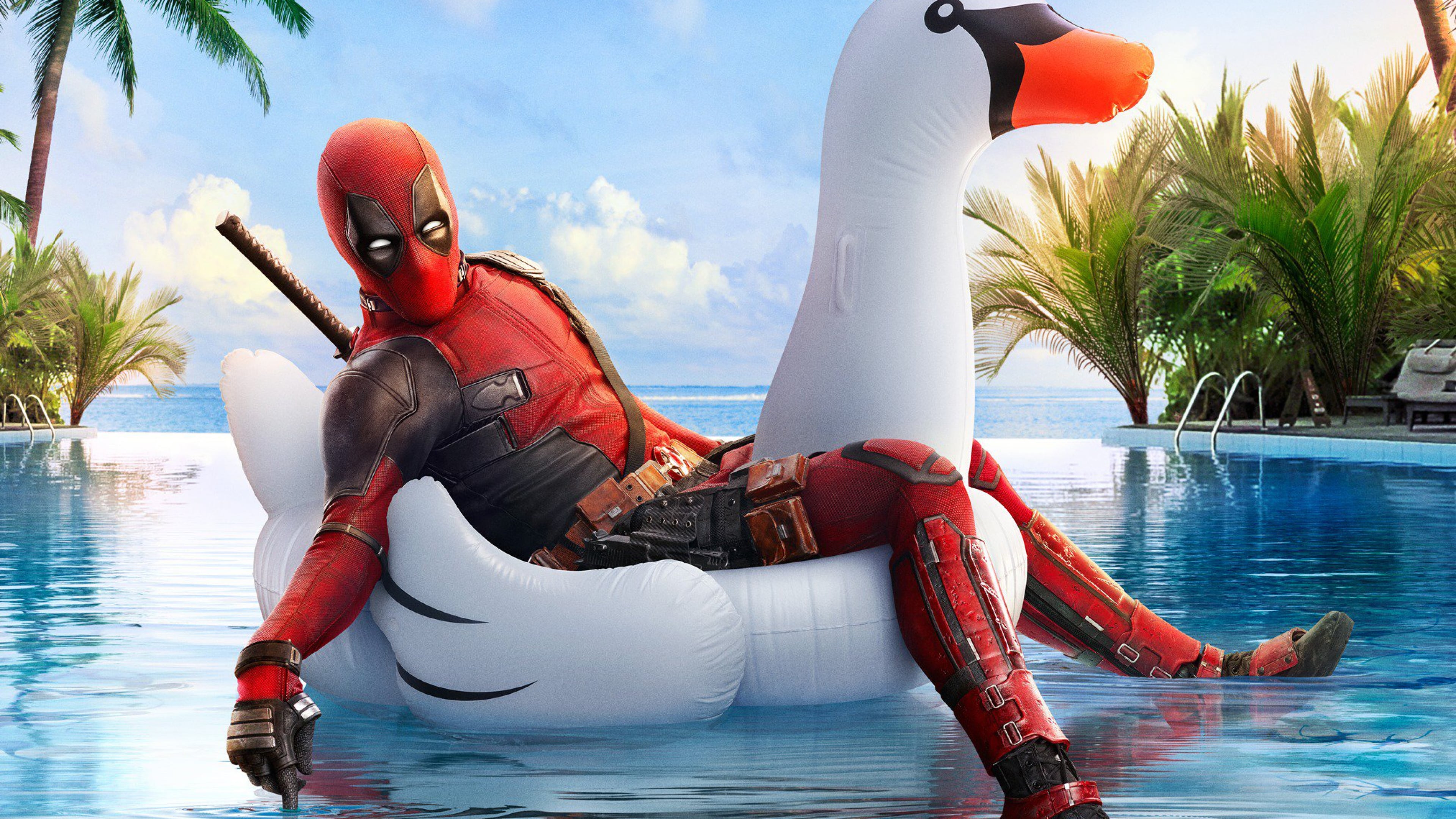
That distinction only carries the movie so far. Self-awareness has become another franchise reflex, as predictable as a costume reveal or an effects-heavy climax. Deadpool mocks the machinery while hitting its marks with increasing professionalism. The sequel knows exactly which conventions it is repeating, but knowing is not the same as escaping. For a cleaner example of a genre film using familiar machinery while genuinely changing its meaning, our discussion of Predator’s subversive action-thriller design offers an instructive contrast. Deadpool 2 often points at the formula, laughs and then follows it anyway.
Cable and Domino give Wade better opposition
The most useful expansion is not the scale but the cast. Josh Brolin’s Cable is severe, focused and almost comically immune to Wade’s need for constant performance. That deadpan contrast gives Reynolds something stronger to play against. Rather than introducing another character who competes in the same wisecracking register, the movie lets Cable’s blunt purpose expose how exhausting Wade’s evasions can become.
Zazie Beetz brings a looser energy to Domino. Her confidence feels distinct from Wade’s desperate compulsion to control the room, and her presence widens the film’s comic and action possibilities without producing another imitation of its star. Contemporary coverage likewise singled out Brolin and Beetz as particularly effective additions to the ensemble. They help because they do not simply applaud Deadpool’s routine; they alter its rhythm.
Julian Dennison’s Russell has a different job. The spoiler-safe setup places Wade between the young mutant and Cable, a heavily armed soldier who has travelled through time to reach him. Russell gives Wade somebody to protect and, more importantly, somebody whose anger cannot be neutralized by a clever aside. Their connection supplies the movie with a moral problem: whether a damaged person should be punished for the harm he might cause or reached before that future becomes inevitable.
The sincerity matters, even when the jokes smother it
Deadpool 2 deserves credit for wanting Wade’s comedy to emerge from pain rather than exist in a vacuum. The story begins from trauma and despair, then pushes him toward a protector or mentor role through Russell. That gives the mayhem a sincere foundation. Wade may turn everything into a performance, but the film recognizes that humor can be armor as much as entertainment.

For me, this emotional undercurrent is the most interesting element of the sequel. The disagreement over Russell is not merely another excuse for heroes to punch each other. It raises questions about punishment, intervention and whether violence can be prevented without abandoning the person most likely to commit it. That is unusually thoughtful territory for a movie so eager to make the next crude joke.
Unfortunately, the film does not always trust its sincere impulses. A painful idea will surface, remain exposed for a moment and then be hurried away by a gag, reference or ironic musical cue. Sometimes that collision is purposeful: Wade is emotionally evasive, so the comedy becomes part of his avoidance. At other times, it feels as though the movie itself is frightened of letting sadness occupy the screen without immediately reassuring the audience that the naughty superhero clown is still on duty.
The result is not emotional emptiness. Reynolds gives Wade enough vulnerability for the dramatic foundation to remain visible, and the Russell storyline supplies a reason to care about the chaos. But the movie’s almost continuous punchline machine repeatedly weakens the gravity it has worked to establish. Sincerity and mockery can coexist; Deadpool 2 simply gives the mockery far more oxygen.
David Leitch makes the action bigger, not more subversive
Director David Leitch broadens the spectacle with the confidence expected from an action filmmaker. The sequel feels more expansive than a scrappy comedy that happens to contain superhero violence. It has convoys, large confrontations and enough destructive movement to make Wade’s jokes feel embedded in blockbuster machinery rather than fired at it from the outside.
The production behind that scale was a genuine hybrid of location logistics, stunt-oriented filmmaking and extensive digital effects. Leitch said a downtown convoy sequence required three days of street closures and roughly 100 police officers, while the film used approximately 1,600 visual-effects shots. He also described a climactic fight involving two fully computer-generated characters and facial-animation work for Deadpool. Leitch’s production discussion with Post Magazine supports an impressive picture of practical coordination and substantial VFX rather than a simplistic claim that the spectacle was predominantly practical.
That mixture generally serves the movie’s enlarged ambitions. There is pleasure in seeing Deadpool’s self-conscious comedy operating on a canvas that can accommodate real superhero scale. Yet bigger action does not automatically produce sharper satire. The set pieces are energetic delivery systems, but they increasingly resemble the expensive franchise obligations Wade is supposed to puncture. The movie can joke about escalation while escalating with complete sincerity.
An overloaded plot keeps interrupting itself
The sequel asks Wade’s grief, Russell’s predicament, Cable’s mission and an expanded supporting ensemble to share space with a nearly uninterrupted stream of jokes. At just under two hours, it is not unusually long for a modern superhero movie, but it often feels crowded rather than expansive; 20th Century Studios lists a runtime of 1 hour and 59 minutes. The issue is not simply duration. It is the amount of narrative and tonal business competing for attention inside that duration.
This congestion is most obvious whenever a dramatic thread begins to gather weight. The film wants Wade’s trauma to matter, Russell’s anger to feel dangerous, Cable’s objective to create urgency and every supporting character to receive a memorable comic beat. It also wants to comment on the franchise format while satisfying it. Any one of those goals could work, but together they create a sequel that is constantly introducing, interrupting and annotating itself.
The pace is rarely dull. If anything, exhaustion is the greater risk. Viewers who enjoy rapid-fire references and fourth-wall jokes will find plenty to reward them, while anyone already tired of Deadpool’s routine may experience the film as a two-hour argument against changing the subject. The humor lands often enough to keep the movie buoyant, but volume is doing some of the work that surprise handled the first time around.
Deadpool 2 review verdict: entertaining, crowded and no longer rebellious
Deadpool 2 remains easy to recommend with reservations. Reynolds is still an unusually committed comic lead, Brolin and Beetz improve the ensemble through contrast, and Leitch gives the sequel the action scale expected from a superhero follow-up. Its emotional interest in Wade’s grief and Russell’s possible future also prevents the movie from becoming pure franchise noise.
What holds it back is the need to turn almost every feeling, convention and quiet beat into material for another joke. The film wants sincerity and subversion, but its dependable construction keeps revealing how thoroughly Deadpool has been absorbed into the system he mocks. Viewers looking for profane superhero comedy, large-scale action and relentless pop-culture commentary should have a good time. Those hoping the darker material will be allowed to breathe may find the barrage more tiring than daring.
I like Deadpool 2 most when the wisecracking briefly gives way to the damaged person underneath. There is a better, stranger sequel hiding in that tension. The movie we have is less radical but still entertaining: a slick superhero product about a character who insists he could never become one.
References
- Deadpool 2 | Rotten Tomatoes
- Review: Deadpool 2 Isn’t Nearly as Clever as It Thinks It Is | Vanity Fair
- ‘Deadpool 2’ does not care about your feelings. That’s what makes it work. – The Washington Post
- Deadpool 2 review – struggles to be subversive despite weapons-grade gags | Deadpool 2 | The Guardian
- Deadpool 2 movie review & film summary
- Director's Chair: David Leitch — Deadpool 2 – Post Magazine
- Deadpool 2 | 20th Century Studios