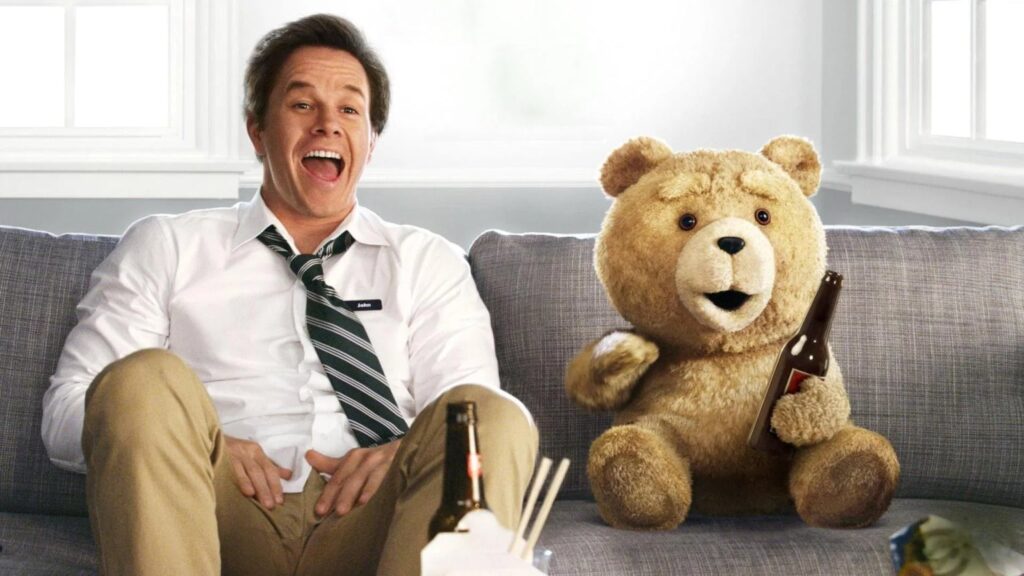
The strangest thing about Ted is how ordinary it becomes. Seth MacFarlane’s feature directorial debut starts with a wonderfully absurd proposition—a boy’s beloved teddy bear comes to life, grows up alongside him and becomes a foul-mouthed liability—then squeezes it into a painfully familiar story about a man reluctantly entering adulthood. This Ted 2012 review comes with a frustrating verdict: John and Ted have enough personality to carry a much better comedy, but the screenplay repeatedly chooses easy provocation, pop-culture recognition and a tired romance-versus-bromance conflict over genuine invention.
Our verdict Ted finds some genuine comic life in John and Ted’s friendship, but its crude, reference-heavy humor cannot rescue an uneven script built around a painfully familiar romance-versus-bromance conflict.
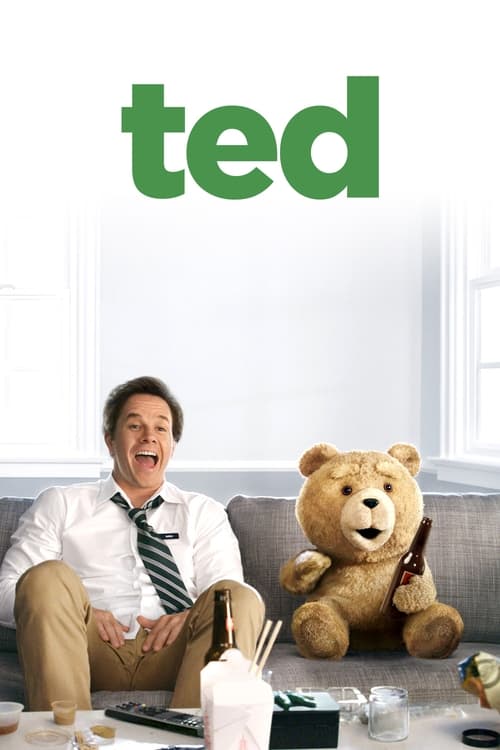
Ted (2012)
Ted is an R-rated comedy starring Mark Wahlberg as John Bennett, Mila Kunis as his longtime girlfriend Lori Collins and MacFarlane as the voice of Ted. MacFarlane co-wrote the screenplay with Alec Sulkin and Wellesley Wild, and the film marked his feature directing debut. Those credits are relevant because the finished movie is unmistakably MacFarlane’s: aggressively irreverent, densely packed with cultural references and determined to turn a symbol of childhood comfort into the least family-friendly bear imaginable. The problem is not that Ted lacks a comic identity. It is that this identity too often substitutes for properly constructed jokes and a story worthy of the premise.
Ted 2012 review: John and Ted are the reason it works at all
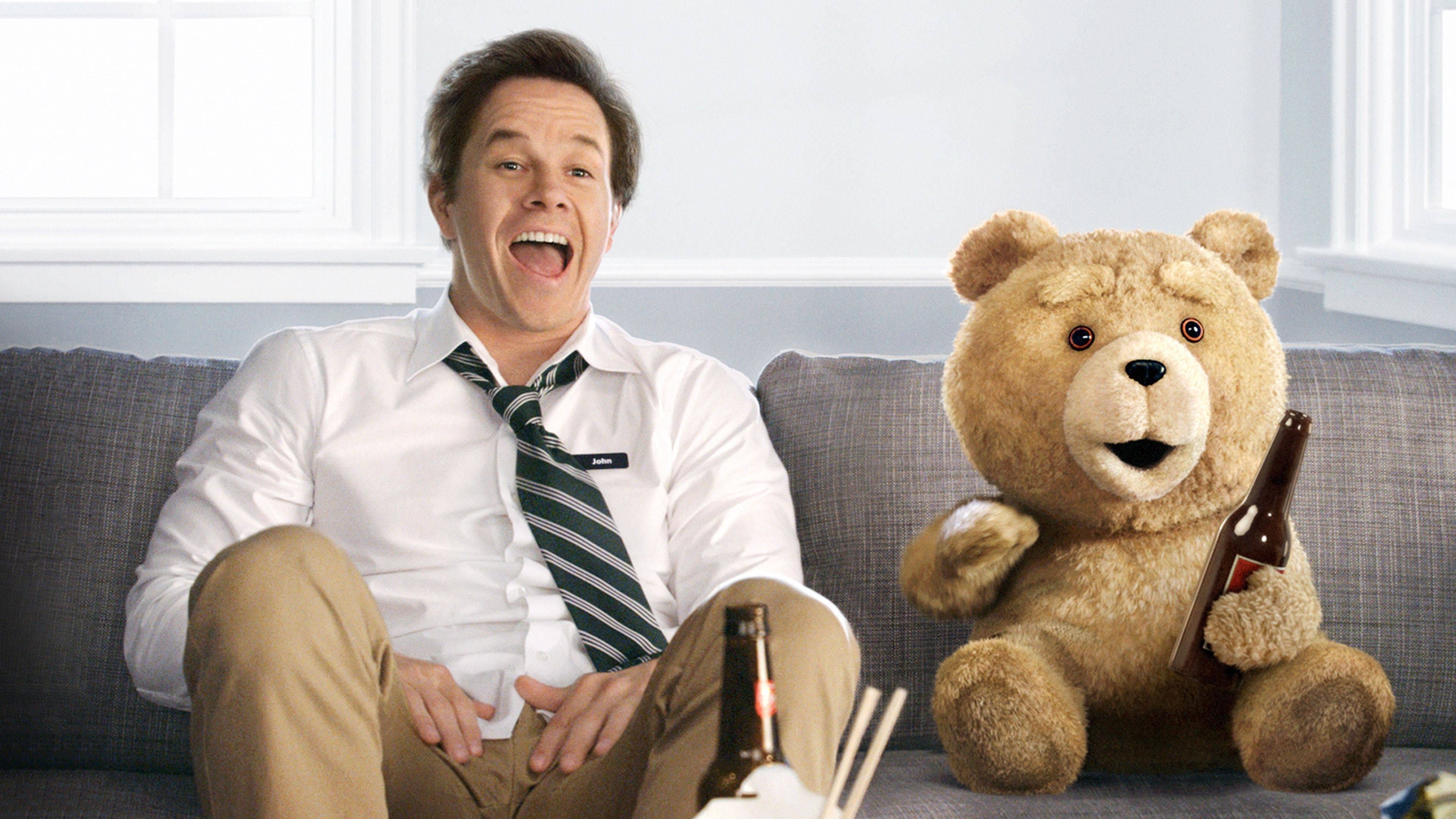
The strongest element is the easy rapport between John and Ted. Wahlberg and MacFarlane make them feel like friends who have spent decades developing private rhythms, shared obsessions and an unhealthy tolerance for each other’s worst behavior. Their exchanges have the casual abrasiveness of two people who no longer need to impress one another. Even when a particular gag misses, the relationship underneath it remains clear.
That distinction matters because the character-based banter works for reasons beyond shock. Ted knows exactly how to distract John, while John treats an impossible talking bear less like a miracle than like the friend who has occupied his sofa for too long. The premise establishes that John’s childhood wish brought Ted to life and that his continuing attachment to the bear now complicates his relationship with Lori. The best comedy grows naturally from that shared history: Ted is simultaneously John’s closest friend, his comfort zone and his most convenient excuse to remain unchanged.
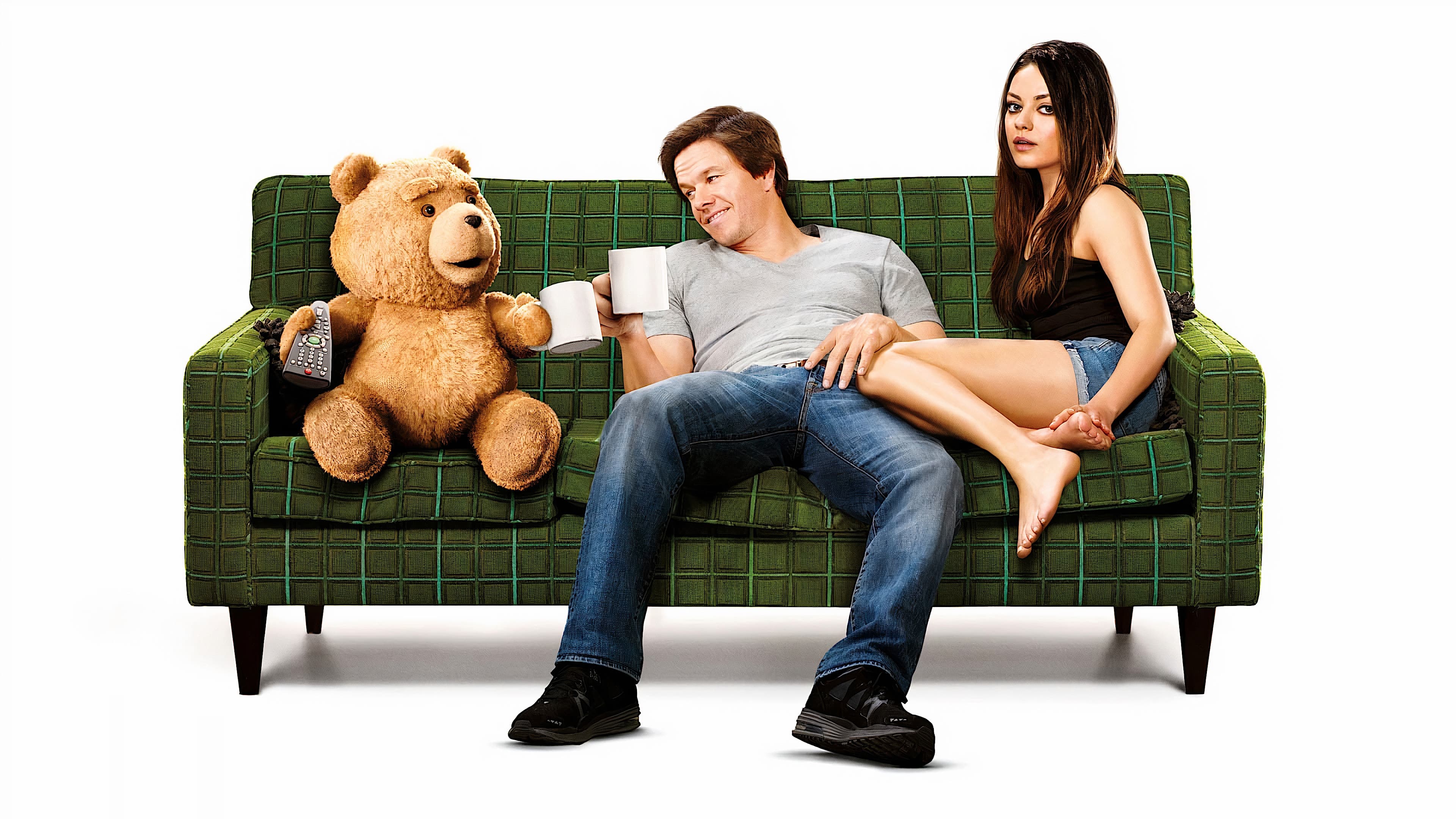
Wahlberg is especially useful because he plays the friendship with almost no sense of wonder. He does not behave as though he is acting opposite a magical creature. He behaves as though he is dealing with a charismatic freeloader who happens to be stuffed. That straight-faced acceptance makes the fantasy funnier than constant amazement would have done, and it gives MacFarlane room to make Ted obnoxious without turning every scene into a technical demonstration.
There is also enough affection between the pair to keep the film from becoming completely cynical. John and Ted can be selfish, juvenile and exhausting, but their bond has warmth, and the movie understands why separating them cannot be treated as a simple lifestyle adjustment. For me, this affection is Ted’s most valuable asset. Unfortunately, the screenplay uses it to soften a formula rather than deepen the relationship.
A great comic premise gets an ordinary adulting plot
Ted’s most imaginative idea is not merely that a teddy bear can speak. It is that a childhood fantasy has survived into adulthood and become inconvenient. There is a sharper comedy buried in that concept: the impossible companion who once saved a lonely child has become part of the machinery keeping that child emotionally static. Affection and dependency are tangled together, and John cannot discard one without confronting the other.
The film touches that idea but mostly reduces it to a straightforward choice. John’s attachment to Ted causes friction with Lori, making Ted the disruptive third point in their relationship. John’s delayed adulthood is such an obvious source of conflict that the dramatic destination becomes visible almost immediately. He must grow up, Lori must demand that growth, and Ted must represent everything fun, irresponsible and comfortably familiar.
There is nothing inherently wrong with conventional structure. Familiar stories can work when their characters complicate the expected route or when the jokes keep finding surprising ways through the material. Here, the structure flattens the premise instead. The movie has a living teddy bear and still feels like another comedy about a man whose girlfriend wants him to stop behaving like an adolescent.
That familiarity becomes increasingly damaging because the fantasy concept mostly decorates the conflict instead of transforming it. Ted could be replaced with an especially reckless human friend and much of the relationship machinery would continue operating. Once the story reaches that point, the talking bear is less a source of possibility than a delivery system for swearing and references.
The frustration resembles the tension explored in MovieBunker’s review of Fast & Feel Love as an adulting comedy: an eccentric comic hook can only do so much when the maturation arc beneath it remains familiar. Ted has the louder gimmick, but it does not build the richer story. The childhood-fantasy angle should make John’s arrested development stranger and more emotionally complicated. Instead, it makes an old conflict easier to advertise.
The R-rated attitude is clear, but the jokes are painfully inconsistent
Ted certainly commits to its comic identity. This is not a timid studio comedy that happens to contain a naughty mascot. The collision between cuddly childhood imagery and emphatically adult behavior gives the film an immediate contrast, while the crude language and irreverent tone make clear that MacFarlane has no interest in producing a family-friendly talking-animal movie. Nobody could reasonably accuse the film of sanding down its premise for younger audiences.
Commitment, however, is not the same as comic invention. Too many jokes depend on the audience recognizing a reference or being surprised that a teddy bear would say something indecent. That mechanism produces scattered laughs, but it has brutal diminishing returns. Once the central contradiction has been established, vulgarity needs character, escalation or precise timing behind it. Otherwise, the joke is merely that the cute bear said the crude thing again.
The inconsistency becomes obvious whenever the film returns to John and Ted simply talking. Their banter has a relationship underneath it; much of the detachable reference-driven material does not. The film can be funny when Ted manipulates John or when their shared habits reveal how thoroughly they enable each other. It becomes much weaker when recognition itself is treated as a punchline.
That reliance on references also leaves too many jokes feeling dramatically weightless. Remove them and neither the characters nor the story changes. A good comic detour can justify itself through sheer inspiration, of course, but Ted too often settles for interruption rather than escalation. The film keeps stopping to show that it knows a piece of popular culture, as though identifying the same thing as the audience is equivalent to finding something funny to say about it.
Viewers with a strong appetite for MacFarlane’s preferred rhythm—provocation, celebrity references and abrupt absurdity—will inevitably get more from the movie. Anyone already tired of gross-out humor functioning as its own punchline will have a rougher time. MovieBunker’s Strays review covers a comparable problem: giving a familiar talking-animal format an adult vocabulary does not automatically create an inventive adult comedy.
Ted works best when the effect stops demanding attention
The production’s smartest decision was to treat Ted as a participant rather than a detached animated ornament. The character was created digitally after filming, while MacFarlane performed off camera in a motion-capture suit. Visual-effects markers and oversized physical scale references helped the actors stage interactions with the character who would be inserted later. This was a practical strategy for making Ted occupy the same physical space as the human cast rather than float through scenes like a cartoon pasted over live action.
In the Los Angeles Times account of Ted’s animation, MacFarlane explained that the goal was a casual, human-like presence rather than bear-like realism or exaggerated cartoon movement. That choice fits the comedy because Ted should feel mundane to John. The joke would weaken if every interaction paused to marvel at the technological showcase or the impossibility of his existence.
Instead, the effect is most useful when it becomes invisible enough to support the performances. John reacts to Ted as an old friend occupying physical and emotional space, not as a special effect waiting for applause. That normality strengthens Wahlberg’s performance and gives MacFarlane’s vocal work something to push against. Ted feels less like a mascot than a bad influence with weight, timing and a permanent place in John’s home.
It is a thoughtful solution to the movie’s central production challenge, and it supports the film’s best idea: the normalization of something impossible. Ted is funniest when the miraculous has become aggravatingly domestic. Unfortunately, the screenplay is considerably less imaginative than the technique used to realize its title character.
A convincing friendship cannot rescue a mechanical story
There is a better film buried inside Ted, one that trusts John and Ted’s friendship enough to explore how affection can become an obstacle without reducing the conflict to a predictable choice between a girlfriend and a best friend. The intermittent tenderness hints at that film. So does the commitment to making Ted feel like a genuine scene partner rather than a walking special effect. But each promising element is pulled back toward the safest possible maturation arc.
The weakness is not simply that the movie is crude. Crude comedy can be precise, revealing and wildly inventive. The problem is that Ted regularly mistakes its willingness to offend for the hard work of constructing a joke. Its strongest moments understand that John and Ted are funny because they know each other too well. Its weakest moments assume that a profane bear, a recognizable reference and sufficient volume will finish the job.
Committed MacFarlane fans may find the force of the R-rated attitude and the chemistry between Wahlberg and Ted enough to sustain the film. There is genuine comic life in their shared history, and the movie is never confused about the audience it wants. For everyone else, the inconsistency is difficult to ignore. The references age faster than the friendship, the crude material regularly mistakes surprise for wit, and the plot makes a fantastical premise feel disappointingly routine.
Ted is not short of personality; it is short of places to take it. The bear comes alive, but the story around him rarely does. Viewers looking specifically for a loud, crude buddy comedy may find enough scattered laughs to justify the trip. Anyone hoping the film will fully exploit its wonderfully strange premise should skip it. John and Ted deserve each other, but they also deserved a much sharper screenplay.