
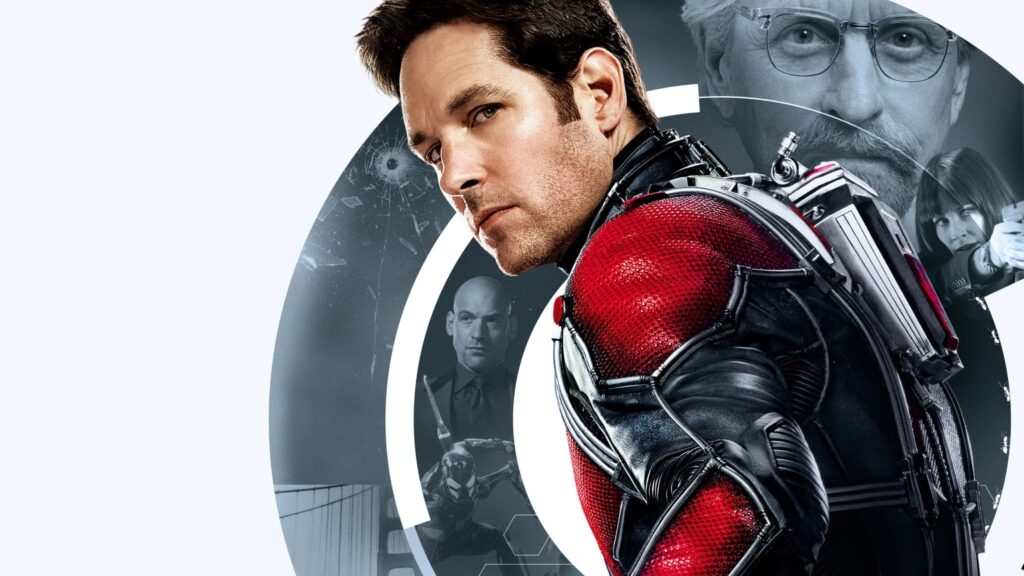
Ant-Man works whenever it remembers that being small is more interesting than being part of something enormous. Peyton Reed’s 2015 superhero movie has Paul Rudd’s warmth, Michael Peña’s comic momentum and a genuinely playful approach to altered perspective. What it lacks is a story capable of matching that ingenuity. This Ant-Man 2015 review lands on a cautious recommendation: it is agreeable Marvel entertainment with several clever sequences, but the standard-issue origin machinery surrounding them is difficult to ignore.
Our verdict Ant-Man has enough warmth, comic timing and scale-shifting ingenuity to remain likable, but its playful heist machinery cannot disguise a conventional origin story, sluggish build-up and underwritten villain. It is agreeable Marvel entertainment, rarely more than that.
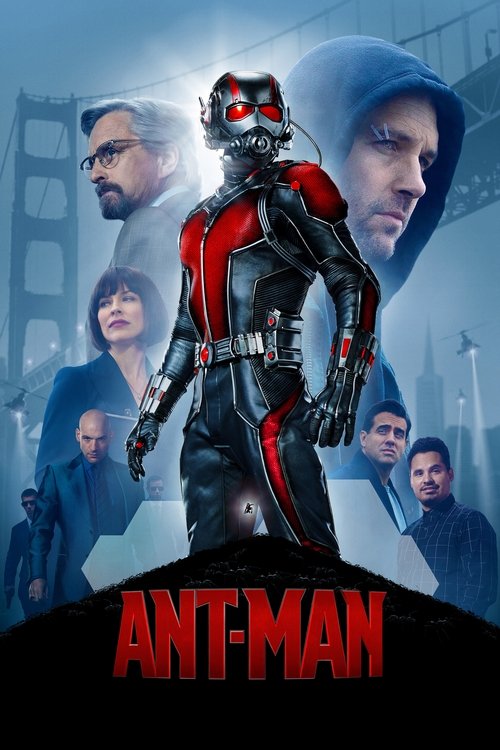
Ant-Man (2015)
The film, directed by Reed, follows Scott Lang, a recently released thief recruited by scientist Hank Pym to prevent shrinking technology from being weaponized. The suit allows Scott to shrink while retaining extraordinary strength, turning his preparation into a mixture of superhero training and heist planning. It is a strong setup because Scott is not being asked to become a generic warrior. His technical knowledge and safe-cracking experience already suit the assignment, while his desire to repair his relationship with his daughter gives the mission a sincere personal purpose.
Ant-Man is most inventive when the world becomes enormous
The shrinking action gives Ant-Man the personality its screenplay often lacks. Carpet fibres become dense terrain, cracks become chasms, and toys acquire the visual weight of heavy machinery. The climax’s child-bedroom setting is the film’s best conceptual joke: superhero destruction is reframed as an elaborate collision inside a toy box, complete with train-set imagery that looks momentous from Scott’s perspective and delightfully trivial from ours. The film understands that scale can generate action and comedy at the same time.
That contrast is more than a recurring sight gag. By moving between Scott’s reduced viewpoint and the ordinary domestic world around him, Reed repeatedly changes the meaning of familiar objects. Something harmless can become a threat when seen from floor level; something that resembles blockbuster devastation can be exposed as a tiny mess. The action remains readable because the joke depends on understanding both scales. Even when the choreography is merely efficient, the perspective gives it an identity.
The tactile quality of these environments helps. Reed described a hybrid effects process combining macro photography, miniature sets, real materials, high-speed photography, motion capture and digital environments. He cited real carpet enhanced digitally and a practical vacuum-bag setup that was paired with an entirely digital shot. Peyton Reed’s discussion of the shrinking effects That mixture is visible in the micro-world’s texture. Ant-Man does not always escape the polished smoothness of studio visual effects, but its best images feel as though the camera has discovered a strange physical landscape hiding inside an ordinary room.
This is where the movie distinguishes itself from the increasingly interchangeable destruction of superhero climaxes. Its spectacle is not bigger; it is more specific. The film finds visual possibilities in confinement rather than treating domestic space as something to abandon on the way to another glowing battlefield. That is a modest achievement, appropriately enough, but it is the clearest reason to watch.
Paul Rudd keeps the Marvel machinery personable
Rudd is an ideal guide through this material because he never strains to announce Scott’s importance. His intelligence and self-deprecation make the character easy to like, while his warmth keeps the father-daughter motivation from feeling entirely like a screenwriting checkbox. He plays Scott as a capable man who knows he has made a mess of his life, not as a swaggering hero waiting for the world to recognize his greatness.
That distinction matters. Ant-Man asks the audience to invest in a second chance rather than a grand destiny, and Rudd gives that smaller emotional objective credibility. Scott’s criminal background also fits the heist framework instead of existing merely as colorful biography. His assignment develops skills he already has, which makes the training sequences more coherent than the usual montage in which a protagonist conveniently becomes proficient at everything the plot requires.
Michael Peña supplies the film’s other dependable source of energy. Luis could have been reduced to noisy sidekick duty, but Peña’s exuberant delivery gives the criminal crew some badly needed texture. His digressive storytelling brings a loose, eccentric rhythm to a movie that otherwise moves along carefully marked franchise rails. Not every comic beat lands, and the constant lightness occasionally reduces the pressure on scenes that need it, but Peña commits so completely that even mechanical exposition gains a pulse.

The result is warmer than many Marvel origin stories, although warmth is not the same thing as dramatic weight. Where Iron Man turns Tony Stark’s personality into the engine of its origin story, Ant-Man often uses Rudd’s charm to smooth over material that remains fundamentally routine. He makes the machinery pleasant to sit through; he cannot make it surprising.
The heist structure cannot hide a conventional origin story
Ant-Man presents itself as a superhero heist movie, but the genre mostly provides decoration. There is recruitment, training, a specialized crew and a fortified target, yet the underlying structure remains a familiar sequence of mentor lessons, family troubles, technological danger and an evil counterpart wearing a more aggressive variation of the hero’s abilities. The heist framework gives the movie a lighter rhythm, but it rarely changes the decisions characters make or the obstacles they face.
That is the key difference between adopting the appearance of a genre and using its dramatic logic. A good heist story creates pleasure through planning, teamwork and complications that expose character. Ant-Man has pieces of that formula, but the superhero origin keeps reclaiming the film. Its crew is entertaining without becoming essential enough, and its preparations feel more like a pathway toward the suit’s next feature than an escalating battle of wits. Compared with an empty heist spectacle such as Lift, Ant-Man at least has personality and a coherent emotional objective. It still stops short of turning the caper into its defining strength.
A sluggish build-up and thin villain reduce the pressure
The problem is not that Ant-Man has smaller stakes. Smaller stakes are welcome, especially in a genre forever threatening to destroy the universe before dinner. The problem is that the film takes too long to generate urgency. Its comfortable cycle of exposition, banter, family pathos and effects demonstrations keeps the tone pleasant but soft. Individual sequences amuse; the story rarely tightens its grip.
Corey Stoll’s Darren Cross is the clearest symptom. The threat of weaponized shrinking technology works as plot infrastructure, but Cross never becomes a compelling dramatic opponent. He is positioned to reflect the consequences of Hank Pym’s choices and to challenge Scott physically, yet his motivation is too thin to give those connections much bite. The film eventually produces the expected hero-versus-villain contest, but it feels like an obligation inherited with the costume.
Hope van Dyne exposes another weakness in the screenplay. She trains Scott, understands the technology, wants the suit and appears exceptionally capable, yet the movie sidelines her so that the less-prepared man can occupy the title role. There are story reasons for Hank’s resistance, but the discrepancy remains awkward because Hope’s competence is established so clearly. Instead of becoming productive tension, her readiness hangs over the film as evidence that its chosen origin-story arrangement is less convincing than the alternative already standing in the room.
The comedy also produces diminishing returns. Rudd and Peña sell numerous moments, and the scale-based visual jokes are usually stronger than the verbal ones. Elsewhere, the screenplay defaults to quips that keep everything buoyant without being sharp enough to justify how often they interrupt tension. Ant-Man is rarely unpleasant, but it is also rarely allowed to become suspenseful, strange or emotionally difficult. The film seems nervous that any silence lasting more than a few seconds might require another joke.
Ant-Man is likable, but rarely more than agreeable
For me, the visual imagination is the strongest part of Ant-Man. The movie looks at carpet, toys and cramped domestic spaces and sees action arenas that a larger hero would never notice. Rudd then makes that miniature world feel welcoming rather than gimmicky. Those qualities are enough to keep the film afloat and to separate it from the most anonymous corners of superhero cinema.
They are not enough to disguise the conventional redemption arc, the slow build-up or an antagonist who never gives the conflict real bite. Ant-Man is a reasonable choice for viewers wanting a lighter Marvel entry, a personable lead and effects built around inventive changes in perspective. Anyone already exhausted by origin-story formulas, underwritten villains and low-pressure quipping will find too little novelty beyond the shrinking itself.
The frustrating part is that the movie repeatedly reveals a better version of itself. Whenever it thinks small, it becomes playful, tactile and specific. Whenever it returns to the larger Marvel blueprint, it becomes another competent product moving through familiar assembly instructions. Ant-Man is worth seeing for its miniature pleasures, but those pleasures belong to a film that never quite grows into its own ideas.
References
- Ant-Man Reviews – Metacritic
- Ant-Man | Rotten Tomatoes
- Interview: 'Ant-Man' Director Peyton Reed Talks Back To The Future, Beavis And Butthead And Fantastic Four
- Ant-Man review – really, really small superhero slips between the cracks | Ant-Man | The Guardian
- Review: Ant-Man Movie: Paul Rudd Scores in Triumphant Marvel Film
- Ant-Man Is Marvel's Weirdest Movie, and That's a Good Thing | WIRED