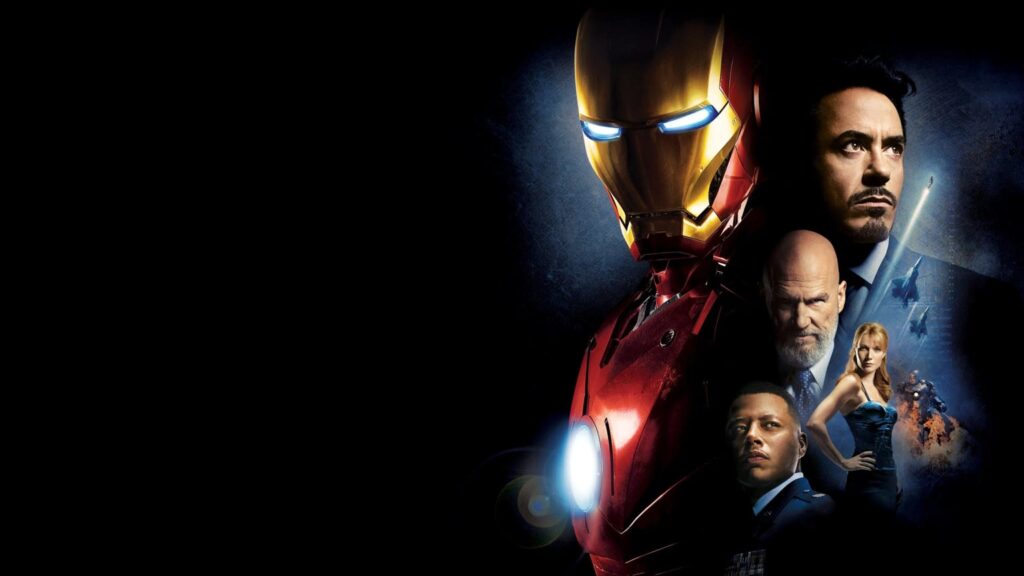
The best thing about Iron Man is not the suit. It is watching Tony Stark slowly understand that technical brilliance without moral responsibility is just destruction with better branding. That transformation gives this Iron Man 2008 review its central argument: Jon Favreau’s film remains a superb superhero origin story because Robert Downey Jr. makes becoming a better person look harder, stranger and more entertaining than becoming a flying weapons platform.
Our verdict Iron Man remains a superb superhero origin story because Robert Downey Jr.’s defensive charm, lively character interplay and satisfyingly tactile technology keep the machinery human—even when the climax settles for broader blockbuster excess.
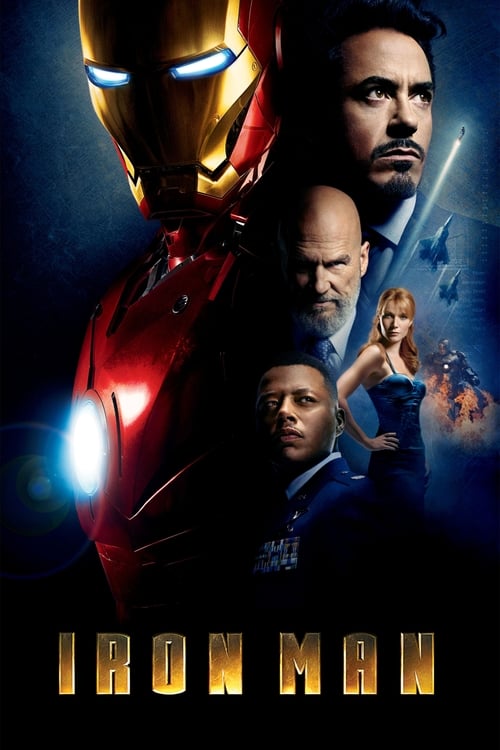
Iron Man (2008)
The machinery certainly helps. Iron Man gives its armor weight, its workshop experiments personality and its action a gratifying sense of physical consequence. But Downey is the essential component. His Tony is charming because he needs to be charming. The jokes, swagger and relentless performance of control are not decorative flourishes pasted onto a conventional hero; they are the defenses of a damaged man who would rather dominate a room than admit it can affect him.
Downey turns Tony Stark’s charm into armor
Tony begins as a celebrity inventor and weapons manufacturer whose intelligence has insulated him from the human consequences of his business. After being captured and ordered to build a weapon, he instead constructs an armored escape suit. Returning home forces him to confront what Stark Industries has enabled rather than simply resume his privileged routine. The outline has since become familiar superhero territory, but Downey keeps it from feeling like a checklist.
He plays Tony as someone who can process almost anything except vulnerability. He changes the subject with a joke, turns confrontation into flirtation and treats sincerity as though it might be contagious. That combination of intelligence, humor and concealed damage was already central to Roger Ebert’s contemporary assessment of Downey’s performance. It remains a useful way into the film because Tony’s charisma is not evidence that he is psychologically uncomplicated. It is how he hides the complication.
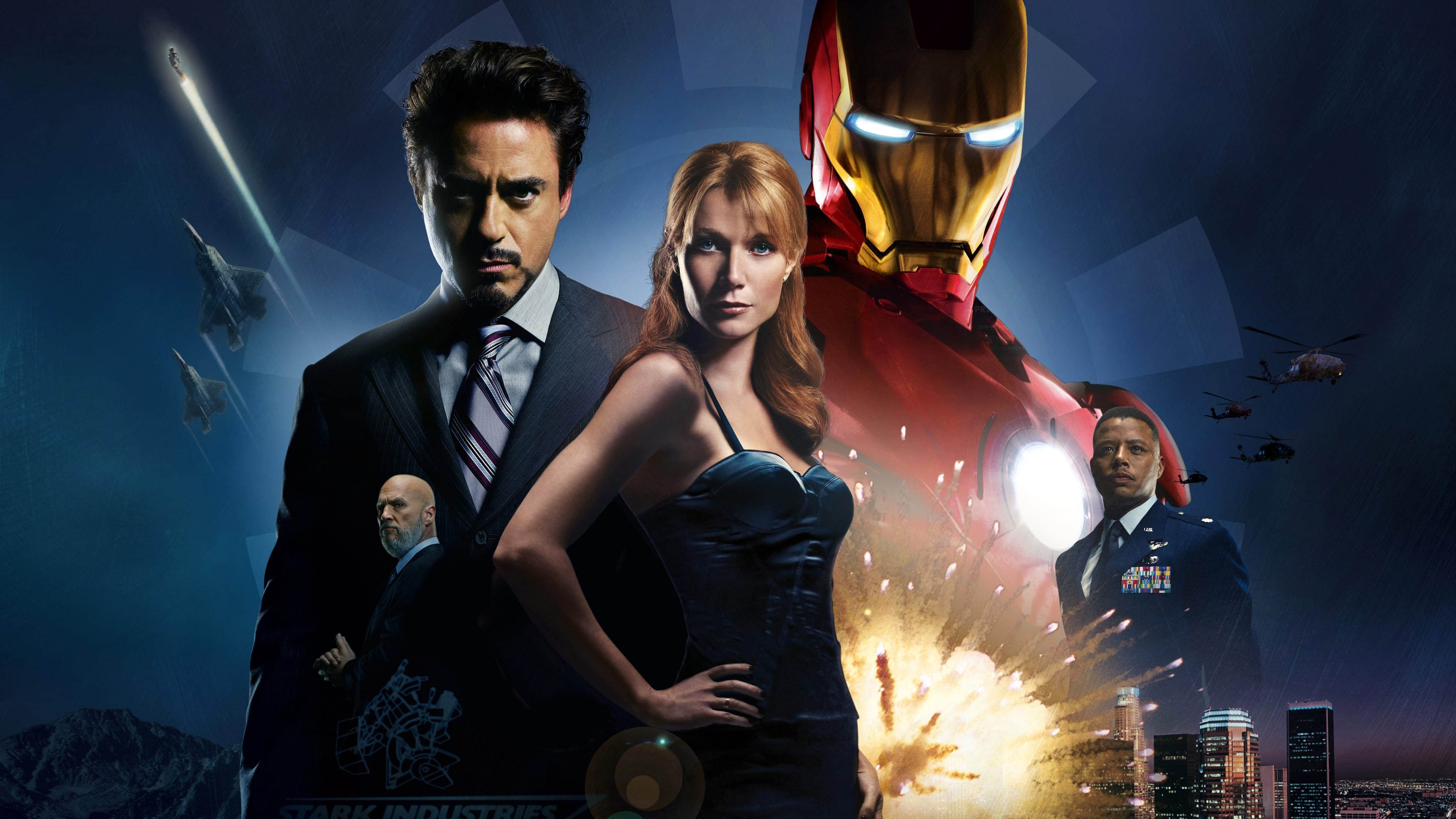
That distinction matters. A less interesting version of the character would move neatly from arrogant industrialist to selfless superhero after one traumatic awakening. Downey lets traces of the old Tony survive every revelation. His moral redirection feels credible precisely because it is incomplete and frequently awkward. He wants to take responsibility, but he still assumes he should be the person in control. Iron Man understands that ego can be redirected toward a worthwhile purpose without magically disappearing.
For me, that tension is the film’s emotional engine. Tony’s greatest invention is a more responsible version of himself, but it is clearly a prototype. He is brilliant, funny, impulsive and psychologically guarded before the armor appears, and the suit magnifies all four qualities. The metal exterior does not create Iron Man so much as make Tony’s existing contradictions visible.
The workshop makes invention feel like drama
The workshop sequences are the film’s secret weapon. Instead of treating the finished armor as a shiny reward waiting at the end of a montage, Favreau makes experimentation, failure and revision dramatically engaging. Tony tests components, discovers flaws and adjusts the design. The pleasure comes from watching intelligence operate under practical constraints rather than hearing other characters repeatedly announce that the protagonist is a genius.
These scenes also connect Tony’s technical abilities to his moral transformation. He does not become responsible by abandoning the talent that helped produce harmful weapons. He tries to repurpose it. That is a more satisfying dramatic choice because it makes redemption active: Tony must examine what he can do, decide what it should be used for and then build accordingly.
The humor works because the machinery refuses to respect his ego. Tony may present himself as the smartest person in every room, but prototypes wobble, misfire and throw him around. The comedy emerges from process and character rather than pausing the movie for a detachable punchline. Contemporary reviews preserved by Metacritic also singled out the workshop and quieter social material as attractions alongside the spectacle. More importantly, those passages reveal exactly why the film works: it trusts personality and problem-solving to be entertaining.
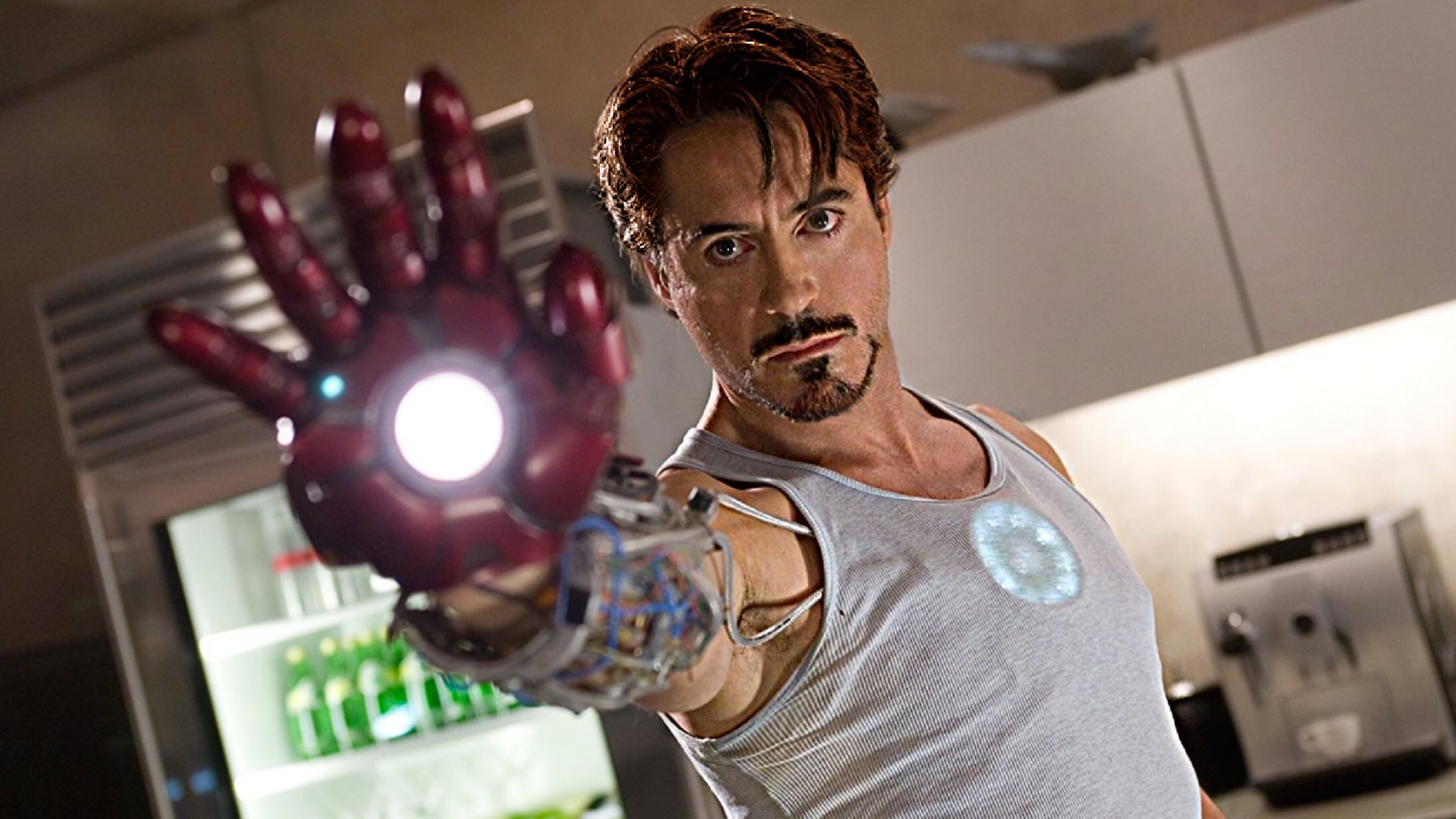
Iron Man understands something many effects-heavy blockbusters forget: preparation can be as exciting as deployment. The movie invites us to understand the suit before asking us to admire it. Each improvement consequently feels earned, and the eventual action carries the memory of every failed test. Viewers who appreciate the rigorous physical storytelling of Mad Max: Fury Road’s action filmmaking will recognize the broader principle, even though Favreau is working in a lighter, more conversational register.
Tony and Pepper give the movie its conversational spark
Tony’s exchanges with Pepper Potts stop the film from becoming a solitary technology showcase. Gwyneth Paltrow does not merely wait for Downey to finish performing; she redirects his energy. Their conversations pass through irritation, familiarity, affection and professional damage control without announcing every emotional shift. Pepper knows Tony’s routines well enough to resist being dazzled by them, which makes the moments when his charm lands more meaningful.
Favreau said he allowed room for improvisation and spontaneity when Downey and Paltrow worked together, while effects-heavy material demanded more advance planning. That does not establish that every line was improvised, nor does it need to. The creative flexibility is apparent in the responsive rhythm of their scenes. The banter feels like two adults testing each other rather than two performers taking turns delivering polished one-liners.
Their chemistry also gives Tony’s behavior consequences beyond the battlefield. Pepper can enjoy his wit while recognizing the exhausting selfishness beneath it. Paltrow makes that balance look effortless: she neither dissolves into adoration nor becomes a humorless obstacle assigned to scold the hero. Her dry resistance gives Downey something firmer than anonymous admiration to play against.
Tony’s relationships with Pepper, Rhodey and Yinsen reveal different aspects of him: the showman, the unreliable friend, the frightened captive and the man beginning to recognize a debt he cannot erase with money. That interplay keeps the story accessible beyond committed superhero fandom. The armor supplies the iconography, but the relationships prevent the movie from feeling engineered solely around action intervals.
Later superhero movies would pursue larger ensembles, denser mythology and increasingly elaborate crossovers. Iron Man benefits from operating before that machinery dominates the frame. Its focus on one difficult personality makes it refreshingly direct. The expansive pleasures of Spider-Man: No Way Home’s superhero spectacle are very different; Iron Man succeeds by making a wrench, a failed test and an uncomfortable conversation feel consequential.
The armor feels engineered rather than conjured
Iron Man’s visual effects have held up because the production does not rely on a single technique. Stan Winston Studios constructed practical suit components, while Industrial Light & Magic created digital armor and many of the flight shots. Some material combined partial armor with a tracking suit, and Favreau sought visual continuity between the physical and computer-generated work. fxguide’s detailed production account also describes specialized wire work and a practical Iron Monger construction operated through a gimbal and puppeteers.
The important result is not a simplistic victory for practical effects over digital ones. It is that the techniques cooperate. Light behaves consistently across the armor, joints appear to resist movement, and flight looks driven by violent thrust rather than by an actor being casually dragged across a digital background. Even when the image is impossible, the suit seems to occupy space.
That physical credibility supports the film’s larger argument. Tony does not wish himself into heroism. He builds, tests and revises the mechanism that allows him to act. Because the armor looks engineered, every movement retains a trace of the work that produced it. Spectacle becomes an extension of character rather than a substitute for it.
Favreau also understands the value of withholding. The film does not bombard us with fully formed armor from the opening scene and then search for increasingly enormous targets. It lets the technology evolve alongside Tony’s intentions. Form and character development move together, so a mechanical upgrade can register as an emotional decision rather than merely the arrival of a new action figure.
The final act trades specificity for scale
Iron Man becomes less distinctive when it reaches the expected blockbuster climax. The careful pleasure of Tony solving mechanical problems gives way to broader escalation, and the antagonist proves more effective as a source of personal and corporate pressure than as the center of a large armored confrontation. The finale remains entertaining, but it feels assembled from more familiar superhero components than the captivity and workshop material preceding it.
The shift is noticeable because the earlier action is rooted in urgent decisions and comprehensible technical limits. By the climax, size and volume begin doing work previously handled by personality and process. I do not think the movie collapses—the confrontation still benefits from the physical credibility established earlier—but this is where Iron Man comes closest to becoming the generic blockbuster it had spent so much time avoiding.
There is also an unavoidable tension in the film’s politics. Iron Man invokes weapons profiteering, terrorism and the language surrounding the war on terror. The New Yorker’s skeptical contemporary appraisal challenged the film’s handling of that material rather than accepting Tony’s awakening as a complete political answer. That criticism remains worth considering because the movie asks one man’s personal redemption to carry implications far larger than one man.
Tony’s reckoning gives the story a strong emotional route through those ideas, but heroic intervention cannot comfortably resolve the system that made his earlier detachment profitable. Iron Man is better at dramatizing his shock and guilt than examining the wider structure surrounding Stark Industries. The movie keeps returning to Downey’s charisma because that is its greatest strength, but charisma can carry only so much ideological freight.
That limitation does not invalidate Tony’s transformation; it defines its scale. Iron Man is persuasive as the story of a man finally accepting that physical and financial distance do not remove responsibility. It is less comprehensive as an answer to the geopolitical consequences of his business. The film’s tidy focus on personal action makes for satisfying drama, even if it leaves the larger moral equation unresolved.
Iron Man remains essential superhero viewing
Iron Man endures because it keeps the machinery human. Downey gives Tony Stark enough defensive charm, fear and arrogance to make a familiar origin psychologically specific. Paltrow meets him with alert, adult comic timing. Favreau finds entertainment in revision and failure, while the hybrid effects give the armor a physical presence that many larger superhero productions struggle to reproduce.
The conventional final confrontation and tidily personalized approach to accountability prevent the film from being flawless. Neither problem overwhelms what comes before. This is still essential viewing for superhero fans and an easy recommendation for anyone who prefers charismatic performances, process-driven invention and tactile action to nonstop digital spectacle.
The suit became the icon, but it is not the film’s real achievement. Iron Man works because it makes Tony’s attempt at responsibility as compelling as his engineering, while Downey ensures that becoming heroic never looks simple. By the time the armor is ready, the movie has already completed its most impressive construction: it has made us believe Tony Stark might become worthy of wearing it.