
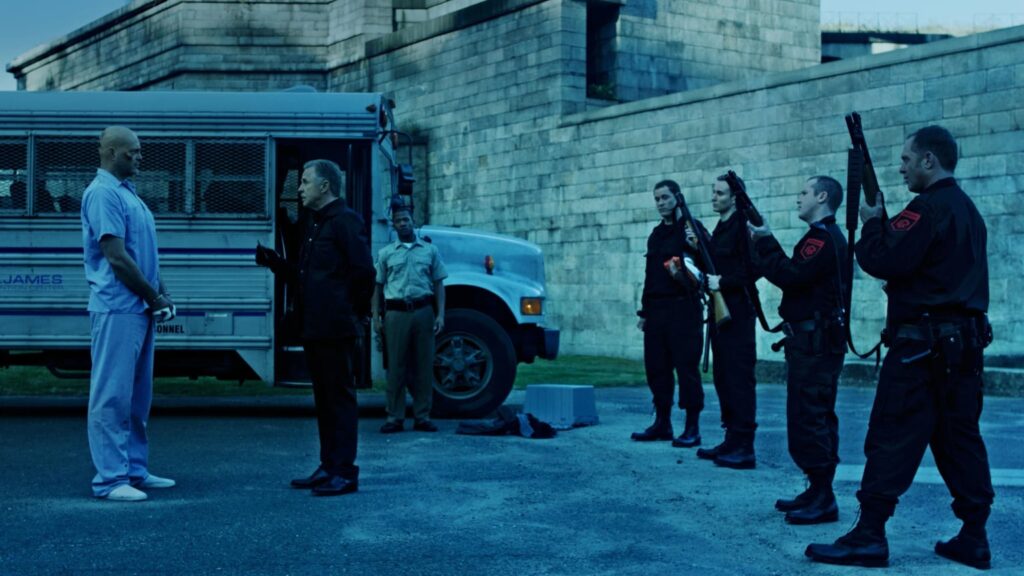
This Brawl in Cell Block 99 2017 review has a simple verdict: S. Craig Zahler’s prison thriller is a punishing, brilliantly controlled piece of exploitation cinema. Its deliberate pace will test viewers expecting the title to deliver immediate carnage, but that patience becomes the film’s most effective weapon. Zahler spends an unusually long time tightening the vice before he lets Vince Vaughn break anything—and when the breaking starts, every impact matters.
Our verdict A punishing, brilliantly controlled prison thriller, Brawl in Cell Block 99 turns Vince Vaughn’s imposing stillness and unusually clear, practical-feeling violence into unforgettable exploitation cinema. Its 132-minute slow burn demands patience, but the descent is worth it.
Brawl in Cell Block 99 (2017)
The film’s great discovery is not simply that Vaughn can look intimidating. Anyone who has noticed that he is enormous could probably have solved that mystery. It is that his stillness can be more threatening than his movement. As Bradley Thomas, a former boxer and auto mechanic driven into drug running by financial and marital pressure, Vaughn holds his rage so tightly that the performance seems permanently on the verge of rupturing. After a deal goes wrong and Bradley is imprisoned, coercion and the need to protect his family push him deeper into a system built to punish resistance.
Bradley has a protective purpose, but the movie never mistakes that purpose for innocence. He is frightening before the prison nightmare fully closes around him, and Vaughn understands that contradiction. The result is not a clean-cut action hero waiting for permission to become violent. It is a volatile man attempting to impose discipline on himself until discipline is no longer enough.
The slow burn makes every bad choice feel terminal
At 132 minutes, Brawl in Cell Block 99 takes its time getting to the cell block. That sounds like a warning because it is one, although not necessarily a complaint. Zahler refuses to treat Bradley’s life before prison as a disposable prologue. The financial strain, wounded relationship and narrowing set of choices establish why this man would accept increasingly dangerous work. More importantly, they show how he responds to pressure: quietly, methodically and with the unnerving certainty that violence remains available if every other tool fails.

For me, that measured setup is essential. The film’s descent works because it begins in a recognizably grim blue-collar reality and then removes one layer of normality at a time. The pacing has been aptly described as deliberately leisurely before the sustained prison violence arrives. Zahler does not rush toward the lurid material advertised by the title. He makes Bradley walk there, step by increasingly awful step.
There are moments when control shades into indulgence. Zahler likes pauses, formal exchanges and people speaking as if every sentence has been sharpened overnight. A few early passages could lose some weight without damaging the emotional foundation. Viewers waiting for the promised brawl may feel as though the movie has added time to their sentence.
Yet the delay changes the violence from an attraction into a destination. By the time Bradley begins moving through the prison hierarchy, the brutality feels like the terminal stage of a coercive process rather than a collection of action beats inserted to keep the trailer honest. The film earns its escalation because it has shown how few exits remain.
Vince Vaughn turns restraint into intimidation
Vaughn’s imposing frame naturally gives Bradley physical authority, but the performance would be much less interesting if it depended on size alone. He speaks carefully, absorbs insults and appears to measure rooms before acting. Even his posture communicates containment. Bradley looks like a man who knows exactly what he can do and would prefer not to demonstrate it—partly from restraint, partly because demonstration usually leaves a mess.
That calm makes each eruption feel earned. Vaughn does not suddenly transform when the film requires an action sequence; he releases something that has been present from the opening scenes. His physical command also gives Zahler room to avoid frantic cutting. Bradley does not need editorial trickery to seem dangerous. The camera can stand back and let his size, timing and blunt efficiency carry the threat.
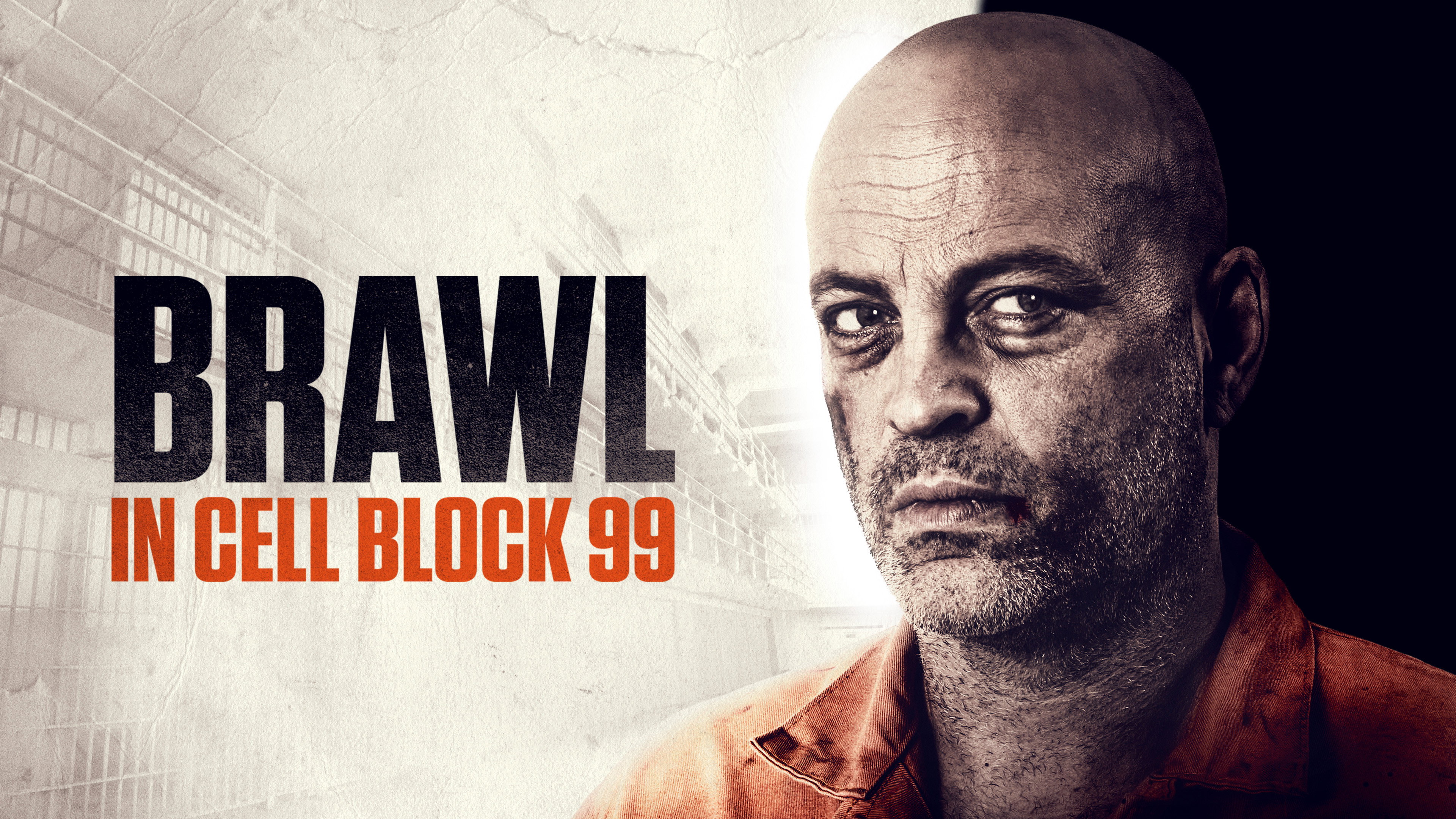
The performance also preserves an important moral discomfort. Bradley’s devotion to his family makes his objective understandable, but his volatility prevents sympathy from becoming absolution. He is both trapped and dangerous, coerced and capable of horrifying choices. Zahler is not especially interested in sanding those contradictions into a conventional redemption arc, and Vaughn is at his best when Bradley’s purpose and menace occupy the same expression.
He is less persuasive when the screenplay asks him to wrestle with its most conspicuously mannered dialogue. Zahler’s hard-boiled language gives the movie personality, and its occasional flashes of dark humor cut through the severity without turning the film into a quip machine. But a few verbose lines sit awkwardly in Vaughn’s mouth, exposing the writing as writing. His physical performance is so direct that the dialogue can feel overdressed beside it.
The violence is clear enough to hurt
The fights are exceptional because Zahler treats clarity as a source of brutality. Wide framing keeps bodies visible, preserving distance, force and consequence instead of hiding the choreography inside a blender of close-ups. The approach shares a basic principle with the visual discipline discussed in our Mad Max: Fury Road review: action becomes more exciting when the audience understands where people are and what is happening to them. Brawl in Cell Block 99 applies that principle to something much uglier. Its clarity does not create exhilaration so much as dread.
That effect was built into the production. Zahler said the longer fight setups were repeatedly rehearsed and designed to keep performers visible from head to toe. He also described using squibs for bullet impacts, makeup effects for wounds and live staging for crashes and explosions, with post-production used sparingly for work such as wire removal. The director’s account in a production interview about Brawl in Cell Block 99 explains why the violence has such unpleasant weight.
Practical construction is not automatically superior filmmaking; a rubber wound can look just as ridiculous as bad CGI. Here, however, the tactile effects match the camera’s refusal to look away. Because the editing does not scramble the action, the effects must survive scrutiny. Bodies occupy space, impacts have a visible cause and injuries alter the physical situation. The violence is extreme, but it is not weightless.
That puts the film in the company of action movies that understand legibility as an essential pleasure, including the muscular simplicity celebrated in our review of Predator. Zahler’s purpose is far nastier, though. Where a conventional action movie might use a clean wide shot to showcase athletic prowess, this one uses it to make bodily destruction impossible to shrug off. The audience is not allowed the comforting abstraction of rapid cutting.
The prison becomes an exploitation nightmare
As Bradley descends through the prison system, the film gradually abandons ordinary realism. The surroundings become sicklier, more artificial and increasingly dungeon-like. Critics have noted both the deliberately unhealthy digital look and the heightened exploitation design of this world. That stylization is crucial: Brawl in Cell Block 99 is not presenting itself as a sober account of American incarceration. It is constructing a pulp underworld ruled by institutional cruelty and sadistic power.
The shift works because Zahler does not announce it with a sudden change of genre. The mundane first act and grotesque final movement are connected by a steady downward motion. Each new environment is harsher than the last, until the film appears to have burrowed beneath the prison movie and emerged in something close to horror. The sickly imagery, vivid sound and bare spaces strip away any illusion that Bradley can reason with the machinery surrounding him.
This is also where the movie comes closest to breaking its own spell. Bradley’s physical capability becomes near-mythic, while the prison’s architecture of suffering can feel so conspicuously designed that the human stakes briefly recede behind the spectacle. The escalation is effective as nightmare logic, but not every exaggeration carries equal emotional force. Occasionally, I could see Zahler arranging the next atrocity rather than feel Bradley being swallowed by it.
Still, the artificiality is more strength than weakness. A more realistic presentation would not necessarily make the film more honest; it might only make its lurid impulses look embarrassed. Zahler commits to exploitation cinema without pretending that extremity is the same thing as social realism. The prison is a moral and physical trap rendered as a dungeon because subtle architecture would be dishonest to the movie’s appetite.
A severe thriller worth the wait
Brawl in Cell Block 99 is demanding, grotesque and unapologetically excessive, but it is never careless. Its extended buildup gives Bradley’s desperation a foundation. Vaughn’s controlled performance makes him sympathetic enough to follow and frightening enough to distrust. Most importantly, the film stages violence with a visual intelligence that many faster, more expensive action movies lack.
The deliberate pacing, formal dialogue and increasingly implausible prison world will repel some viewers before the brutality does. Anyone sensitive to extreme bodily violence should stay far away, and anyone allergic to slow burns may find the first half overextended. Those are not minor qualifications; they define the experience.
For patient viewers who want grim exploitation cinema, an inspired against-type performance and action that remains brutally easy to follow, this is an emphatic recommendation. Zahler makes waiting feel like pressure and violence feel like release, then ensures that the release is too ugly to celebrate comfortably. Brawl in Cell Block 99 does not merely deliver on its title. It makes the long walk there part of the punishment.
References
- Brawl in Cell Block 99 | Rotten Tomatoes
- Brawl in Cell Block 99 movie review
- Brawl in Cell Block 99 review: Vince Vaughn’s headbanger in the clanger | Sight and Sound
- Interview: S. Craig Zahler Talks Brawl in Cell Block 99
- Review: S. Craig Zahler’s Brawl in Cell Block 99 on Image Entertainment Blu-ray – Slant Magazine