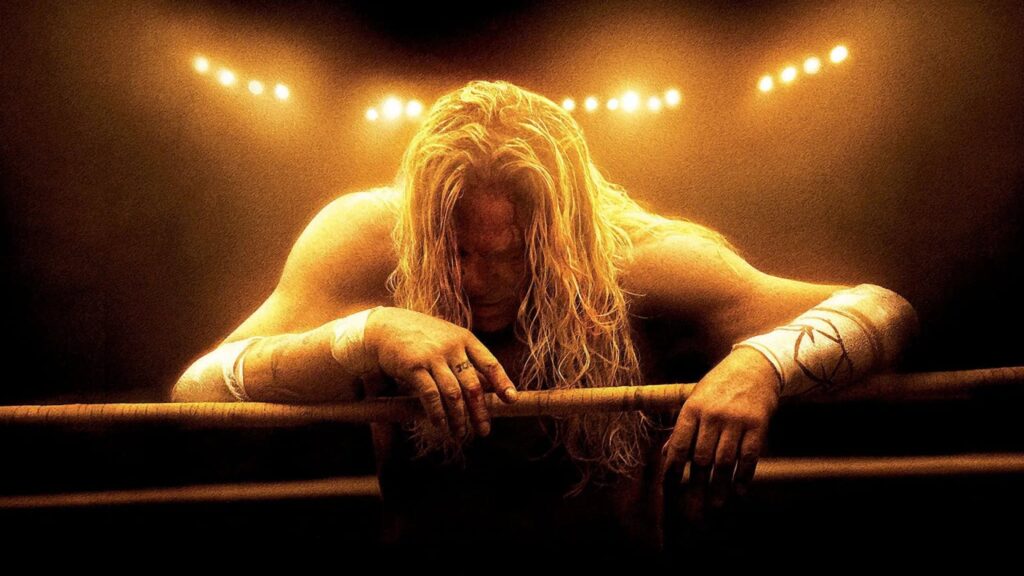
The Wrestler is not really a comeback movie. It is a tragedy about a man who cannot separate being loved from being watched. Darren Aronofsky borrows the familiar shape of a sports drama—an aging star, a damaged body and one more opportunity to repair a life—but denies it the comforting simplicity of victory and defeat. The result is raw, intimate and emotionally punishing, with Mickey Rourke giving Randy “The Ram” Robinson the battered charisma of someone who becomes fully visible only after stepping into the ring.
Our verdict Mickey Rourke gives The Wrestler its battered heart. The familiar reconciliation beats occasionally show their seams, but Darren Aronofsky’s raw, physically punishing character study lands with bruising honesty.
The Wrestler (2008)
That tension is what makes this The Wrestler 2008 review an enthusiastic recommendation rather than merely a nostalgic salute to Rourke. His performance is exceptional, but the film around him also understands exactly why Randy remains trapped by his vocation. Wrestling is simultaneously his talent, community, income, addiction and identity. Aronofsky never asks us to believe that Randy is powerless, yet he makes every damaging choice painfully understandable.
Randy’s greatest gift is also his deepest weakness
Randy was once a headliner. By the time we meet him, he is working small independent shows and trying to survive beyond the ring, where ordinary employment and strained personal relationships expose how little of himself exists outside “The Ram.” A health crisis makes that division impossible to ignore. Rourke stars alongside Marisa Tomei as Cassidy and Evan Rachel Wood as Randy’s estranged daughter, Stephanie.
Rourke makes Randy charming without cleaning him up. He can be warm, funny and generous, but that warmth does not cancel his unreliability. It makes the damage more frustrating. Randy knows how to connect with strangers and crowds because those encounters come with recognizable cues; lasting intimacy demands accountability, patience and consistency, none of which can be summoned with an entrance theme. Rourke lets confidence and embarrassment occupy the same lumbering body, often turning Randy’s smile into a defensive maneuver.
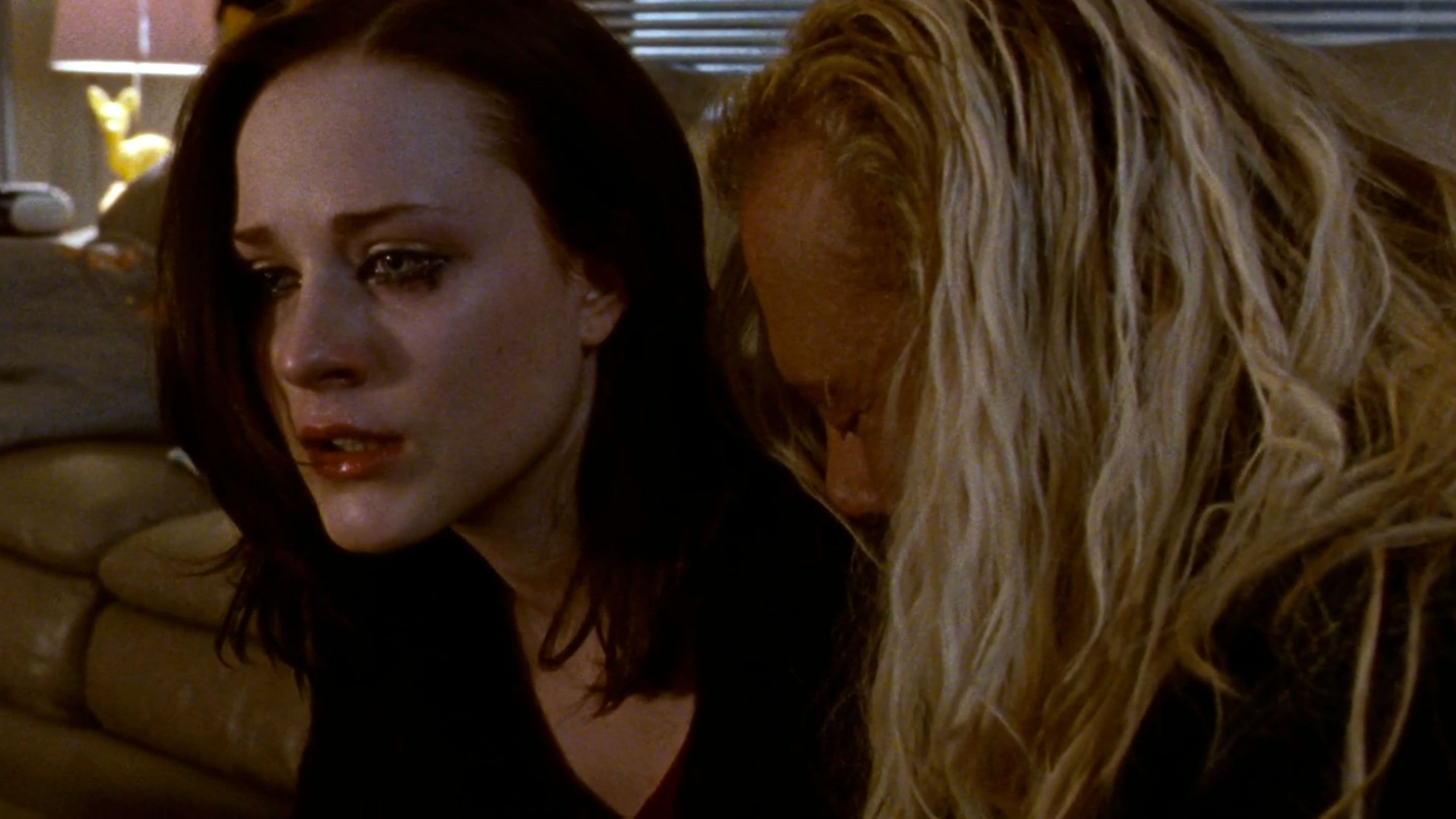
For me, that vulnerability is the key to the film. It prevents The Wrestler from becoming either a simplistic comeback story or a cold case study in self-destruction. Randy is not merely exploited by the business, nor is he simply a fool who refuses to grow up. He has agency, but his choices have been narrowed by age, precarious work and decades spent building a self that only makes sense under stage lights. The crowd’s approval is not a shallow bonus. To Randy, it is evidence that he still exists.
The film’s emotional cruelty comes from showing that his charisma is genuine. Randy really is good at making people respond to him. He understands the rhythm of a room, the pleasure of recognition and the communal release of a performance. He can make a stranger feel included in seconds. The tragedy is that he has developed those instincts more successfully than the quieter skills required to sustain a life.
Rourke never reduces that contradiction to a single tragic expression. Randy can appear physically imposing in one moment and almost childishly lost in the next. His body advertises his former glory while recording everything it cost him. That tension gives the performance its unusual power: we can see why people cheer for Randy without mistaking their affection for salvation.
The wrestling feels like labor, not escapist spectacle
Aronofsky presents professional wrestling as cooperative theater built from genuine bodily risk. In a Fresh Air interview about the production, the director explained that the matches were filmed before live audiences and that Rourke’s opponents were real wrestlers. He also described improvisation in specific backstage material. That foundation gives the wrestling world a lived-in ease that a more polished production might have smothered.
The backstage camaraderie matters because it complicates the violence. Competitors discuss what they are going to do, help construct the spectacle and then enter an environment where performance and injury remain uncomfortably close. Aronofsky is fascinated by that contradiction. Wrestling may be staged, but the labor is not imaginary, and the body still absorbs the bill.
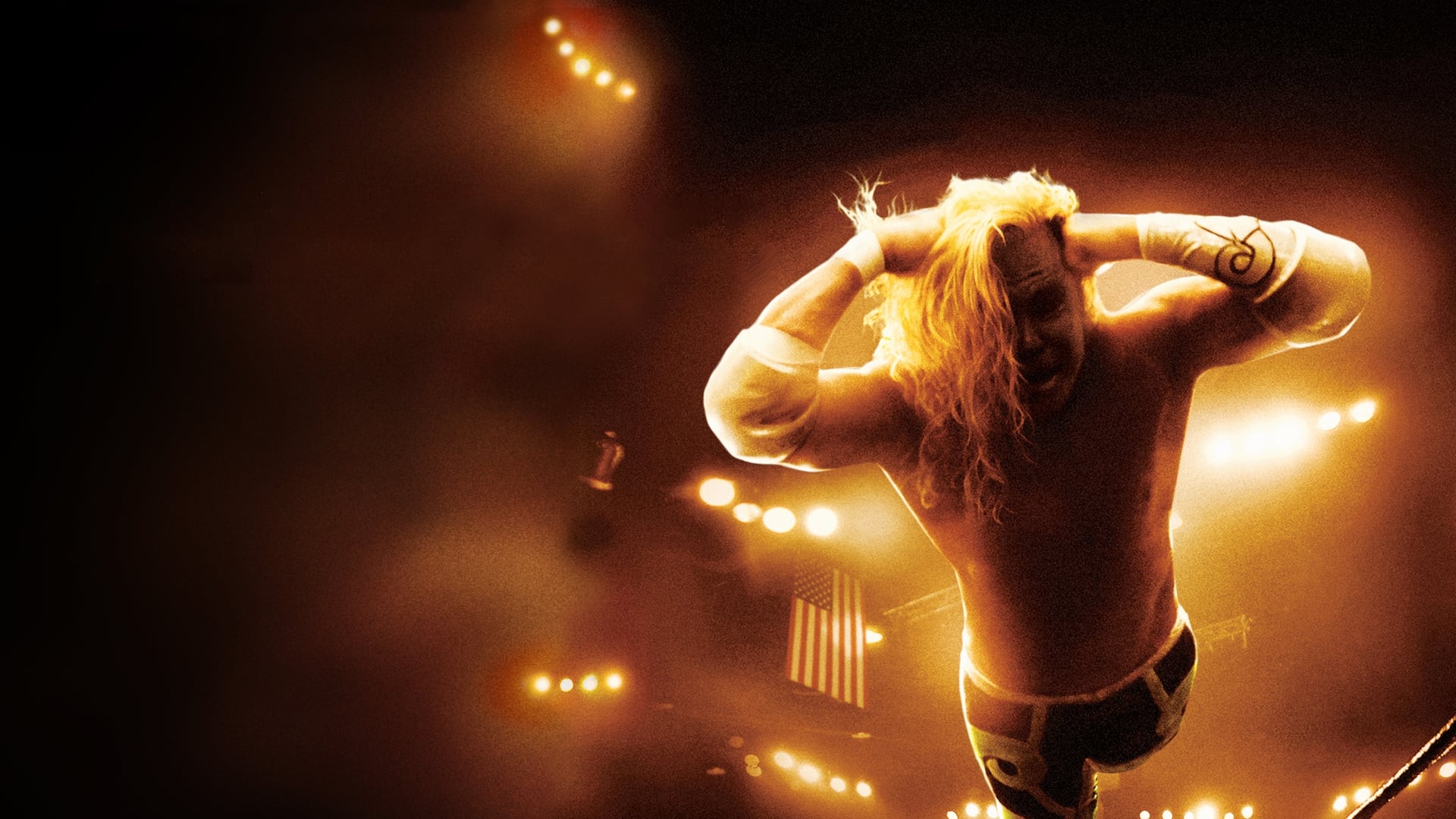
Every physical risk therefore carries dramatic weight. Randy is not fighting a villain who can be defeated to restore moral order. He is trying to preserve the one role in which he feels fluent and valued, even as performing it threatens his health, livelihood and chances of building anything beyond it. The action is exciting because Randy experiences it as liberation; it is horrifying because the film keeps showing us the cost of that liberation.
This is also why the movie works for viewers with no interest in wrestling. Aronofsky treats the ring as a concentrated version of a broader problem: what happens when a person’s vocation consumes the body and identity needed to pursue it? Randy’s situation is extreme, but the fear beneath it is recognizable. If the thing you do is also the thing that tells you who you are, walking away can feel less like retirement than erasure.
The film’s prolonged attention to wounds and hardcore wrestling can approach overstatement. The Los Angeles Times argued that it sometimes moves from observing pain toward fetishizing discomfort. That objection is worth taking seriously because Aronofsky’s camera can be brutally insistent. I ultimately land on the other side of the disagreement: most of the bodily punishment is dramatically necessary because it destroys the easy distinction between “fake” spectacle and real suffering. Even so, some viewers will feel that the point has landed before Aronofsky stops pressing on the bruise.
Aronofsky’s stripped-back realism keeps the film honest
The Wrestler looks worn rather than designed. Its vérité-style photography, modest venues and unglamorous workplaces place Randy in a world of fluorescent light, shabby interiors and bodies held together through habit. Contemporary reporting and Aronofsky’s account of filming in live wrestling environments and working locations support that material immediacy. The film is not pretending to be a documentary, but it benefits from spaces that do not look as though they were built to flatter anyone.
The supermarket sequences are especially revealing because they turn ordinary employment into a different kind of performance. Aronofsky said these scenes were filmed in an operating store with real employees and customers served by Rourke. Randy can still summon flashes of showmanship there, but the environment offers none of the ritual that makes his wrestling persona feel heroic. What should be safer work instead exposes how alien he feels without an audience that already understands his act.
That contrast is more effective than any speech explaining Randy’s psychology. In the ring, pain comes with applause and identity. At work, physical effort ends in anonymity. One environment is dangerous but emotionally legible to him; the other is stable but spiritually unbearable. The film does not endorse his priorities, but it makes them coherent.
This is among the most materially grounded modes of Aronofsky’s filmmaking. He does not need elaborate visual machinery to communicate obsession when Rourke’s movement, breathing and posture already tell the story. The camera’s closeness gives Randy’s bulk a strange fragility. He looks capable of filling a room and disappearing inside it at the same time.
Anyone drawn to similarly uncomfortable studies of identity and the body may also appreciate MovieBunker’s review of Raw and its disturbing coming-of-age transformation. The films operate in very different genres, but both understand that physical discomfort becomes meaningful when it reveals a character’s unstable relationship with the self.
Familiar relationships reveal the screenplay’s machinery
The film is less original when it turns from Randy’s vocation to his attempts at reconciliation. His relationships with Stephanie and Cassidy deepen his isolation and force him to confront the damage left outside the ring, but those strands sometimes follow recognizable dramatic tracks. Estrangement produces an opening, hope appears and Randy’s weaknesses threaten it. The plotting can feel arranged in a way Rourke’s performance never does.
This is the film’s most substantial weakness, although not a fatal one. The sports-drama architecture gives the story momentum and clarity, but the family material occasionally makes its emotional destination too visible. I can feel the screenplay positioning Randy for another test of whether he can change. Rourke, meanwhile, keeps the moment unstable enough that it does not play like a box being ticked.
Tomei and Wood also stop the relationships from becoming simple instruments of Randy’s redemption. Cassidy is not a prize waiting to confirm that he has become a better man. Her own work depends on controlled performance and negotiated intimacy, creating a pointed parallel with Randy without making their situations interchangeable. Stephanie represents something even less comfortable: a history that applause cannot erase.
Both relationships ask whether Randy can remain emotionally present when he is not the center of a show. That is a much harder demand than absorbing physical punishment. In wrestling, he knows the rhythms, expectations and desired response. Intimacy offers no rehearsed sequence and no guaranteed pop from the crowd. His failures outside the ring consequently feel connected to his success inside it rather than attached as generic tragic backstory.
Rourke does the heaviest lifting whenever the screenplay shows its seams. His face registers the panic beneath Randy’s attempts at sincerity, suggesting a man who may mean what he says in the moment but lacks the stability to make that feeling durable. It is a performance with the bruised authority MovieBunker also values in Ben Kingsley’s transformative work in Sexy Beast: star power used not as decoration, but as the engine of an entire character study.
The Wrestler 2008 review verdict
The Wrestler won the Golden Lion at the 2008 Venice Film Festival. The award reflects the seriousness with which this apparently modest character drama was received, but the film’s lasting force does not depend on trophies or aggregate acclaim. It endures because it makes Randy’s need for performance feel exhilarating and devastating at once.
This is essential viewing for anyone who values performance-led drama, whether or not professional wrestling holds any interest. It is not an uplifting sports triumph, and its tension is bodily and emotional rather than thriller-oriented. Viewers should expect graphic physical punishment alongside sexual material, nudity, drug use, strong language and a generally harsh emotional register.
The familiar reconciliation beats occasionally show their construction, and Aronofsky’s fixation on suffering can become severe. Neither reservation breaks the film’s grip. Rourke gives The Wrestler its battered heart, while the raw locations and intimate photography make every cheer feel both sustaining and dangerous.
Randy’s tragedy is not that he lacks something to live for. It is that the thing making him feel most alive is also consuming everything else. The Wrestler understands performance as a gift, a livelihood and a trap, then allows all three meanings to coexist without offering an easy escape. That contradiction turns familiar sports-drama architecture into an exceptional film about identity, labor and the terrible cost of applause.