
Missing is an emphatic recommendation: a gripping, ingeniously assembled mystery that turns the everyday clutter of digital life into a complete cinematic language. Its great trick is not simply that the story unfolds across computers and mobile devices. Directors Nicholas D. Johnson and Will Merrick understand that a cursor hovering over the wrong button, a rearranged window or a delayed reply can create as much tension as somebody creeping down a dark corridor.
Our verdict Missing turns the everyday clutter of searches, messages and camera feeds into a gripping suspense machine. Storm Reid gives its digital detective work urgency and heart, even when the final surge of twists strains credibility.
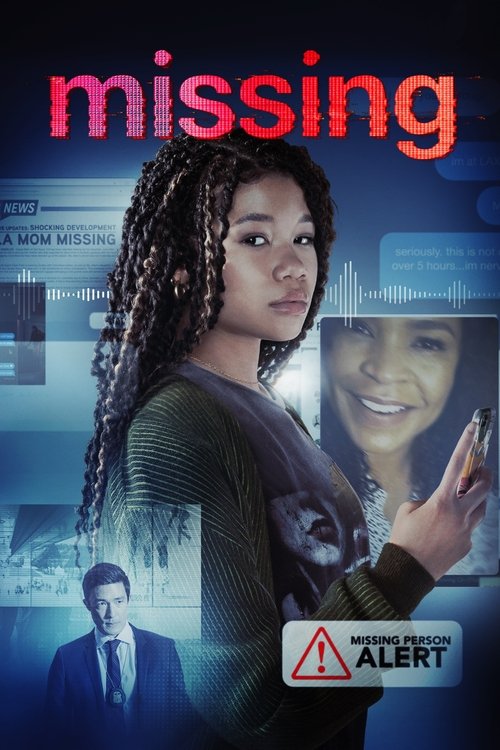
Missing (2023)
This Missing 2023 review comes down to one decisive strength: the screenlife format never feels like a novelty imposed on an ordinary thriller. It is the thriller. Searches, messages, payment records, location tools and camera feeds become June’s evidence board, while Storm Reid keeps all that technical ingenuity attached to a frightened daughter rather than a particularly stressful software demonstration.
Missing makes the laptop screen feel cinematic
The spoiler-safe setup is wonderfully direct. June’s mother, Grace, leaves for a trip to Colombia and fails to return, forcing her daughter to investigate from home through the digital traces people leave behind. Sony identifies Johnson and Merrick as the directors, with Reid leading a cast that includes Nia Long, Joaquim de Almeida, Ken Leung, Amy Landecker, Daniel Henney and Megan Suri.
From there, Missing finds suspense in actions most of us perform without thinking. June opens tabs, tests passwords, studies video, checks transactions and searches for people who might know more than they are saying. Each action remains easy to follow, but the accumulating information rarely feels simplistic. A clue can alter the practical direction of the investigation and June’s emotional understanding of her mother at the same time.

That is where the film separates itself from a gimmicky collection of browser windows. It recognizes that digital behavior has rhythm and body language. A cursor can hesitate. A half-written message can reveal doubt. A window can be moved aside because its contents have suddenly become uncomfortable. Information is hidden not only behind passwords but inside habits, omissions and the gap between what people say publicly and what they do privately.
Searches, hotel cameras, location services, online payments and local gig work collectively function as a contemporary detective’s clue board. The important point is that June is not waiting for technology to rescue her. Her fluency with it becomes investigative competence. Missing treats knowing where and how to look as meaningful agency, turning familiar tools into extensions of her curiosity, judgment and desperation.
The film also makes the audience participate without becoming needlessly obscure. We scan windows alongside June, notice names and wait for icons to change. That active viewing creates an unusually close relationship between form and suspense: every new search feels like a decision rather than a convenient delivery system for exposition.
Storm Reid gives the interface a heartbeat
A technically clever mystery still needs somebody worth following, and Reid is crucial to the film’s success. June begins from a place of recognizable adolescent distance. Her mother’s concern can feel intrusive, and a low-effort response to one of Grace’s messages later acquires a painful emotional charge. The investigation is therefore more than a series of escalating revelations. It is also June confronting how casually a person can dismiss an ordinary exchange without realizing it may become important.
Reid communicates that change even when the format confines her to a relatively small portion of the frame. Her physical reactions do work that a weaker screenlife movie might hand to clumsy explanatory dialogue. She can register calculation, panic and guilt while making June’s problem-solving look fast but credible. The character becomes resourceful without turning into a frictionless movie hacker who can penetrate any system because the screenplay needs another clue.
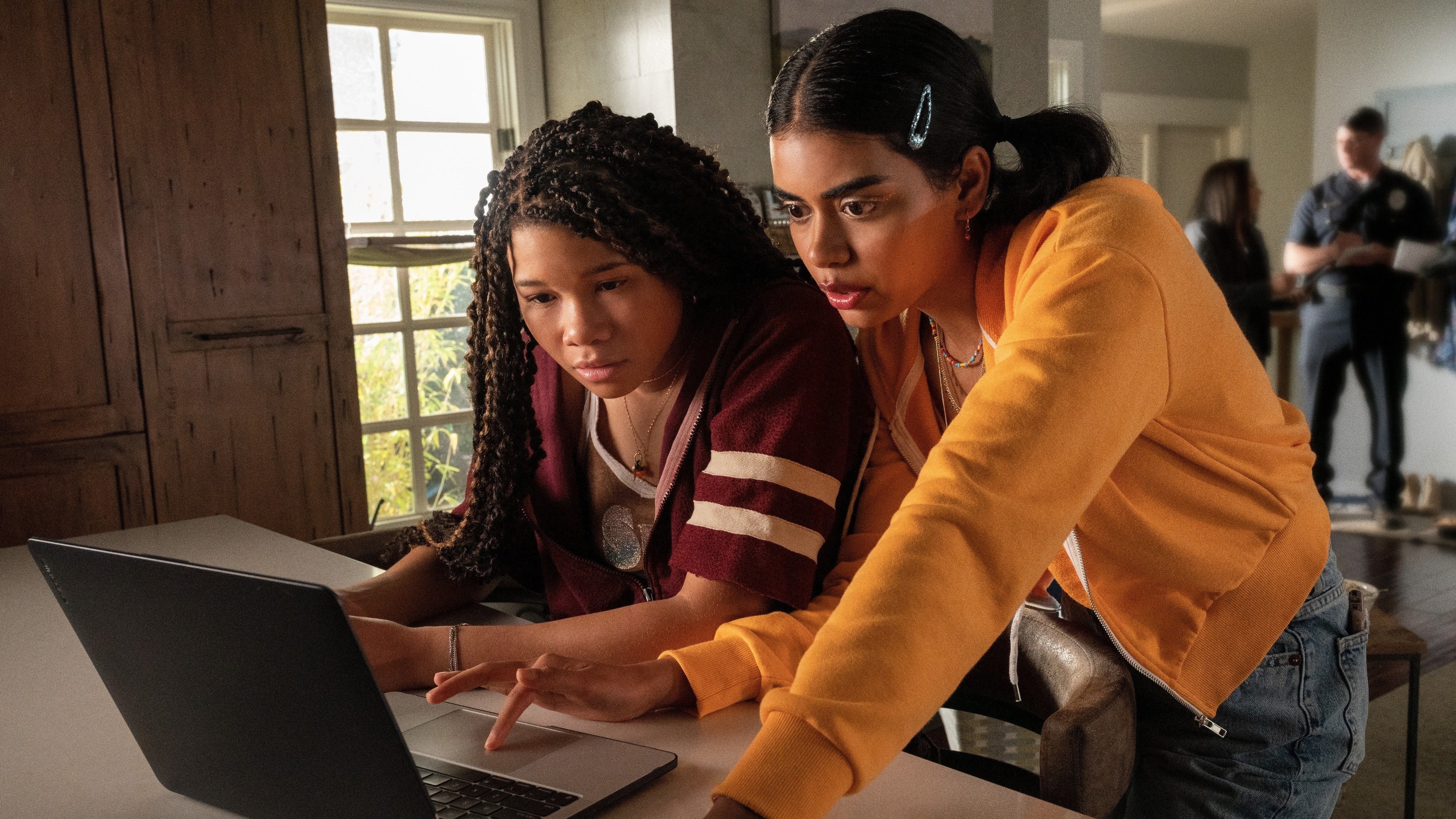
The performance also prevents the format from creating emotional distance. A conventional thriller can move closer to an actor whenever the drama demands it; Missing must often find intensity within video-call boxes, recordings and device cameras. Reid makes those restrictions useful. June’s face may occupy only part of the image, but her anxiety changes how we read everything else on the screen.
The mother-daughter relationship gives Missing its emotional spine, while Joaquim de Almeida’s Javi provides its warmest secondary presence. He assists June on the ground in Colombia, and their developing WhatsApp rapport creates a genuine sense of support without taking the investigation away from her. Their connection proves one of the film’s smartest ideas: two performers do not need to occupy the same physical room—or even the same country—to establish trust.
That warmth matters because the plot moves aggressively. Missing has little interest in letting the audience sit comfortably with a theory. Leads collapse, new possibilities appear and apparently mundane details acquire fresh significance. Exposition and action become the same thing: opening the right tab or waiting for a response can redirect the story as sharply as a conventional chase sequence.
The restricted viewpoint is built, not merely recorded
Calling Missing a film that takes place on computer screens risks understating how carefully manufactured those screens are. In an interview with the Motion Picture Editors Guild’s CineMontage, editors Arielle Zakowski and Austin Keeling explained that the movie was extensively previsualized using temporary screen assets, rough footage and voice recordings before the finished interfaces were incorporated. Mouse movement, composition and animated desktop elements all contributed to the construction of narrative and performance.
That planning is visible in the clarity of the finished film. The frame may be crowded, but it directs attention with impressive precision. Windows expand or retreat at the right moment, visual emphasis moves naturally, and the audience learns to scan the desktop alongside June. The result feels active rather than cheap. The interface is not a neutral container for footage; it is production design, editing and camera movement folded into one system.
The production used a hybrid approach rather than relying on a simple screen capture. Reporting on cinematographer Steven Holleran’s work describes the use of iPhones, Sony mirrorless cameras and physical device rigs, including an iPhone attached to Reid’s wrist for a smartwatch-like shot. Desktop environments, browser actions and messages were then extensively constructed and animated in post-production.
For me, this formal control is the film’s masterstroke. Missing accepts a severe visual restriction and then asks how much cinematic grammar can fit inside it. The answer is: quite a lot. Perspective shifts through camera feeds, editing occurs through the arrangement of windows, and suspense emerges from watching an icon indicate that somebody is typing. Mundane digital signals become loaded because the film has trained us to read them.
The approach works because the directors resist treating digital space as visually flat. Different devices imply different viewpoints, while the placement and movement of windows determine what June—and the audience—can process at any moment. Missing does not imitate traditional filmmaking so much as translate its principles into a new grammar.
The twists eventually push past elegance
The same appetite for new information that makes Missing so compulsive also produces its clearest weakness. Its late accumulation of revelations strains credibility, and the elegant investigation occasionally starts to feel like a mechanism designed to generate one more reversal. The momentum carries the film a long way, but viewers who demand airtight realism may find the heightened final stretch harder to accept.
This is not simply an objection to a mystery having twists. Missing is supposed to keep revising our understanding of events. The problem is that every additional layer competes with the emotional weight established by June’s fear and regret. When the machinery becomes too visible, the people caught inside it briefly risk looking like pieces being rearranged for maximum surprise. The final movement still grips, but it is less disciplined than the investigation that precedes it.
The screenplay is also more perceptive about using technology than interrogating it. Its interfaces are exceptional instruments of pace, perspective and suspense, but its broader observations about mediated relationships are comparatively modest. Some thin dialogue cannot always provide the missing depth. That makes the movie a better digital detective story than a profound statement about life online—which is hardly a fatal problem when the detective story is this effective.
Readers looking for another mystery built around painstaking investigation can continue with our review of David Fincher’s Zodiac. For a more intimate family thriller shaped by doubt and fractured trust, our Goodnight Mommy review offers a useful contrast. Missing is faster and more technologically playful than either, but all three understand that uncertainty becomes most effective when attached to a relationship rather than treated as an abstract puzzle.
Missing earns its emphatic recommendation
Missing works because its form, protagonist and mystery all pull in the same direction. June’s online fluency gives her believable agency, Reid supplies the emotional urgency, and the filmmakers turn every search field and video window into part of the suspense architecture. Even the smallest interface behavior can matter, which keeps the audience actively reading the screen instead of passively waiting for answers.
The final surge of twists is less controlled than the digital investigation leading to it, and the movie’s thematic reach does not quite match its technical imagination. Neither reservation seriously diminishes the experience. For viewers who enjoy fast, twist-heavy mysteries, this is screenlife filmmaking at its most confident: accessible, emotionally grounded and assembled with startling precision. Missing does not ask us to overlook the laptop screen. It teaches us how to watch one.
References
- MISSING | Sony Pictures Entertainment
- Missing (2023) – IMDb
- Review: Hacking, not shoe-leather, solves thriller 'Missing' | AP News
- Missing Review: Stand-Alone 'Searching' Sequel Delivers More Digital Hunt-and-Peck Thrills
- ‘Missing’: An adolescent Sherlock Holmes, by way of WhatsApp – The Washington Post
- Arielle Zakowski and Austin Keeling Talk Editing the Very Online Thriller ‘Missing’ – CineMontage: A Journal of the Motion Pictures Editors Guild
- Missing Cinematographer Steven Holleran on Letting Actors Shoot the Brilliant Screen Thriller
- Missing (2023) | Rotten Tomatoes