
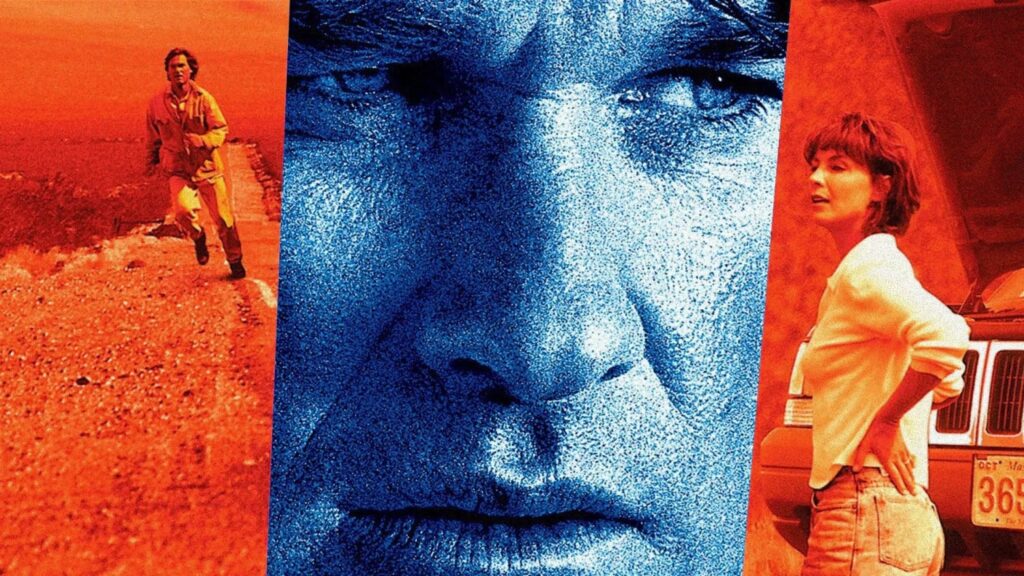
Breakdown is the kind of lean, adult thriller Hollywood rarely makes this well anymore. Jonathan Mostow strips away elaborate mythology, lengthy backstory and action-hero posturing, then traps an ordinary man in an indifferent landscape and keeps tightening the screws. The result is a brutally efficient roadside nightmare powered by Kurt Russell’s wonderfully vulnerable performance and action that feels dangerous because much of it genuinely involved heavy machinery being placed in precarious situations.
Our verdict A brutally efficient roadside thriller, Breakdown turns an ordinary travel nightmare into 93 minutes of escalating panic. Kurt Russell’s vulnerable performance and Jonathan Mostow’s muscular practical action make its occasional plotting shortcuts easy to forgive.
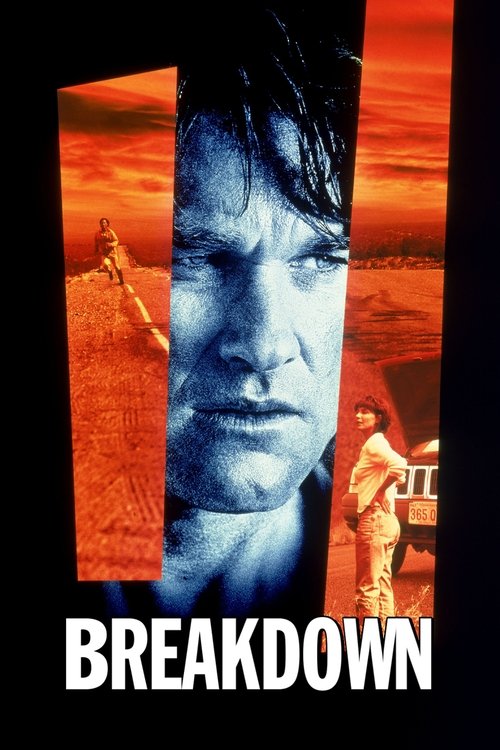
Breakdown (1997)
Its occasional plotting shortcuts are easy to spot, particularly once the mystery gives way to a more conventional final stretch. They are also easy to forgive. Breakdown understands that suspense becomes much more frightening when the protagonist cannot punch his way through every problem. For me, its real triumph is making vulnerability—not invincibility—feel heroic.
A simple nightmare with no room to breathe
Jeff and Amy Taylor are driving across the American Southwest when their vehicle trouble leaves them stranded on a remote highway. Amy accepts a truck driver’s offer to take her somewhere she can call for help, but when Jeff reaches the agreed meeting point, she has vanished and nobody admits to having seen her. That is essentially all the setup Breakdown needs before turning Jeff’s search into an escalating maze of uncertainty and hostility.
At approximately 93 minutes, the film moves with ruthless purpose. Mostow does not mistake complication for tension; he lets the frighteningly plausible foundation do the work. A breakdown, an unreliable stranger and a landscape where help may be miles away are mundane fears. The film’s skill lies in steadily removing every comforting explanation until ordinary inconvenience becomes full-blown paranoia.

The remote roads are not merely attractive scenery. Their openness becomes oppressive because Jeff is visible yet effectively alone. Passing vehicles and scattered buildings suggest civilization without offering its protection. Every encounter might provide information, but it might also pull him deeper into danger. The movie keeps us aligned closely with his limited knowledge, so even apparently routine conversations acquire a nasty edge.
Mostow later explained that he removed an explanatory prologue after test screenings and relied instead on behavior, clothing and other visual details to establish Jeff. He also described shooting much of the film from Jeff’s point of view so viewers would share his uncertainty. Mostow’s detailed Metrograph interview confirms how deliberate that restraint was. It was exactly the right decision: backstory would only have delayed the nightmare and reassured us that the screenplay had answers ready.
Kurt Russell makes panic more compelling than power
Russell is superb because he refuses to play Jeff as a dormant superhero waiting for permission to emerge. His posture is hunched, his voice carries mounting strain and his appearance becomes increasingly dishevelled as the ordeal grinds him down. Mostow described Jeff as a “Regular Joe” who is completely over his head and forced to improvise, while Russell connected the character’s anxious physicality to the discomfort he experienced during filming.
That physical unease matters. Jeff does not suddenly become cooler when the danger escalates; he becomes more desperate. He makes decisions under pressure, absorbs punishment and keeps moving because stopping is unthinkable. Russell had already demonstrated effortless screen authority many times, but Breakdown gains its emotional force from asking him to suppress that authority. We believe Jeff might fail, which makes each small act of courage count.
J.T. Walsh is equally valuable as Red Barr, projecting menace without turning every moment into a performance of capital-E Evil. The calmness is the point. This is a world in which danger can wear a friendly expression and speak in a reasonable tone, making Jeff’s inability to convince anyone of the truth feel even more suffocating.

Viewers interested in another stripped-down thriller where characterization emerges through movement and pressure should also revisit Walter Hill’s The Driver. Breakdown is less stylized and more emotionally exposed, but both movies understand the pleasure of removing narrative decoration until only pursuit, personality and consequence remain.
Real vehicles give the action bruising weight
When Breakdown finally expands from psychological suspense into physical action, it retains the weight established by its quieter scenes. Cars and trucks occupy actual space. They skid, collide and threaten bodies with an impact that clean digital spectacle often struggles to reproduce. Mostow has said the production used real vehicles because he wanted that photographed physicality.
The climactic set piece is the clearest example. A contemporary Los Angeles Times production report documented that the filmmakers suspended a real truck from a real bridge after structural-engineering tests, safety checks and extensive crane protection; performers also physically hung from the vehicle. Knowing the logistics is impressive, but the sequence works because the preparation never appears on screen as self-congratulation. It simply feels alarmingly tangible, as if all that metal could slip beyond anyone’s control.
This commitment separates Breakdown from thrillers that become weightless precisely when they are supposed to peak. Its action is not an escape from Jeff’s vulnerability but an extension of it. Machinery remains larger and stronger than the people scrambling around it, and survival looks exhausting rather than glamorous. Fans of muscular practical filmmaking may find a useful companion in our review of Predator, another action thriller that understands the value of making its stars look physically challenged rather than digitally untouchable.
The payoff is rougher than the setup
The film is not immaculate. A bank sequence pushes credibility harder than the earlier material, and a later clue arrives with the conspicuous convenience of a screenwriter moving pieces into position. Roger Ebert similarly argued that the setup was stronger than parts of the action-oriented payoff and questioned those specific developments. Ebert’s contemporary review also objected to the harsher retributive impulse near the ending.
That final movement does exchange some of the setup’s unnerving restraint for blunt catharsis. Breakdown begins by suggesting that the most frightening thing in the world is not a single villain but the ease with which an ordinary person can disappear while everyone else remains indifferent. Its conclusion is more interested in making the guilty suffer. The satisfaction is real, but it is less morally disciplined and less unsettling than the material leading to it.
Still, these weaknesses do not break the film’s grip. Mostow has already invested the action with enough character and physical jeopardy that even a convenient turn carries momentum. The screenplay’s machinery briefly becomes visible, but the larger machine keeps roaring forward.
Breakdown remains essential thriller viewing
Breakdown is essential viewing for anyone who likes compact, serious thrillers built around ordinary vulnerability, escalating distrust and practical stunt work. It has no interest in comic-relief detours, sprawling lore or an indestructible hero. It presents a terrible situation, denies its protagonist easy solutions and lets desperation reshape him one bruising decision at a time.
The setup may be more elegant than every part of the payoff, but few thrillers sustain this much pressure with so little waste. Russell makes fear active rather than passive, Mostow turns empty roads into hostile territory, and the practical action gives the final escalation genuine force. Breakdown is lean, mean and confident enough to know that the most compelling hero is not the man who cannot be hurt—it is the man who is visibly terrified and keeps going anyway.