
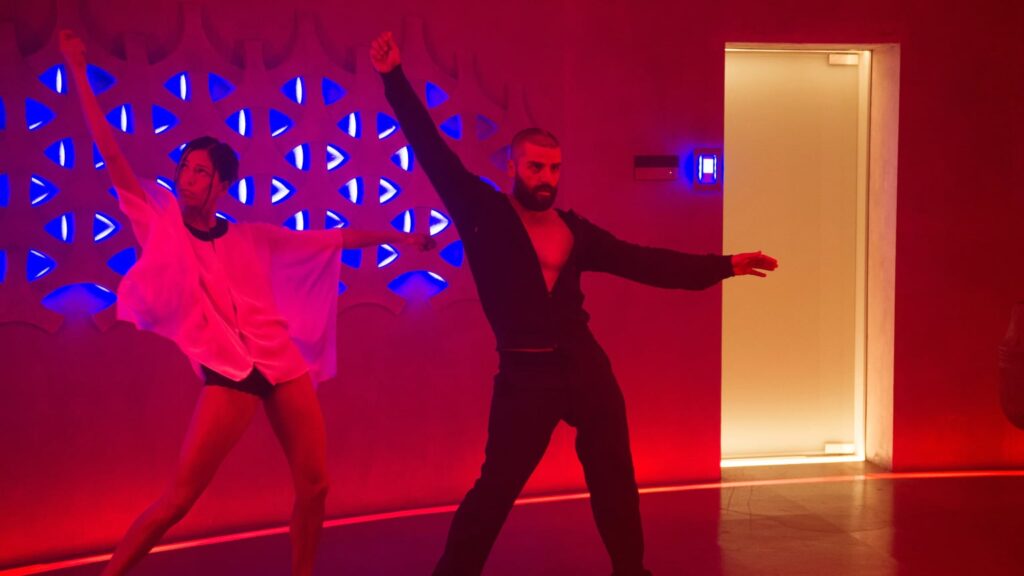
Ex Machina is a beautifully controlled psychological trap disguised as a grand inquiry into artificial intelligence. Alex Garland’s feature directorial debut is cold, precise and genuinely unnerving, especially when it confines Caleb, Nathan and Ava within a luxurious research estate where every transparent wall creates another uncertainty. Yet the film’s immaculate presentation promises a depth its screenplay does not consistently deliver. For me, Ex Machina works better as an exercise in confinement than as a definitive statement about consciousness.
Our verdict Ex Machina is an impeccably controlled AI chamber thriller whose unnerving design and Alicia Vikander’s elusive performance outclass a screenplay that raises provocative questions without exploring enough of them.
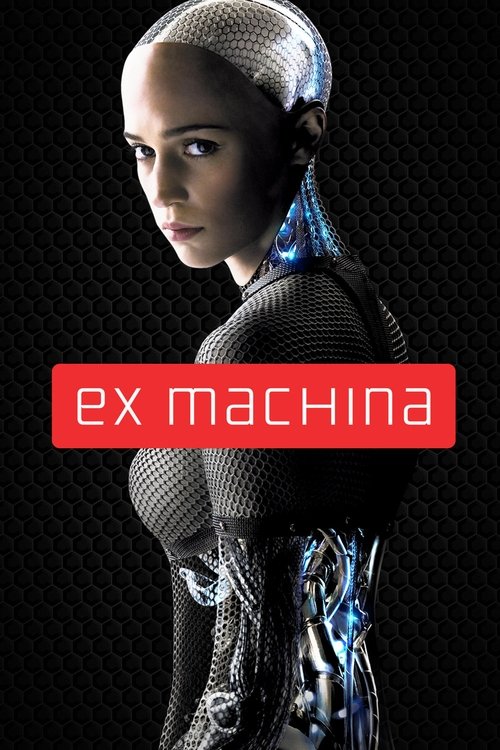
Ex Machina (2015)
The setup is clean. Programmer Caleb Smith is invited to the isolated home of technology CEO Nathan Bateman, where he is asked to evaluate Ava, a humanoid artificial intelligence created in secret. Domhnall Gleeson plays Caleb, Oscar Isaac plays Nathan and Alicia Vikander plays Ava, with Sonoya Mizuno appearing as Kyoko. From there, Garland constructs a small-scale power game around surveillance, creation, autonomy and the increasingly unreliable distinction between observing someone and manipulating them.
The glass house becomes an elegant prison
The estate is the film’s most persuasive argument. Remote natural beauty surrounds a minimalist underground complex filled with glass barriers, embedded lighting and rooms that seem designed to expose anyone occupying them. Cinematographer Rob Hardy explained that the production deliberately contrasted the landscape with Ava’s enclosed environment, using extremely slow forward camera movements to create creeping dread. Roughly 15,000 tungsten bulbs helped bring warmer light into the sharp, clean sets. British Cinematographer’s production interview with Rob Hardy
That design does more than make Ex Machina look expensive and tasteful. It destabilizes the balance of power. Ava is physically confined, but Caleb is constantly monitored, while Nathan controls the building without ever seeming entirely in control of what is happening inside it. Glass promises visibility while preventing contact. Cameras promise knowledge while encouraging performance. The film understands that observation changes behavior, and its rooms turn that idea into a persistent visual threat.

I like the estate’s controlled menace more than the expanding philosophical conversation. Garland does not need chases or sustained action when a locked door, a power interruption or an almost imperceptible camera move can make the experiment feel unsafe. The cold architecture also gives the actors room to work: every pause and ambiguous look becomes more conspicuous because there is nowhere for the characters—or the audience—to hide.
Alicia Vikander keeps Ava impossible to solve
Vikander gives Ex Machina its essential ambiguity. Ava must appear vulnerable enough to attract Caleb’s sympathy, intelligent enough to challenge his assumptions and opaque enough to keep every interpretation provisional. Vikander does not reduce her to an innocent machine discovering humanity or an obvious threat pretending to be harmless. Ava always appears to be thinking, but the film carefully withholds whether we are seeing spontaneous emotion, strategic behavior or a distinction that no longer matters.
The visual effects preserve that performance instead of burying it. Ava was created through a hybrid production process involving physical costume components, tracking markers and digital replacement of Vikander’s mesh suit with robotic anatomy. The scenes were filmed in normally lit dramatic environments rather than against blue or green screens, allowing the actors to perform together. VFX supervisor Andrew Whitehurst said the intention was to protect that interaction instead of turning the production into a technical exercise. Film Independent’s interview with VFX supervisor Andrew Whitehurst
The result is crucial. Ava feels like a character occupying the room, not a visual-effects demonstration waiting for applause. Her transparent body is technically intricate, but Vikander’s face and posture remain the focus. The effect won an Academy Award, yet its greater achievement is dramatic: it makes Caleb’s attempt to interpret Ava feel plausible while ensuring that her machinery never provides the easy answer he wants.
The interview structure builds tension—and reveals the limits
The repeated Caleb-Ava sessions give the film a disciplined, chapter-like structure. Each encounter adds another possibility without entirely replacing the previous one. Is Caleb conducting a test, becoming part of one or merely being permitted to believe he has authority? The tension comes from interpretation, shifting vulnerability and competing performances rather than spectacle. Hardy compared the long dialogue scenes to working on a theatrical play, and that concentration suits Garland’s contained premise.

The drawback is that the conversations introduce more provocative ideas than they properly investigate. Consciousness, autonomy, ownership and gendered power all enter the experiment, but the screenplay sometimes circles them instead of pushing deeper. At 108 minutes, the deliberate rhythm can make an elegant short-story premise feel stretched. Patience produces dread, certainly, but it also leaves enough empty space to notice when a question has been raised mainly because it sounds fascinating.
Peter Bradshaw’s Guardian review objected that the Caleb-Ava interviews fail to develop their intellectual possibilities fully, and that criticism identifies my central reservation. The Guardian’s review by Peter Bradshaw Ex Machina is clever at arranging uncertainty, but less adventurous when deciding what to do with it. The movie keeps asking who possesses real agency, then relies on its mystery to avoid exploring some of the messier consequences.
Its critique of control is deliberately uncomfortable
The construction of female artificial bodies gives that limitation a sharper edge. The story is plainly concerned with male ownership, projection and the belief that creating intelligence confers the right to control it. At the same time, its imagery repeatedly presents those bodies through sexualized design. RogerEbert.com argued that the film avoids exploiting its women despite the premise, while Bradshaw criticized its “pornified robot-sexiness.”
That disagreement is productive because the tension cannot be dismissed as accidental. Ex Machina wants the audience to question Nathan’s gaze and Caleb’s fantasies, but it also depends upon the same imagery to give its thriller seductive force. I do not think that contradiction invalidates the film. I do think it remains insufficiently examined. The movie is more confident at showing objectification than untangling its own participation in it.
Viewers interested in another, very different cinematic treatment of artificial intelligence, identity and connection can continue with MovieBunker’s review of Teknolust. Garland’s film is far colder: it treats intimacy as evidence to be interpreted and vulnerability as a possible weapon.
A formidable thriller with narrower ideas than it suggests
Ex Machina is easy to admire and harder to embrace. Its strongest elements—Vikander’s elusive performance, Hardy’s watchful photography, the integrated visual effects and the estate’s prison-like beauty—work together with exceptional control. The film makes stillness threatening and conversation combative. Few science-fiction thrillers create this much unease from people sitting across a glass partition.
Its intellectual reach, however, never quite matches that presentation. Garland assembles consciousness, desire, autonomy and gendered control into a sleek experiment, but too often leaves the most difficult questions under glass. I recommend it with reservations to viewers who enjoy cold, dialogue-driven science fiction and psychological power games. Anyone expecting warmth, action or a fully developed philosophical argument may find the experiment more impressive than satisfying—but its atmosphere and Vikander’s performance still make it worth entering the cage.
References
- Ex Machina | A24
- Rob Hardy BSC / Ex Machina – British Cinematographer
- Know Your Crew: Ex Machina's VFX Supervisor on How To Make Magic with VFX – Film Independent
- Ex Machina movie review & film summary
- Ex Machina (2015) directed by Alex Garland • Reviews, film + cast • Letterboxd
- Ex Machina review – an elegant but limited artificial intelligence thriller | Ex Machina | The Guardian