
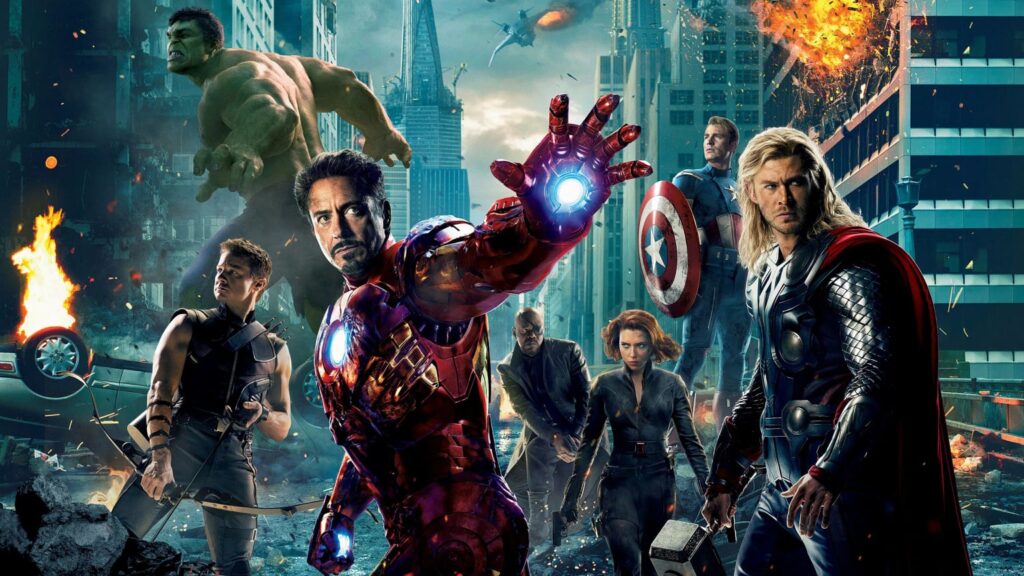
The Avengers still works because it understands that assembling superheroes is less interesting than watching them irritate one another. Joss Whedon’s 2012 crossover is a hugely entertaining piece of blockbuster traffic control: it takes a crowded roster, gives everyone a recognizable voice and turns franchise logistics into a comedy of competing egos. The eventual alien invasion is considerably less distinctive, but by then the movie has made its heroes fun enough to carry even the most obligatory city-smashing spectacle.
Our verdict The Avengers remains a hugely entertaining ensemble blockbuster, powered by combative chemistry, sharp comic timing and unusually readable action, even if its personality eventually gives way to a familiar, overextended city-smashing finale.
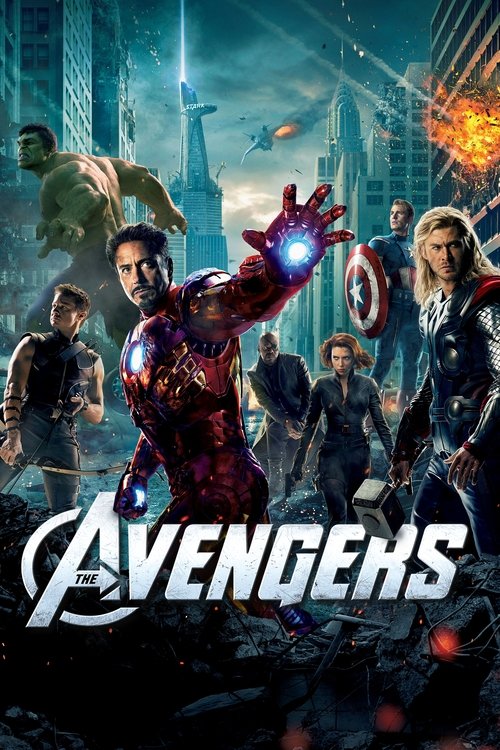
The Avengers (2012)
That is the film’s real achievement. The Avengers arrived as the culmination of the Marvel Cinematic Universe’s first phase, bringing together characters established across Iron Man, The Incredible Hulk, Thor and Captain America: The First Avenger, with Black Widow and Hawkeye completing the lineup. BAFTA’s production account describes the scale of that assembly. It could easily have played like a two-hour corporate group photo. Instead, the movie makes incompatibility its engine.
The team formation is the main event
Loki’s theft of the Tesseract gives Nick Fury a reason to recruit Iron Man, Captain America, Hulk, Thor, Black Widow and Hawkeye, but the external threat is mainly an excuse to put volatile personalities in the same room. The film’s smartest decision is refusing to hurry past their resistance. These are not instant friends united by a swelling score. They are powerful individuals with different loyalties, temperaments and ideas about who should be giving orders.
The banter works because it is more than decoration between action scenes. Every argument establishes the group’s hierarchy, exposes an insecurity or shifts an alliance. Robert Downey Jr.’s Tony Stark naturally tries to seize the room, but his disruptive confidence becomes funnier and more revealing when it collides with Chris Evans’ disciplined Steve Rogers. Chris Hemsworth’s Thor brings divine entitlement, while Mark Ruffalo’s Bruce Banner hangs back with the uneasy composure of a man who knows he could end the debate by losing his temper.

Scarlett Johansson’s Natasha Romanoff is also allowed to operate inside the ensemble’s strategic core rather than merely connecting its louder men. Her power is observation: she reads a conversation, identifies the ego driving it and changes her approach accordingly. That variety is what keeps the roster coherent. The heroes do not need equal screen time so much as distinct dramatic functions, and the film is remarkably good at reminding us who each person is whenever the group threatens to become a blur of costumes.
For me, the pleasure is not simply seeing these characters occupy one frame. It is watching them interrupt, provoke and expose one another. The reluctant alliance develops through friction rather than dutiful franchise administration, making the eventual moment of cooperation feel like a payoff instead of a contractual obligation.
Loki makes superhero grandeur fun to puncture
Tom Hiddleston’s Loki is the right antagonist for this particular Marvel movie. He can threaten Earth, but he also behaves like someone personally offended that the universe has failed to appreciate his magnificence. Hiddleston delivers the grand speeches with conviction while preserving the theatrical petulance underneath them. The result is playful menace rather than crushing solemnity, which suits a film eager to puncture superhero grandeur whenever it becomes too impressed with itself.
Loki also turns the comedy into part of the conflict. He assumes pride will make the heroes easy to divide, and for much of the film they seem determined to prove him right. Their cooperation consequently has a clear shape. They do not suddenly become a warm surrogate family; they reach the more convincing conclusion that their separate strengths must be coordinated. The movie earns its assembly by letting disunity remain entertaining until it becomes dangerous.
The action remains readable when the scale explodes
Once the Avengers finally operate as a unit, the climactic battle has an unusually clear sense of purpose. These heroes possess radically different abilities, and the sequence keeps those contrasts visible instead of reducing everyone to figures flying through anonymous digital noise. BAFTA’s production material says the effects team faced the storytelling challenge of distinguishing each character without allowing one to overwhelm the others. That principle survives on screen: however large the destruction becomes, the team remains the subject.

The physical foundation helps. The battle combined practical vehicles, debris, pyrotechnics and a 300-foot viaduct set with green-screen photography and digitally extended New York environments. Full-body Iron Man action and Hulk were handled digitally, and the finished movie contained more than 2,000 visual-effects shots. In an interview with visual-effects supervisor Jeff White, he described adding smoke, dust, ash, paper, embers and fire to give the battle a more chaotic, war-film texture.
That mixture gives the spectacle weight. Debris seems to occupy the same environment as the actors, characters move through identifiable spaces, and the editing usually lets an action beat communicate before rushing toward the next one. The camera’s movement from hero to hero is not just a victory lap; it visually confirms that the clashing individuals have become a functioning system. Huge action is easy to commission. Coherent action is harder, and The Avengers makes its many moving parts unusually legible.
The invasion cannot match the personalities fighting it
The weakness is that Marvel’s machinery eventually becomes more conventional than the personalities trapped inside it. Once the movie settles into prolonged urban destruction, its witty ensemble comedy begins to resemble the effects-heavy blockbuster it had spent the buildup outsmarting. The attackers provide scale and urgency, but little character. They are targets arranged across a digital battlefield rather than an enemy as entertaining as Loki.
At 143 minutes, the film also lacks complete discipline. The early friction is brisk and purposeful, while the final confrontation keeps escalating after its dramatic point has become clear. I enjoy watching the heroes coordinate, but the movie could preserve that satisfaction with less repetition. There is an irony here: it sometimes rushes the conversations that give it personality, then becomes extremely generous with minutes once buildings start breaking.
That imbalance matters because the cast is more engaging than the invasion. The Avengers is at its best when a conversation feels like a contest and every joke reveals who believes they should control the room. Its action pays off those tensions, but it cannot replace them. Marvel would spend years making its finales bigger; this film’s more valuable lesson is that scale works best after personality has given it meaning.
The verdict: chemistry beats continuity homework
The Avengers remains an easy recommendation for viewers who want accessible superhero spectacle, fast comic timing and a charismatic ensemble. Its crowded setup is remarkably coherent, Hiddleston brings exactly the right theatrical mischief, and the climax coordinates enormous visual effects without sacrificing basic action geography. Viewers exhausted by quips or lengthy city-leveling finales may admire the cast more than the blockbuster surrounding it, and that final stretch is where my enthusiasm cools.
Still, the movie’s best qualities have lasted. It makes a franchise crossover feel like a collision of personalities rather than a meeting scheduled by intellectual property. Later Marvel films would attach greater emotion and heavier continuity to the formula—most obviously the farewell examined in our Avengers: Endgame review—but this first assembly remains lighter on its feet. The invasion may be familiar, yet the pleasure of watching these incompatible heroes become a team still lands.