Reservoir Dogs is a ferociously controlled crime thriller in which conversation feels as dangerous as gunfire. For this Reservoir Dogs 1992 review, the key is not simply that Quentin Tarantino withholds the central robbery. It is that he recognizes the aftermath as the more revealing spectacle: a group of supposedly professional criminals trapped with their fear, their aliases and their rapidly disintegrating performances of cool. The film’s writerly swagger occasionally gets in its own way, but its tension, ensemble and formal confidence remain exceptional.
Our verdict Reservoir Dogs is a ferociously controlled crime thriller that turns an unseen robbery into a gripping test of loyalty, fear and performed toughness. Its writerly swagger occasionally limits its emotional depth, but the tension, ensemble and formal confidence are exceptional.
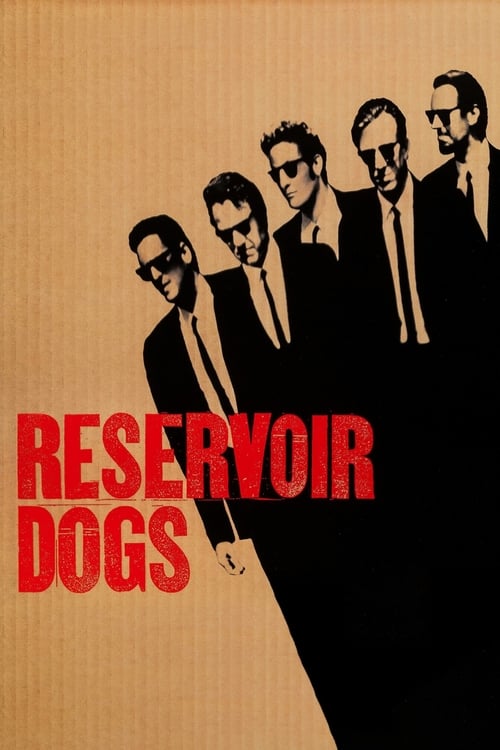
Reservoir Dogs (1992)
Written and directed by Tarantino as his feature-directing debut, the film follows the surviving members of a criminal crew as they regroup in a warehouse after a diamond robbery collapses into violence. Someone may have betrayed them, nobody has the complete picture, and trust becomes a resource more valuable than the missing diamonds. Crucially, the robbery itself stays off-screen; Tarantino concentrates on what the failure exposes instead.
Reservoir Dogs Makes the Missing Robbery Its Smartest Decision
Most heist movies sell competence before introducing chaos. Reservoir Dogs skips the glamorous machinery and drops us into the consequences. We do not get the procedural pleasure of watching every role click into place. We get panic, accusation and wounded men trying to reconstruct an event that each experienced differently. That absence gives the robbery unusual weight: because Tarantino refuses to show it, every retelling becomes partial evidence rather than objective truth.
The fractured chronology then distributes information with ruthless precision. Character-focused flashbacks allow the audience to understand certain dangers before everyone in the warehouse does, transforming suspicion into the film’s real action. The structure does not merely decorate a simple crime story or shuffle scenes to appear clever. It controls who knows what, when they know it and how much dread sits beneath an otherwise casual exchange.
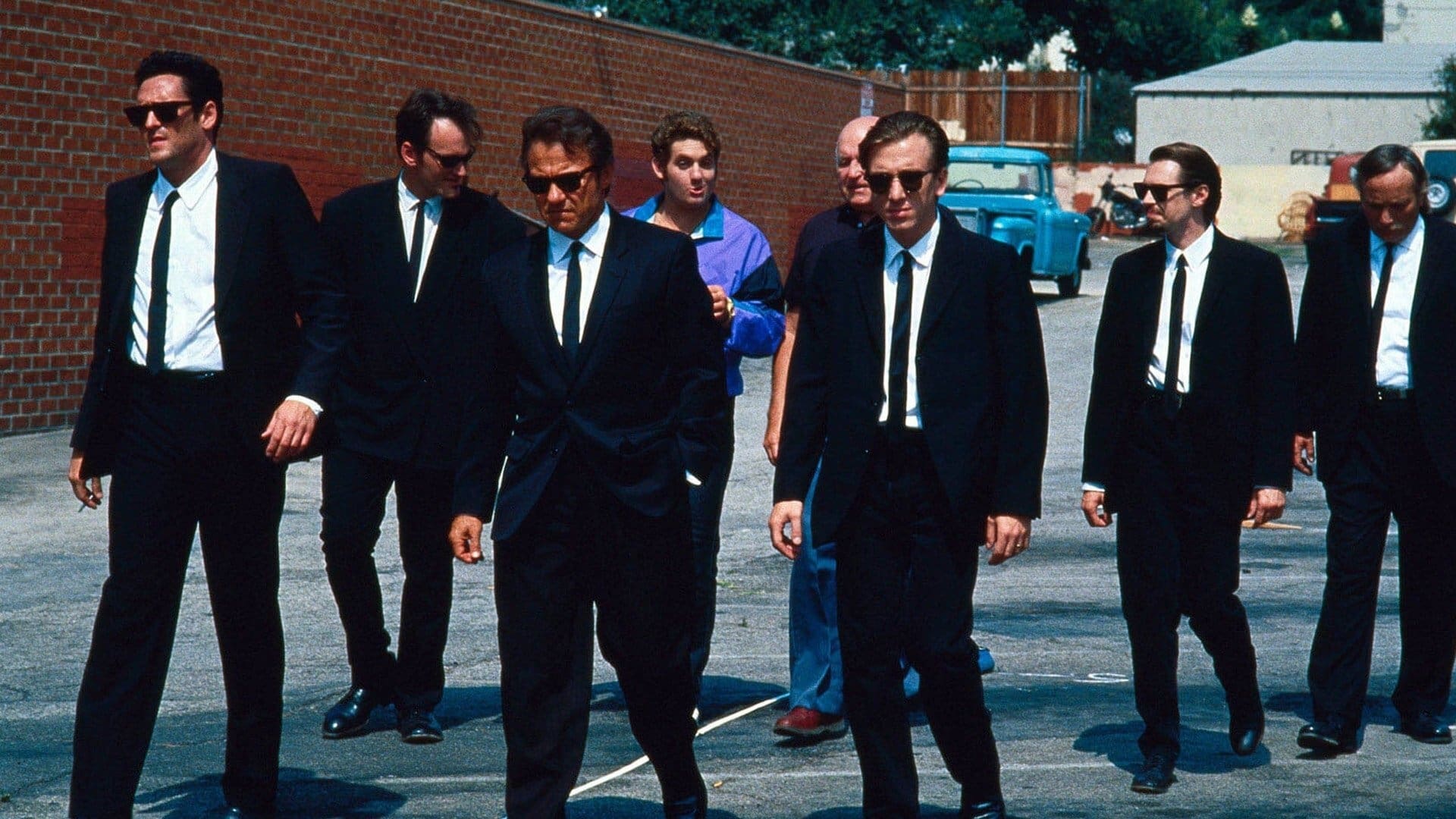
That is why the warehouse never feels like a budgetary compromise. Its emptiness becomes a trap, and its sparse layout magnifies every change in allegiance. Cinematographer Andrzej Sekula, editor Sally Menke and production designer David Wasco are among the film’s key credited craftspeople, and the cumulative result is a setting that feels both theatrical and brutally immediate. Menke’s editing is especially important: each movement away from the warehouse adds context, but the film always returns with the pressure increased.
The Dialogue Is Another Loaded Weapon
Reservoir Dogs announced Tarantino as a filmmaker fascinated by how dangerous people talk when they are not doing the supposedly important part of the job. The jokes, insults and pop-culture arguments are not warm bonding exercises. These men talk to dominate the room, test one another and maintain the illusion that they remain in control. An alias offers protection, but it also creates a role that must be performed convincingly.
For me, this is the film’s defining achievement. The criminals’ macho posturing initially sounds effortless, yet pressure reveals how rehearsed it is. Language works alongside guns as a threat, and the escalation from joking to hostility is frightening because the two modes were never as separate as they appeared. The BFI similarly reads the film’s aliases, bravado and aggression as part of a study of masculine performance, rather than treating the dialogue as detachable verbal fireworks.
Tarantino is very good at turning a digression into a contest. Who gets interrupted, who refuses to participate and who changes the mood matter as much as the nominal subject of the conversation. The closest comparison is not necessarily another heist picture but any thriller built around a disruptive personality entering a confined social space. That same pleasure—watching intimidation alter the temperature of a room—drives Jonathan Glazer’s Sexy Beast and Ben Kingsley’s menacing performance, although the two films apply it very differently.
There is a cost to all this verbal confidence. Some exchanges sound conspicuously authored, as if every criminal has wandered in from the same exceptionally profane writers’ room. The digressions are often electric, but the film can become so pleased with its rhythm that momentum and character development have to wait outside. That self-consciousness is part of the movie’s personality; it is also the clearest reason someone might admire its construction without completely surrendering to it.
A Volatile Ensemble Keeps the Warehouse Alive
The cast prevents the film from becoming a screenwriting demonstration. Harvey Keitel gives the group battered authority and just enough steadiness to make loyalty seem possible. Tim Roth brings exposed nerves and physical vulnerability, while Michael Madsen’s composure is disturbing precisely because it appears immune to the panic infecting everyone else. Steve Buscemi turns anxious self-interest into its own survival strategy. Chris Penn adds more combustible energy, and Lawrence Tierney makes the criminal hierarchy credible before the plan has even unraveled.
These are not interchangeable tough guys. Each performer finds a distinct relationship with fear: suppressing it, broadcasting it, exploiting it or pretending not to recognize it. The differences create the pressure-cooker chemistry. When two characters disagree, the tension comes not only from the possibility of violence but from competing definitions of professionalism. Everyone wants to be the person who understands the situation, and nearly every new piece of information makes that confidence look more foolish.
The movie’s dismantling of masculine invulnerability makes an interesting companion to Predator as a subversive action-thriller classic. Both films understand the entertainment value of imposing men projecting competence, then place that image under severe pressure. Reservoir Dogs is smaller, nastier and more verbally aggressive. Its battlefield is a warehouse floor, and humiliation can be as destabilizing as injury.
The ensemble is vivid rather than consistently deep, however. We understand how these men behave under pressure more fully than we understand who they are beyond the criminal identities assembled for the job. That makes betrayal gripping as a mechanism of suspense, but not always devastating as human tragedy. The performances add emotional texture, yet the screenplay rarely lets its relationships escape the narrow channel required by the thriller.
Music and Restraint Make the Violence More Uncomfortable
Reservoir Dogs is remembered as a violent film, but its most unsettling choices are often built around anticipation and response. The violence is intimate, pain-centered and stripped of heroic action choreography. A notorious sequence refuses to show the literal act at its decisive moment; buildup, music and reaction do the uglier work instead. Tarantino understands that explicit imagery is not automatically the most disturbing option. Sometimes the audience’s imagination is a more efficient accomplice.
The K-Billy radio framing and upbeat pop songs sharpen that discomfort. The music does not arrive to dignify suffering or tell us how solemnly to react. Its cheerfulness collides with intimidation and bodily pain, producing a tonal cruelty that the film controls with unnerving confidence. The soundtrack belongs to the same world as the banter: familiar entertainment is repurposed as a tool for managing, disguising or intensifying violence.
This stylization also creates distance. Reservoir Dogs is incisive about the performance of toughness, but less interested in fully exploring the suffering left behind when that performance becomes lethal. The controlled compositions, musical counterpoint and morbid humor prevent the movie from becoming solemn, yet they also place a ceiling on its emotional force. I feel the tension intensely; I do not always feel the relationships with the same depth.
Its Swagger Is Both the Attraction and the Limitation
That tension between craft and emotional range has followed the film from its original reception. In Roger Ebert’s original review, he praised the strength of the cast—particularly Tierney’s authority—while arguing that the lengthy conversations did not reveal enough additional character. The criticism identifies a genuine limitation, but I land more positively because the speech is doing another kind of dramatic work. It reveals hierarchy, insecurity and control even when it does not provide conventional psychological depth.
The New Yorker likewise identified a stagy, hermetic quality in the compositions and argued that the film’s stylized bloodshed limits its emotional force. I understand that reservation, especially when the characters seem designed to collide rather than connect. Still, the theatrical containment is also one of the film’s great strengths. The warehouse becomes a stage where criminal cool cannot survive contact with uncertainty. Tarantino may not make every relationship profound, but he makes every unstable alliance legible.
The result is a movie with a narrow emotional register but extraordinary command within it. Its abrasiveness is deliberate, its humor is hostile, and its characters are not asking to be loved. Viewers looking for the kinetic pleasures of a conventional robbery film may wonder why the expensive part happened somewhere else. Anyone receptive to nonlinear storytelling, abrasive personalities and dialogue-driven suspense will find that omission to be the whole point.
Verdict: An Essential Pressure-Cooker Crime Thriller
Reservoir Dogs remains essential because it turns limitation into identity. One principal location becomes a psychological trap. A missing robbery becomes the source of suspense. Pop music becomes an instrument of unease, and casual conversation becomes a struggle for dominance. Tarantino’s confidence is occasionally indistinguishable from self-satisfaction, and the film’s betrayals generate more suspense than heartbreak. Neither weakness seriously compromises the precision of the construction.
This is an emphatic recommendation for viewers who like crime thrillers driven by fractured chronology, volatile performances and words sharpened into weapons. It is less inviting if you need emotional warmth, sustained action spectacle or characters whose inner lives extend far beyond the mechanics of suspicion. Reservoir Dogs does not offer those comforts. It offers something leaner and meaner: a room full of men discovering that the roles they rehearsed cannot protect them once fear takes over.