
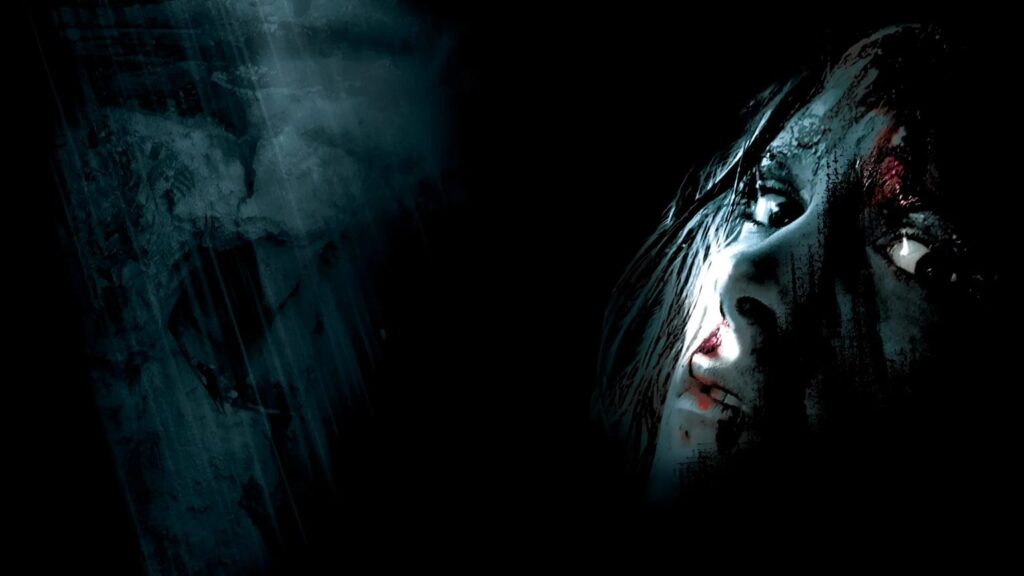
This The Descent 2005 review comes down to one brutally simple idea: the cave is the real monster. Neil Marshall’s film is a fiercely controlled survival-horror ordeal that makes darkness, stone and shrinking space terrifying long before anything supernatural enters the frame. Its later creature-feature mechanics are more familiar, but they barely diminish the suffocating power of what comes before.
Our verdict A fiercely controlled survival-horror film that makes darkness, stone and shrinking space terrifying long before its creatures arrive. The later genre mechanics are more familiar, but they barely diminish its suffocating power.
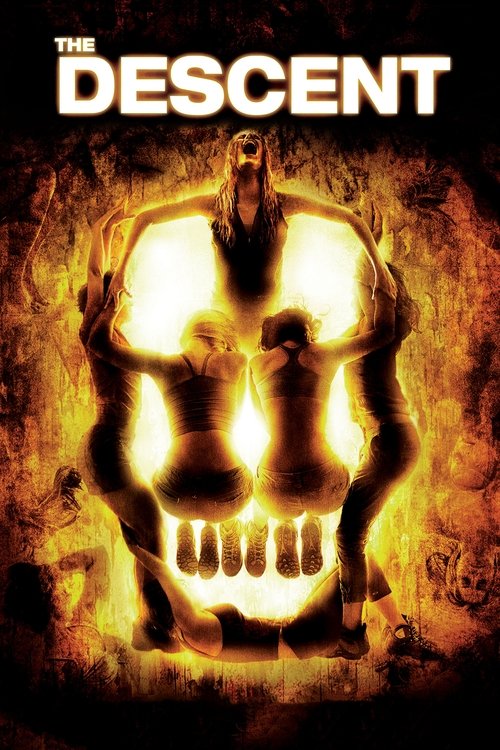
The Descent (2005)
Written and directed by Marshall, The Descent follows Sarah and five friends on a caving expedition in the Appalachian Mountains after a personal tragedy has left her emotionally shattered. A collapse traps the group underground, forcing them to search for another route while confinement and tension turn the expedition into a fight for survival. The film stars Shauna Macdonald, Natalie Mendoza and Alex Reid among its principal cast and runs 99 minutes. The British Film Institute’s film record confirms its British production credits and principal cast.
That is all the setup anyone should need. The Descent does not require elaborate mythology or a parade of shocks to establish control. It takes a basic fear—being stuck somewhere that does not care whether you live—and tightens it until the audience can practically feel the rock pressing against its ribs.
The Descent 2005 review: The cave earns top billing
Marshall’s patient build-up is the movie’s masterstroke. The creatures are delayed until roughly the halfway point, leaving collapses, crevasses, drops and narrow passages to generate the initial terror. This is not empty waiting-room suspense before the “real” horror begins. The cave is already attacking the group through its scale, unstable geography and complete indifference.
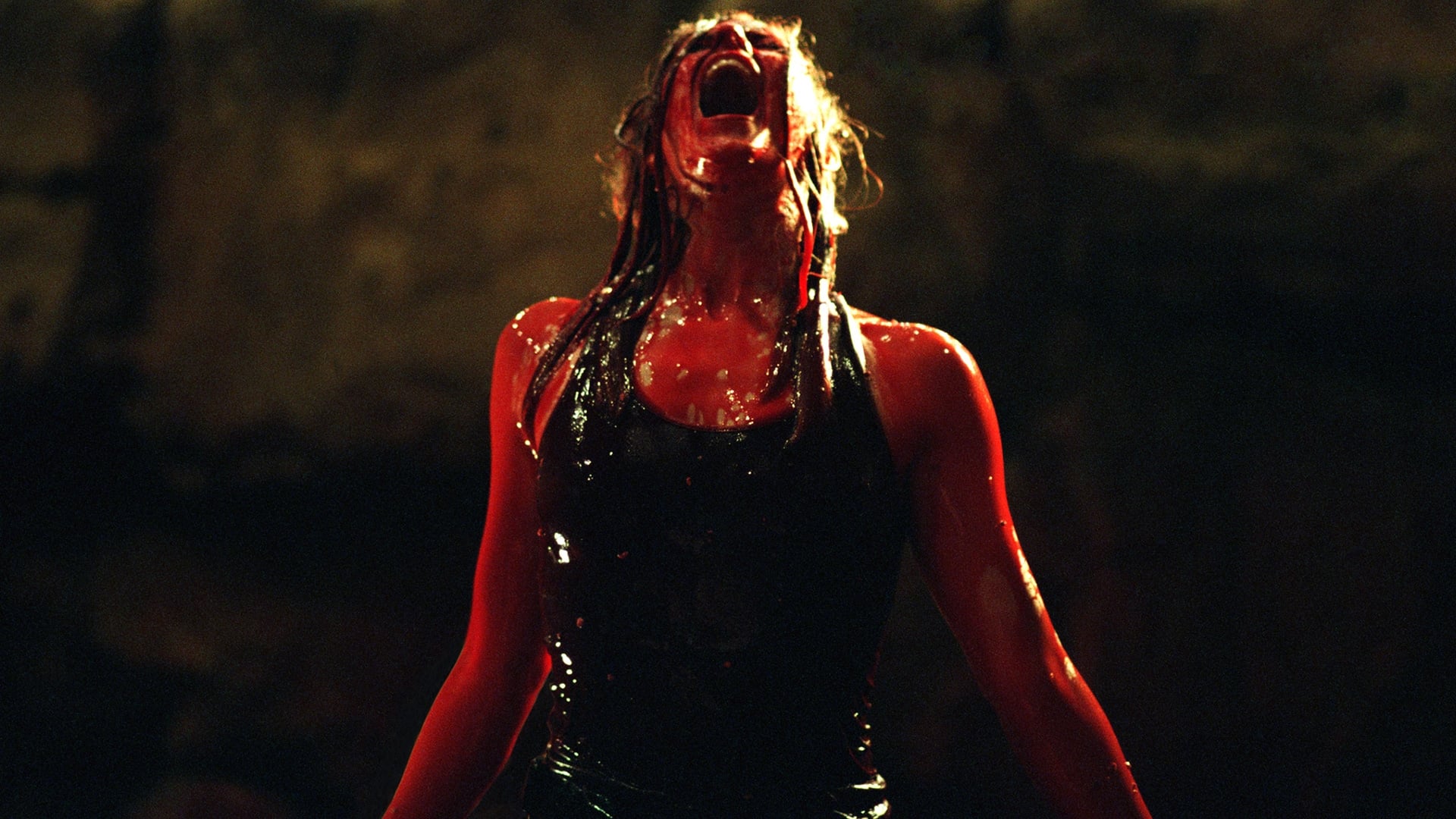
For me, this first stretch is the film’s most distinctive achievement. The fear is elemental and immediately understandable. A person does not need to believe in monsters to understand what it means to crawl through a gap barely wider than their body, with tons of stone overhead and no easy way to reverse direction. Marshall turns every squeeze, climb and drop into exhausting physical work. Movement is never merely movement down here; it is a negotiation with the environment.
That physical emphasis separates The Descent from horror movies that treat their setting as a decorative backdrop. The cave determines where the characters can look, how quickly they can travel and whether they can help one another. It breaks the group’s freedom of movement into a series of cramped, dangerous decisions. Even an open chamber offers little relief because darkness conceals its boundaries. More space does not necessarily mean more safety when nobody can see what occupies it.
The pacing is exceptionally disciplined because Marshall understands that anticipation needs tangible pressure. The film does not simply hold back its creatures and hope impatience will become suspense. It keeps introducing environmental threats that are frightening on their own terms. By the time the horror expands, the audience has already been trained to distrust every tunnel and patch of darkness.
Restricted light makes every metre feel hostile
The production’s approach gives that fear convincing physical weight. Marshall and cinematographer Sam McCurdy have described shooting the cave material on constructed sets and restricting illumination to plausible sources within the expedition, including headlamps and flares. The result is darkness that functions as part of the story rather than a filter pasted over it.
That distinction matters. A conventional horror movie can use low light to hide a threat until the designated jump scare. The Descent uses limited light to shrink the characters’ usable world. A headlamp may reveal the rock immediately ahead, but it also emphasizes everything beyond its beam. A flare briefly opens the space before surrendering it again. Visibility becomes temporary, fragile and dependent on equipment that feels pitiful against the scale of the cave.
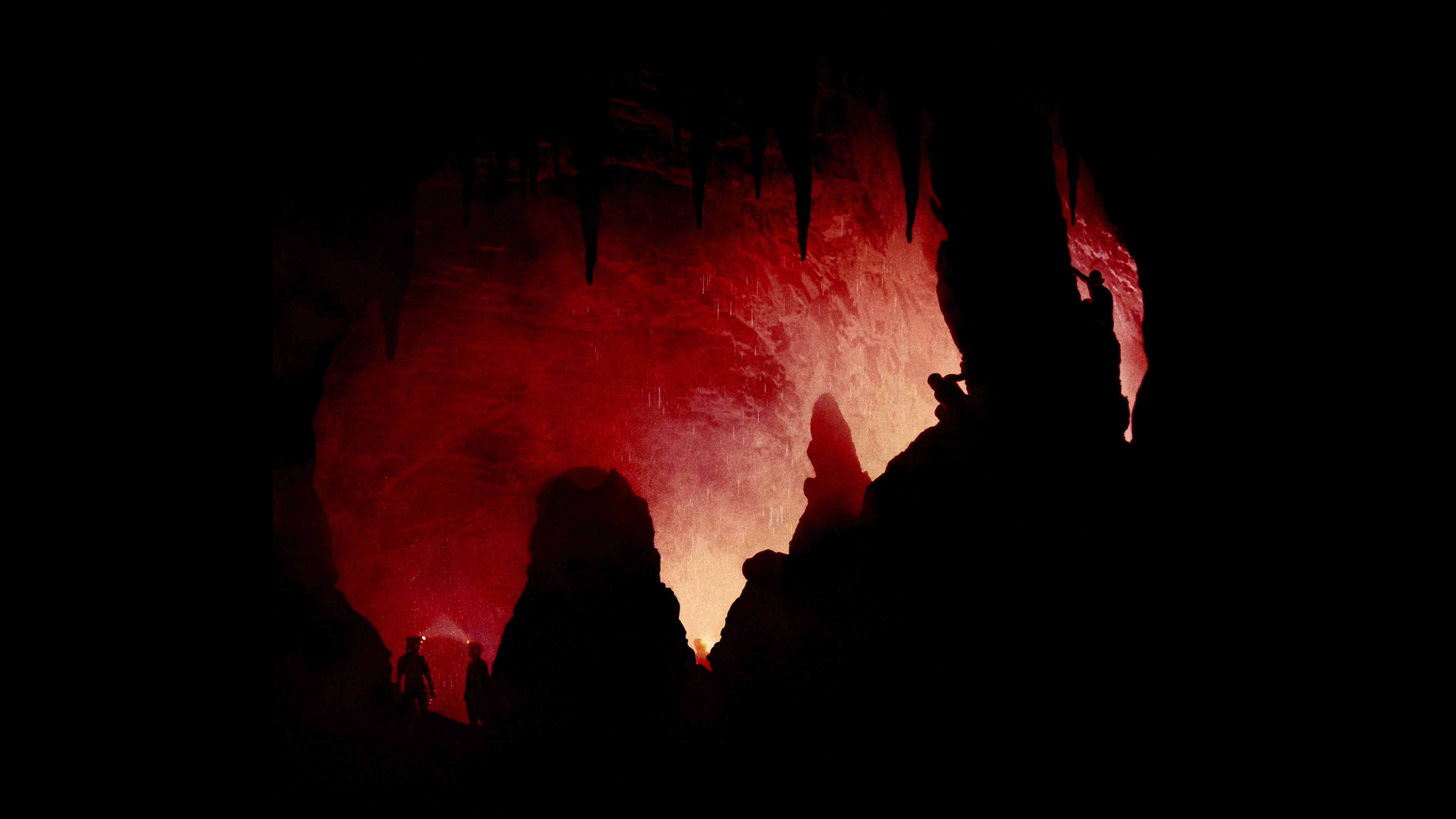
Marshall also avoids making the darkness abstract. The built environment gives bodies something solid to scrape against, hang from and force themselves through. The geography may remain threateningly incomplete, but individual obstacles feel immediate. That combination—uncertainty about the larger space and painful clarity about the next few feet—is exactly what makes the film so punishing.
It is also why the film remains a stronger example of survival horror than many movies wearing that label. Survival here is not reduced to defeating an enemy. It means controlling panic, conserving movement and continuing through a place built from terrible options. Readers interested in another film that prioritizes vulnerability over easy power fantasy may also appreciate our review of how Resident Evil makes survival feel like survival.
Sound turns the darkness into a pressure chamber
The visual restriction would be effective by itself, but the sound design completes the trap. Marshall said that much of the non-dialogue location sound was replaced and built during post-production, including the creature noises. That deliberate reconstruction lets the soundtrack suggest spaces and movement the camera cannot show.
Echoes are especially valuable in a setting where distance is difficult to judge. A noise can feel close enough to trigger panic and distant enough to imply a much larger unseen network. The frame tells us very little; the soundtrack keeps proposing dangers beyond it. Instead of clarifying the environment, sound makes its dimensions more unstable.
The effect is wonderfully cruel. Darkness prevents the characters from confirming what is around them, while every scrape or distant disturbance suggests that something is there. Silence offers no comfort because it creates room for anticipation. Noise offers no comfort because its source and location remain uncertain. The movie has effectively removed the audience’s preferred option.
This is sustained dread rather than a mechanical succession of jump scares. The Descent certainly knows how to deliver sharp shocks, but its deeper power comes from making the underground world feel continuously occupied and alert. The cave seems larger through sound and smaller through sight, trapping the characters between two contradictory sensations.
The creatures escalate the ordeal, but they do not improve on it
When The Descent finally reveals its more overt genre machinery, it works because the film has already established the rules of survival. The creatures do not replace the danger of the cave; they exploit it. Restricted visibility, difficult movement and uncertain geography become even more punishing once the group is no longer alone.
The action remains grounded in bodies struggling through hostile space. Crawling, climbing, falling and squeezing matter as much as confrontation. That gives the later sequences a visceral force often missing from chase scenes in which characters sprint through interchangeable corridors. Here, every route carries a physical cost, and escape can be blocked by the environment before any pursuer enters the equation.
Still, this is where the film becomes slightly less singular. Its creature-feature rhythms are effective, aggressive and expertly integrated, but they are also more recognizable than the earlier claustrophobic suspense. The first half turns an ordinary environment into a nightmare through patience and spatial control. The second half delivers a more familiar kind of survival horror with exceptional intensity.
That is hardly a fatal complaint. If anything, it demonstrates how frightening the cave has already become. The movie introduces creatures and still cannot devise anything more upsetting than the idea of being wedged inside rock, unable to move forward or back. Most horror films would be delighted to have one monster this effective; The Descent accidentally creates its best one out of geology.
The human conflict is useful but not always fully earned
Shauna Macdonald’s Sarah is positioned as the emotional center, a description Marshall himself has used for the character. Her grief gives the expedition an emotional vulnerability before its physical dangers take over. The film needs that center because relentless confinement without a human stake could easily become a technical exercise.
The broader group dynamic is less rigorously developed. Some late-emerging motives and interpersonal complications feel engineered to increase the pressure rather than like inevitable extensions of relationships the film has patiently dramatized. A contemporary Phil on Film review raised a similar concern, arguing that certain motives and group tensions were insufficiently developed. I agree with the underlying criticism, although it does not seriously damage the survival story.
The problem is one of comparison. Marshall is so precise when dramatizing bodies against stone that the interpersonal machinery can seem blunt beside it. The cave communicates danger instantly; the relationship complications occasionally need the screenplay to push harder. The film’s physical storytelling is simply more persuasive than its attempts to add another psychological blade.
Even so, the ensemble structure remains essential. The expedition is frightening partly because every obstacle affects a group trying to move, communicate and make decisions under pressure. Isolation is terrifying, but shared panic creates its own hazards. The women are not merely waiting to be attacked; they are continually forced to act while their environment removes the space and time needed for good choices.
For a very different horror film that also uses bodily transformation and strained relationships to generate discomfort, our review of Raw’s disturbing coming-of-age story makes a useful companion read.
A punishing recommendation for horror fans
The Descent is essential viewing for horror fans who value sustained dread, claustrophobic settings and tactile survival action. It is not a comfortable recommendation for anyone especially sensitive to confinement. The movie’s greatest achievement is making the audience feel that discomfort rather than merely observe it.
Marshall understands that monsters are most effective when they enter a world that is already frightening. By treating restricted light, hostile geography and bodily confinement as the foundations rather than the warm-up, he creates a pressure chamber that keeps tightening even after its secrets emerge. The later conventions and thinner interpersonal turns are real reservations, but they are minor beside the film’s extraordinary command of space.
Watch The Descent in the darkest room available, with the sound high enough to catch what seems to be moving beyond the frame. Then appreciate being able to stand up, turn on a light and leave. The characters are not granted those luxuries, and Marshall makes their absence feel terrifying.
References
- The Descent (2005) | BFI
- The Descent (2005) directed by Neil Marshall • Reviews, film + cast • Letterboxd
- The Descent
- EXCLUSIVE INTERVIEW: NEIL MARSHALL (THE DESCENT) — CHUD.com
- Primal Fear: writer-director Neil Marshall on the twentieth anniversary of his claustrophobic caving horror, The Descent • Journal • A Letterboxd Magazine • Letterboxd
- Phil on Film: Review – The Descent