

The Taking of Pelham One Two Three makes competence thrilling. Joseph Sargent’s 1974 subway-hijacking film has guns, hostages and a ticking clock, but its real contest is between two men trying to impose order on a chaotic city. Robert Shaw’s Mr. Blue controls the timetable; Walter Matthau’s Zachary Garber gradually contests that control through transit knowledge, sardonic calm and an absolute refusal to behave like a conventional action hero. The result is a near-perfect pressure-cooker thriller: lean, grimy, darkly funny and entirely confident about where its excitement comes from.
Our verdict A near-perfect pressure-cooker thriller that turns subway logistics, workplace irritation and a battle of composure into riveting entertainment. Walter Matthau and Robert Shaw lead a grimy, darkly funny New York crime film with uncommon economy and personality.
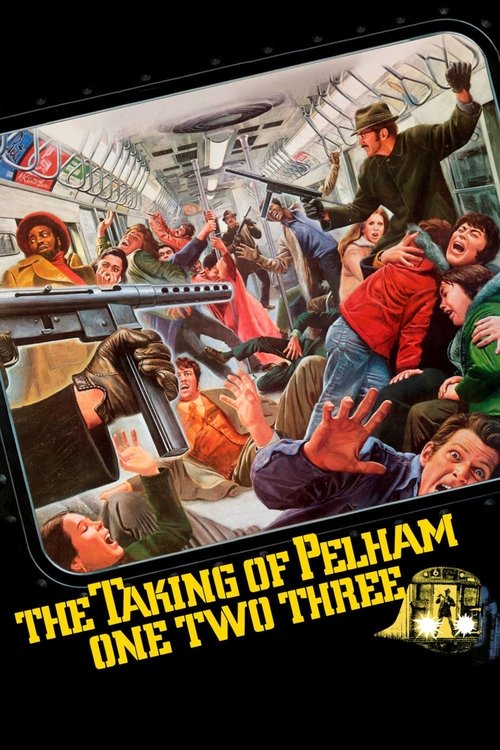
The Taking of Pelham One Two Three (1974)
Peter Stone adapted John Godey’s novel into a beautifully direct premise. Four armed men seize a New York subway car, demand $1 million and threaten its passengers while Garber becomes the Transit Authority officer negotiating with their leader. The AFI Catalog credits Sargent alongside cinematographer Owen Roizman, editors Gerald Greenberg and Robert Q. Lovett, and composer David Shire. The pleasure lies in how completely their contributions lock together. Every cut, radio call and irritated interruption tightens the same mechanism.
Mr. Blue owns the clock, but Garber changes the rhythm
The central Garber–Blue duel is conducted largely by radio. Denying Matthau and Shaw a conventional face-to-face showdown makes their voices into opposing weapons. Shaw is clipped, formal and unnervingly professional. Blue sets the terms, deadlines and consequences, so he initially controls both the crisis and the pace of every conversation. Even the sight of him working on a puzzle book between negotiations makes his discipline feel habitual rather than theatrical.
The early exchange over the ransom captures the balance. Blue announces the million-dollar demand and treats the deadline as an extension of his authority. Garber cannot match that coercive power, so he refuses to accept Blue’s tone as the only one available. Matthau answers precision with dry skepticism and the weary patience of a man accustomed to systems failing in elaborate ways. He sounds less like an action hero than an employee discovering that today’s operational headache happens to involve automatic weapons.

Matthau’s rumpled appearance and mildly offended manner make Garber seem almost comically ordinary, yet operational confidence steadily emerges without being announced. Shaw plays control as rigid and external; Matthau plays it as flexible and internal. The film’s masterstroke is recognizing that these men can fight for command without sharing a room—or raising their voices to prove how serious they are.
Transit workers turn procedure into suspense
The procedural machinery is not background decoration. It is the movie’s pulse. Deadlines move through radio traffic, command rooms, city offices and street-level coordination, expanding the emergency without sacrificing clarity. Sargent understands that a city response depends on dozens of people relaying information, complaining about instructions and trying to keep an imperfect system moving. Institutional expertise, rather than lone-avenger heroics, drives the response.
For me, that workplace culture is what elevates Pelham above an efficient hostage thriller. Transit employees interrupt one another, snap at colleagues and greet fresh catastrophe with the special irritation of people whose shift was already difficult. Their mordant humor does not release the suspense. It makes the danger feel as though it has crashed into a functioning, exhausted workplace instead of appearing on a polished movie set.
Plenty of thrillers can manufacture a deadline. Far fewer understand that the people racing against it might also be annoyed by paperwork, bad communication and somebody else’s incompetence. The comedy keeps the movie moving because it grows from pressure and personality. Anyone who enjoys the muscular efficiency of an action classic such as Predator will recognize the pleasure of a film that knows exactly what each character contributes to its machinery.
New York grime becomes part of the mechanism
Roizman’s photography makes the subway narrow, dark and tactile. Its brown-and-black widescreen palette gives the cars and tunnels a physical hostility, while the location footage carries the same nervous energy above ground. Production used an abandoned train at Brooklyn’s Court Street Station, while the Transit Authority command center was recreated at Filmways Studios from the real Brooklyn headquarters. The feature was shot in 35mm anamorphic and became the first to use Movielab’s photochemical flash process, intended to increase available-light detail. MovieMaker’s account of the cinematography

Those choices matter because the movie never looks hygienic. New York appears crowded, abrasive and worn down before the hijackers add their threat. Sargent moves among the enclosed subway car, the command center, city offices and the streets without dissipating the central claustrophobia. Greenberg and Lovett’s editing preserves the geography while accelerating the relay of information, and Shire’s abrasive score supplies momentum without polishing away the dirt.
That widening network also prevents a simple premise from becoming visually static. Each new location shows another part of the city struggling to respond, yet the film always knows where its pressure originates. It finds scale through coordination rather than spectacle, which is exactly right for a thriller in which knowing how the subway works matters more than looking impressive while holding a gun.
The caricatures are sharp until they become shallow
The film’s hard comic stylization has a cost. Passengers and city officials are often treated as quickly legible types, giving scenes bite and speed while leaving several people closer to components than characters. The transit workers have convincing professional texture; the hostages rarely receive comparable depth. Viewers looking for emotional intimacy may therefore find the film cooler than its lethal stakes suggest.
The broader jokes are also less precise than the Garber–Blue exchanges. Most of the humor sharpens the pressure, but occasional flippancy turns officials into easy targets rather than interesting participants. In 1974, The New Yorker’s contemporary review objected especially to the broad treatment of the mayor. I think that response undervalues how essential workplace irritation is to the film’s nervous energy, but it identifies a real dividing line: the best jokes reveal how people behave under stress, while the weaker ones merely reduce them to punchlines.
A model of lean thriller filmmaking
The Taking of Pelham One Two Three is essential viewing for anyone who likes procedural detail, sardonic dialogue and unglamorous 1970s New York atmosphere. Its hostages are archetypal, and some of its civic satire is broader than the rest of the filmmaking, but those reservations barely slow a thriller with this much economy, clarity and personality.
Most importantly, it understands that control becomes more interesting when it changes by degrees. Mr. Blue can command the deadline, yet Garber’s experience gradually exposes the difference between setting a clock and mastering the system around it. Sargent turns that battle of composure into riveting entertainment—and then closes with a final gag too good to spoil. Watch the original before anyone tells you what it is.
References
- AFI|Catalog
- The Taking of Pelham One, Two, Three (1974)
- The Taking of Pelham One Two Three (1974), dir. Joseph Sargent — analysis, influences and similar films — Sightlines
- The Taking of Pelham One Two Three | Rotten Tomatoes
- The Taking of Pelham One Two Three movie review
- Sic Transit Garber’s Subway: ‘The Taking of Pelham One Two Three’ • Cinephilia & Beyond
- The Taking of Pelham: Then and Now – MovieMaker Magazine
- True grit: The Taking of Pelham One Two Three | SBS What's On
- Taking a Chance | The New Yorker