
TL;DR: Bring Her Back is a brutally effective grief nightmare that turns care into coercion and an unsafe foster home into a pressure cooker. Its supernatural mythology is murkier than it needs to be, but Sally Hawkins, the exceptional young cast and some revoltingly tactile body horror make the film extremely difficult to shake.
Our verdict A brutally effective grief nightmare, Bring Her Back turns an unsafe foster home into a pressure cooker of dread. Sally Hawkins, the young cast and stomach-churning practical effects carry it past some familiar plotting and murky mythology.

Bring Her Back (2025)
This Bring Her Back 2025 review comes down to one distinction: the movie is far more convincing as a human nightmare than as an occult puzzle. Directors Danny and Michael Philippou make grief feel physical, something that stains rooms, relationships and even the idea of parental protection. When the screenplay starts explaining the ritual machinery behind that horror, its grip loosens. Whenever it returns to the people trapped inside the house, it becomes suffocating again.
Bring Her Back 2025 review: grief becomes a form of control
Written by Danny Philippou and Bill Hinzman, the film follows siblings Andy and Piper after their father’s death. They are placed in the secluded home of foster mother Laura, where they discover signs of a frightening ritual. Billy Barratt plays Andy, Sora Wong plays Piper, Sally Hawkins is Laura and Jonah Wren Phillips appears as Oliver. That is all the plot preparation the movie really needs. Its most effective horror does not come from learning what the ritual can do; it comes from recognizing that the children have entered a household whose apparent warmth is inseparable from manipulation.
Hawkins is the destabilizing force at the center of that household. Laura can project hospitality, emotional need and menace without allowing those qualities to settle into separate modes. The performance keeps shifting the temperature of an interaction. A gesture that initially reads as care can become possessive, while an expression of grief can feel like both genuine suffering and a warning.

That balance matters because Laura would be much less interesting as a straightforward monster. Bring Her Back instead treats bereavement as a force capable of distorting love into entitlement. Laura’s pain does not excuse what happens in her home, but Hawkins never lets us forget that pain is part of the machinery. The character is frightening precisely because her emotional logic has not disappeared. It has folded in on itself until other people exist chiefly as tools for correcting an unbearable loss.
The foster home makes domestic care feel dangerous
The secluded house is not merely the ominous address where the plot happens. Its messy, colorful design reflects Laura’s volatility, turning a place associated with protection into an external expression of her instability. The setting feels lived in rather than arranged as a generic haunted-house attraction, and that makes its wrongness more invasive. The children are not visiting somewhere obviously cursed. They are supposed to live here, follow its routines and depend on the adult who controls it.
For me, that domestic containment is the movie’s greatest advantage. The Philippous have described Bring Her Back as a tighter, more character-driven production than the ensemble-oriented party horror of Talk to Me. The difference is substantial. Where Talk to Me turned possession into a reckless group activity, this film concentrates its danger inside an already fragile household. Every act of manipulation therefore lands as both a horror beat and a violation of trust.
The direction patiently tightens that trap. Bring Her Back runs for 104 minutes, and its gradual buildup lets suspicion accumulate before the graphic horror takes over. The pacing is oppressive rather than frantic. It asks the audience to sit with strained relationships, uncertain motives and the discomfort of children who lack meaningful control over their surroundings. That approach makes the eventual eruptions more potent because the movie has already taught us to fear the ordinary rhythms of the house.
There is a recognizable tradition of domestic thrillers in which affection and danger occupy the same space. As in Fatal Attraction’s collision of vulnerability and menace, the strongest tension comes from refusing to make the antagonist emotionally simple. Bring Her Back is more openly supernatural and far more graphic, but it understands the same useful principle: a character becomes more disturbing, not less, when traces of recognizable humanity survive the descent into monstrosity.
Andy and Piper give the horror an emotional stake
A film this punishing needs more than endangered children to generate feeling. Andy and Piper work because their relationship has friction as well as loyalty. Andy’s protectiveness gives the story its clearest emotional anchor, but Piper is not reduced to a helpless objective waiting to be rescued. Her desire for independence complicates his protective instinct and gives both siblings a degree of agency.
Barratt plays Andy’s responsibility as an exhausting burden rather than an easy heroic trait. He is grieving, frightened and still trying to act like the person who can keep the remaining pieces of his family together. Wong gives Piper a stubbornness that prevents the sibling dynamic from becoming sentimental. Their bond makes the danger matter, but their differences stop that bond from becoming a screenplay shortcut.
The smaller cast helps these relationships breathe. There is nowhere for the movie to hide when the emotional pressure slips, but the performances hold it together. Hawkins may provide the most immediately alarming work, yet the younger actors keep Laura’s manipulation from becoming a one-performer showcase. The horror depends on how each child reads the household, what each needs from it and how those needs can be exploited.
The body horror has horrible, practical weight
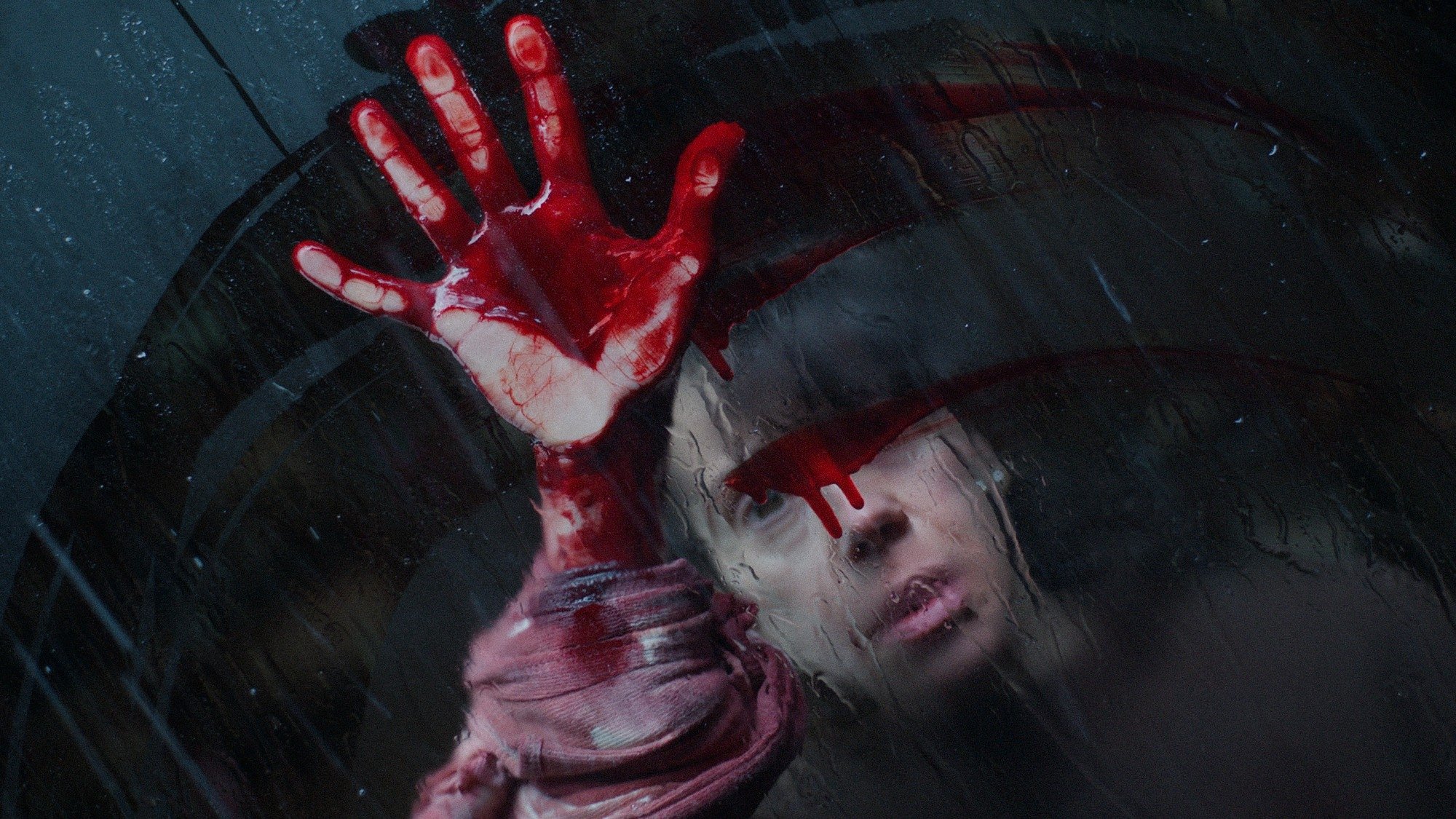
When Bring Her Back becomes graphic, it commits. The violence has a tactile ugliness that feels inseparable from the film’s treatment of grief. Bodies become sites of damage, attempted transformation and control. These sequences are not tasteful suggestions designed to let the audience congratulate itself for imagining something worse. The movie wants the physical consequences directly in front of us, and it has the effects work to make that confrontation count.
Cinematographer Aaron McLisky said the production used two special-effects teams, rain rigs, prosthetics and minimal visual effects. He also described the ritual footage as predominantly created in camera using Mini DV, rerecording through analog tape and VHS playback. McLisky’s account of the practical production methods That combination gives the film two complementary textures: immediate physical damage within the house and degraded occult imagery that looks as if it has been copied, hidden and contaminated over time.
The practical emphasis is not impressive merely because practical effects are automatically better than digital ones. It works because weight and texture serve the argument. This is a film about people refusing to accept the physical finality of loss, so its horror needs bodies to feel vulnerable, stubbornly material and terribly breakable. The gore is difficult to watch, but it is not detachable decoration. It is where the movie’s emotional obsession becomes flesh.
The occult mythology is the weaker half
Bring Her Back is less persuasive when it asks its supernatural rules to carry the drama. Some connective tissue feels patched together, and the mythology does not always provide the clarity that the performances and images do. The emotional objective is clear: grief has curdled into an attempt to reverse or control loss. The precise mechanics surrounding that objective can feel more functional than fully integrated, an elaborate delivery system for horror the film already expresses more powerfully through Laura and the children.
The broad direction of Laura’s plan may also become apparent before the film formally lays it out. That does not destroy the suspense, because the real question is less what she wants than what she is prepared to do. Still, it makes several reveals feel like confirmation rather than discovery. Familiar grief-horror beats occasionally push an otherwise distinctive film toward convention, particularly when the screenplay leans on occult explanation instead of the ambiguity of Laura’s behavior.
I like the controlled buildup more than the expanding mythology. The movie is at its best when the house feels emotionally poisoned and every offer of comfort carries a hidden demand. Once it starts joining supernatural dots, the design becomes easier to see. Fortunately, it never stays away from its human nightmare for long.
A punishing horror film worth enduring
Bring Her Back is bleak, intimate and deliberately distressing. Viewers sensitive to graphic body horror, endangered children or prolonged depictions of grief should approach it cautiously. This is not reassuring entertainment, and it does not offer the easy release of watching disposable characters wander into a carnival of elaborate kills.
For viewers who want character-driven horror built on sustained dread, committed performances and stomach-churning practical effects, however, it earns a strong recommendation. Hawkins makes grief and menace impossible to separate, Barratt and Wong give the household’s terror genuine emotional stakes, and the Philippous understand how to turn domestic dependence into a source of helplessness.
The mythology may wobble, but the nightmare does not. Bring Her Back works because it treats grief as more than a theme pasted onto supernatural machinery. It lets grief infect the setting, distort care into ownership and finally erupt through the body. The result is familiar in outline yet ferocious in execution—a horror film whose ugliest images linger because the emotions beneath them are even harder to escape.
References
- Bring Her Back | A24
- Bring Her Back | Rotten Tomatoes
- The Muddled Message of ‘Bring Her Back’ – The Atlantic
- Exclusive Interview: Filmmakers Danny and Michael Philippou on the cast, effects and more of “BRING HER BACK” – RUE MORGUE
- 'Bring Her Back' review: A deeply disturbing and gory portrait of grief | AP News
- Practical Magic: DP Aaron McLisky on Bring Her Back – Filmmaker MagazineFilmmaker Magazine
- Bring Her Back Directors on the Horror of Watching Their New A24 Release with an Audience
- Bring Her Back Reviews – Metacritic