

TL;DR: Leave the World Behind is most effective when it stops pretending that the apocalypse can be solved and instead watches confidence, competence and civility collapse inside one expensive holiday home. Sam Esmail builds gripping dread from technological failure and mutual suspicion, while his formidable cast makes every uneasy exchange feel dangerous. The broader social commentary can be blunt and the payoff remains emotionally remote, but this is still a striking, controlled psychological thriller that earns a strong recommendation.
Our verdict Sam Esmail’s apocalypse thriller turns technological collapse and social mistrust into gripping, visually audacious dread. Its blunt messaging and emotionally remote payoff hold it back, but the formidable ensemble and controlled paranoia earn a strong recommendation.
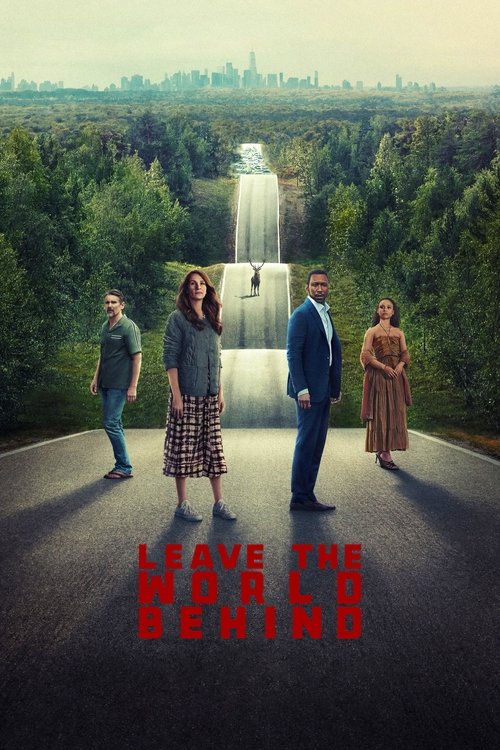
Leave the World Behind (2023)
The central question in this Leave the World Behind 2023 review is not what caused the catastrophe. It is what happens when nobody in the room possesses enough information to establish authority. Written and directed by Esmail from Rumaan Alam’s novel, the film sends Amanda and Clay Sandford’s family to a Long Island rental, then interrupts their escape with a communications blackout and the late-night arrival of homeowners G.H. and Ruth Scott. Each new disruption makes the crisis beyond the house more threatening, but it also makes the people inside less willing to trust one another.
Leave the World Behind 2023 review: Uncertainty becomes the monster
This is an apocalypse movie built around an information vacuum. Phones fail, explanations conflict and ordinary assumptions about how the world works become useless. Esmail understands that losing reliable communication is frightening not simply because help becomes difficult to reach, but because every person must suddenly decide whose version of reality deserves belief. The characters are isolated from news, expertise and institutional reassurance. All they have left are their instincts, and the film is not especially optimistic about those.
That makes the rental house a pressure cooker rather than a refuge. Amanda is immediately suspicious of G.H. and Ruth, who arrive claiming to own the property, while the Scotts have good reason to resent being treated like intruders in their own home. Race and class shape the encounter, but so do fear, embarrassment and the desperate need to appear in control. Nobody wants to admit how little they understand. The threat outside keeps escalating the tension within, turning basic questions about sleeping arrangements, money and access into contests over credibility.
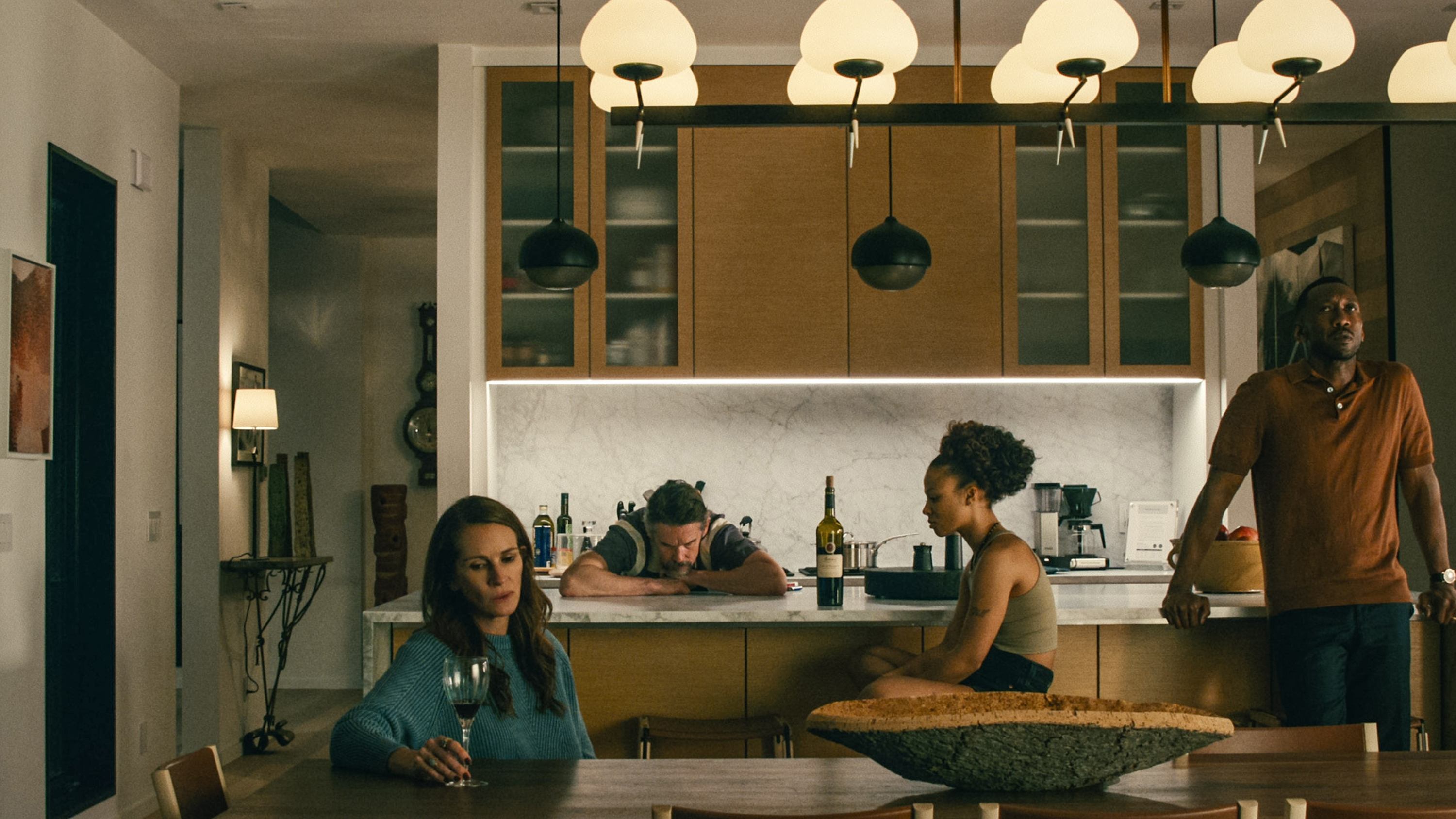
For me, the atmosphere is the film’s greatest achievement. Leave the World Behind does not need a constant supply of conventional action because it makes waiting feel active. A strange sound or failed device matters because the characters cannot place it within a trustworthy explanation. Esmail has said that his approach was to leave breadcrumbs without giving viewers enough information to get ahead of the story. That withholding is not coyness for its own sake. At its best, it traps us at the same frustrating distance from certainty as the characters.
The leisurely pace will test viewers who expect each clue to move the film toward a clean solution. Yet speed would damage the particular anxiety Esmail is constructing. The long pauses and incomplete conversations allow suspicion to ferment. This is less a puzzle box than a study of people behaving as though they can force scattered evidence into a reassuring pattern. The movie keeps suggesting that certainty itself has become a luxury item.
The ensemble makes distrust feel personal
A film this withholding depends on actors who can create tension without turning every disagreement into a declaration of intent. Julia Roberts, Mahershala Ali, Ethan Hawke and Myha’la provide exactly that. Roberts gives Amanda an abrasive alertness: she is often perceptive about danger, but that perception is tangled with assumptions that make her difficult to trust. Ali plays G.H. with careful composure, suggesting a man trying to retain social grace even as circumstances make grace increasingly impractical.
Hawke’s Clay is useful precisely because he is not a sturdy disaster-movie patriarch. He wants to be reasonable, but reasonableness is not the same thing as decisiveness, especially when familiar systems stop working. Netflix’s character material similarly frames Clay as struggling to solve problems after the power failure. Hawke finds the anxiety beneath his easygoing manner, making Clay’s uncertainty more interesting than a sudden transformation into an action hero would have been.
Myha’la gives Ruth a sharper defensive energy. She sees how Amanda looks at her and refuses to make that prejudice comfortable. The confrontations between them carry the movie’s social argument more persuasively than its broadest pronouncements because the performances leave room for several emotions at once. Anger mixes with fear; courtesy becomes tactical; a reasonable question can still carry an ugly implication.

Crucially, these people are not sorted into dependable heroes and obvious antagonists. Their competence fluctuates with the situation, and their judgments are affected by information the others do not possess. That instability gives every negotiation weight. Even when the screenplay’s ideas become conspicuous, the cast keeps the human friction alive.
A camera that refuses to let the house feel safe
Esmail’s visual style is anything but invisible. The camera glides, cranes and adopts reoriented compositions, repeatedly transforming an apparently luxurious space into unstable territory. The technique can call attention to itself, but here that conspicuousness mostly serves the movie. A conventional camera might let the house settle into reassuring geography. Esmail keeps making rooms and corridors feel newly unfamiliar, as if the building itself has stopped obeying domestic logic.
That visual mobility was supported by unusually deliberate production planning. A real Old Westbury property supplied exterior footage and some interiors, while near-full-scale room replicas were constructed on Bethpage soundstages so shots could travel through walls and floors. The result is not movement added merely to advertise directorial flair. The camera erodes the separation between safe interior space and an unknowable exterior threat.
The effects work also supports that uneasy collision of the physical and the uncanny. VFX supervisor Chris Harvey described a hybrid process for particular sequences, including filmed reference, photographic textures and mounted deer heads used on set to establish eyelines and staging. Harvey’s account of the film’s visual-effects work also explains that foliage was digitally altered in some material to match the intended season. Those details matter because the finished images often feel close enough to reality to be recognizable, yet wrong enough to suggest that normal environmental rules have shifted.
Viewers interested in another Netflix adaptation that approaches catastrophe through disorientation rather than straightforward disaster spectacle may also appreciate MovieBunker’s review of White Noise. Esmail’s film is colder and more mechanically suspenseful, but both treat domestic routine as a flimsy defense against collective panic.
The messaging is less subtle than the suspense
Leave the World Behind is more persuasive when it dramatizes mistrust than when it explains what that mistrust means. Amanda’s prejudice and the friction between the two households produce sharp scenes, but some of the screenplay’s larger social observations arrive in broad strokes. The movie is excellent at showing people retreating into assumptions when information disappears. It is less successful at giving every character enough interior life to complicate those assumptions.
The younger characters are especially uneven. Ruth has the force and presence to push back against Amanda, but other members of the families can feel closer to thematic instruments than equally developed participants. The film wants its household to function as a compressed model of a fractured society. That idea is clear long before the screenplay finishes underlining it.
There is also an emotional limitation that becomes more noticeable as the implied scale of the crisis expands. The images grow more ominous and the possibilities more alarming, yet the personal drama does not deepen at the same rate. Esmail maintains tension, but he keeps the audience at a cool distance. The accumulating catastrophe therefore feels intellectually provocative more often than emotionally devastating.
That distance is partly intentional. Warm bonding would be false to a movie about eroding trust, and a conventional cathartic climax would betray its commitment to uncertainty. Still, intention does not automatically eliminate the problem. A withheld answer can intensify paranoia; withheld emotional consequence can make the same material feel oddly weightless. Leave the World Behind occasionally crosses that line in its later stretch.
Does the ambiguity work?
Mostly, yes. The film’s refusal to provide a complete diagnostic report on civilization is consistent with its central argument. These characters are not the chosen witnesses to history. They are frightened people collecting incomplete signals, misunderstanding some of them and reacting before they can verify the rest. A neat explanation would offer precisely the reassurance the movie has spent its running time dismantling.
I like the controlled build-up more than the expanding mythology. Esmail is strongest when a small failure creates a practical problem and that problem exposes a weakness in the group. He is less persuasive when the film’s symbols and statements begin reaching for a complete diagnosis of modern society. The mystery remains productive because it preserves uncertainty, but the commentary sometimes tries to close arguments that the drama would be better leaving open.
That distinction will probably decide whether the film works for you. If you need an apocalypse thriller to reveal its machinery and reward each clue, the deliberate ambiguity may feel like delayed payoff without a satisfying destination. If you enjoy watching a filmmaker turn missing information into psychological pressure, the lack of closure becomes part of the threat.
Leave the World Behind is worth the unease
Leave the World Behind is a gripping piece of controlled paranoia, even when its thematic messaging becomes too blunt and its emotional temperature stays frustratingly low. Esmail’s restless visual language, patient escalation and refusal to provide easy reassurance make technological dependence feel genuinely fragile. Roberts, Ali, Hawke and Myha’la ensure that the disaster matters first as a crisis of trust rather than a collection of ominous events.
This is an easy recommendation for viewers who enjoy patient psychological thrillers, conspicuous camerawork and apocalypse stories that resist tidy answers. Anyone seeking rapid action, warm character bonding or a fully explained catastrophe may find it chilly and overextended. For everyone willing to sit inside its uncertainty, however, Leave the World Behind turns not knowing into the most frightening possibility of all.
References
- About Netflix
- Leave the World Behind (2023) | Rotten Tomatoes
- Leave the World Behind: Cast, Release Date, Trailer & Plot of Julia Roberts Movie – Netflix Tudum
- Leave the World Behind Ending Explained: Sam Esmail Answers Questions About Friends, Noise, and More – Netflix Tudum
- Leave the World Behind movie review
- Leave The World Behind VFX supervisor Chris Harvey | The GATE