
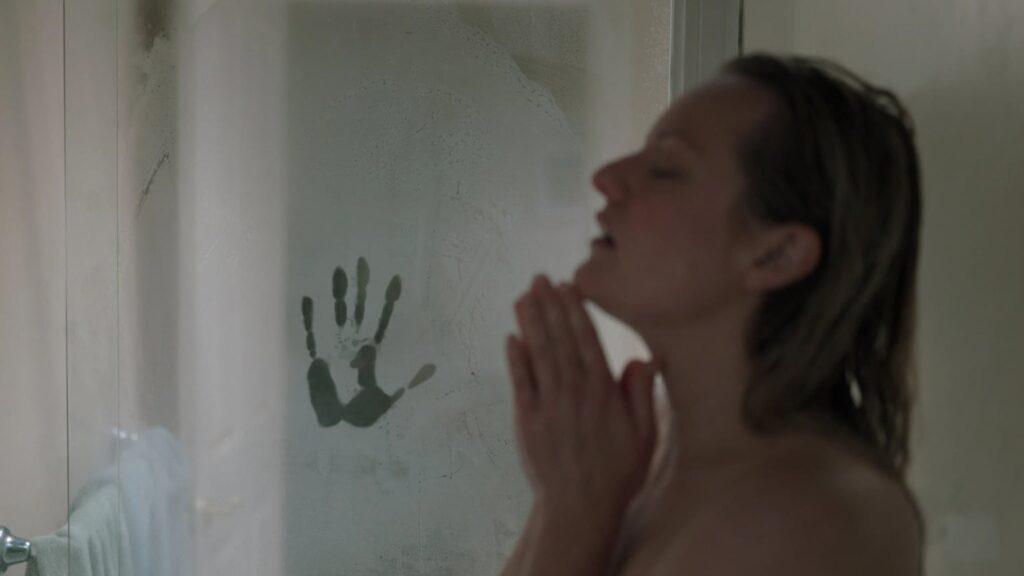
The Invisible Man is a model of how to reinvent a familiar monster without reducing the exercise to updated effects and recognizable branding. Leigh Whannell takes invisibility—a power usually treated as a fantasy, scientific breakthrough or excuse for spectacle—and recognizes its ugliest potential. In the hands of an abuser, it means control without evidence, surveillance without exposure and violence without accountability. This The Invisible Man 2020 review comes down firmly on the film’s side: it is an intensely personal horror story, a muscular thriller and one of the smartest modern reworkings of a classic screen monster.
Our verdict Leigh Whannell transforms a familiar monster property into an intensely personal horror story about coercion and disbelief. Elisabeth Moss and the film’s weaponized empty space make this a gripping, unusually purposeful genre reinvention.
The Invisible Man (2020)
Its real achievement is perspective. Rather than asking us to marvel at the invisible figure, Whannell locks us beside Cecilia Kass, played with frightening emotional precision by Elisabeth Moss. Cecilia escapes a controlling former partner, learns of his apparent death and then becomes convinced that an unseen presence is stalking and undermining her while the people around her struggle to verify the threat. The premise turns every empty doorway into a possible attack and every demand for proof into another source of pressure.
The Invisible Man 2020 review: a monster built from disbelief
Whannell’s crucial decision is to treat invisibility as an extension of coercive control rather than the entire attraction. The technology matters because of what it allows someone to do to Cecilia: invade her space, isolate her and make her appear unstable. The absence of visible evidence does not merely make the threat difficult to fight. It gives that threat control over the story other people tell about her.
That makes the film’s horror unusually specific. Cecilia is not only afraid that somebody is nearby; she is exhausted by the knowledge that she may be required to prove an experience designed to be unprovable. The film draws on the familiar Invisible Man property without organizing itself around the invisible figure’s discovery or descent into madness. Instead, it asks what such power looks like from the position of someone being watched, manipulated and discredited.
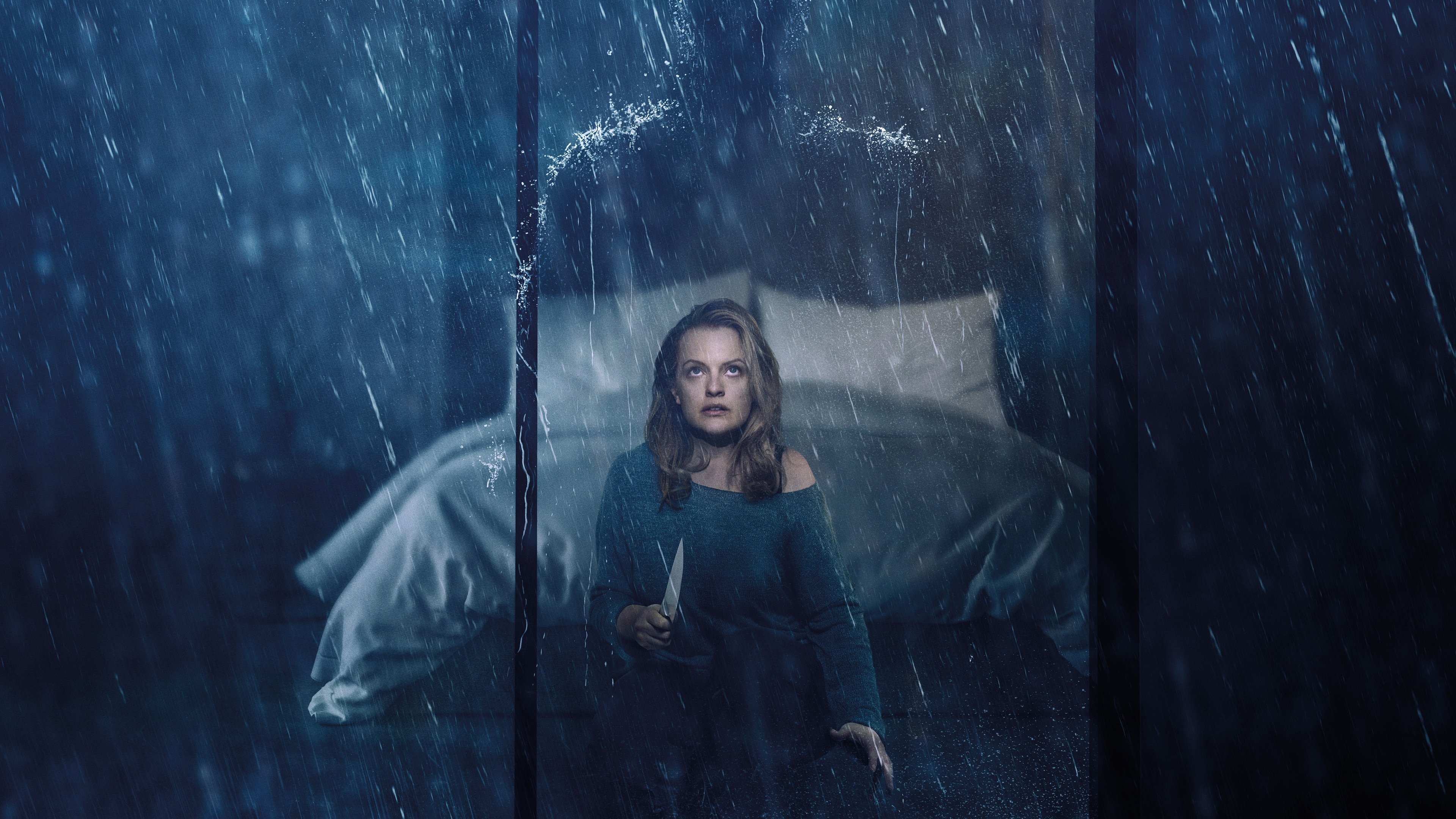
This is the difference between a cosmetic reboot and a purposeful reinvention. Whannell does not discard the central gimmick, but he changes who owns the story. Invisibility is no longer interesting because a man has achieved the impossible. It is frightening because Cecilia cannot make anybody else see what that achievement permits. The monster’s defining ability and an abuser’s preferred defense become the same thing: nobody can prove he was there.
The result belongs beside psychological thrillers in which domestic spaces become contested territory. Readers interested in another film where intimacy curdles into danger may also appreciate our look at the domestic dread of Fatal Attraction. The relationships and moral perspectives are very different, but both films understand that a home can become terrifying once trust no longer protects the people inside it.
Elisabeth Moss makes Cecilia impossible to dismiss
A concept this neat could easily overpower its protagonist, but Moss prevents that from happening. The largely wordless opening escape establishes Cecilia as terrified without making her passive. Her attention is divided between the need for speed and the fear that one small disturbance could reveal her. Moss communicates calculation, panic and determination physically, giving the sequence an emotional clarity that pages of explanation would struggle to match.
That performance remains the film’s center as Cecilia’s circumstances become harder to explain. Moss does not play fear as one sustained note. Cecilia can look depleted, alert, furious and fiercely resourceful, sometimes within the same stretch of action. Her body carries the strain of anticipating an attack nobody else can perceive. When the people around her hesitate to accept what she says, Moss makes the gap between their doubt and her certainty feel unbearable.
This distinction matters because Cecilia is constrained without being reduced to helplessness. The film understands that agency under coercion does not look like effortless empowerment. She makes decisions and resists, but she does so while being watched, disbelieved and physically endangered. Moss sells both sides of that equation: the accumulated damage and the intelligence required to survive it.
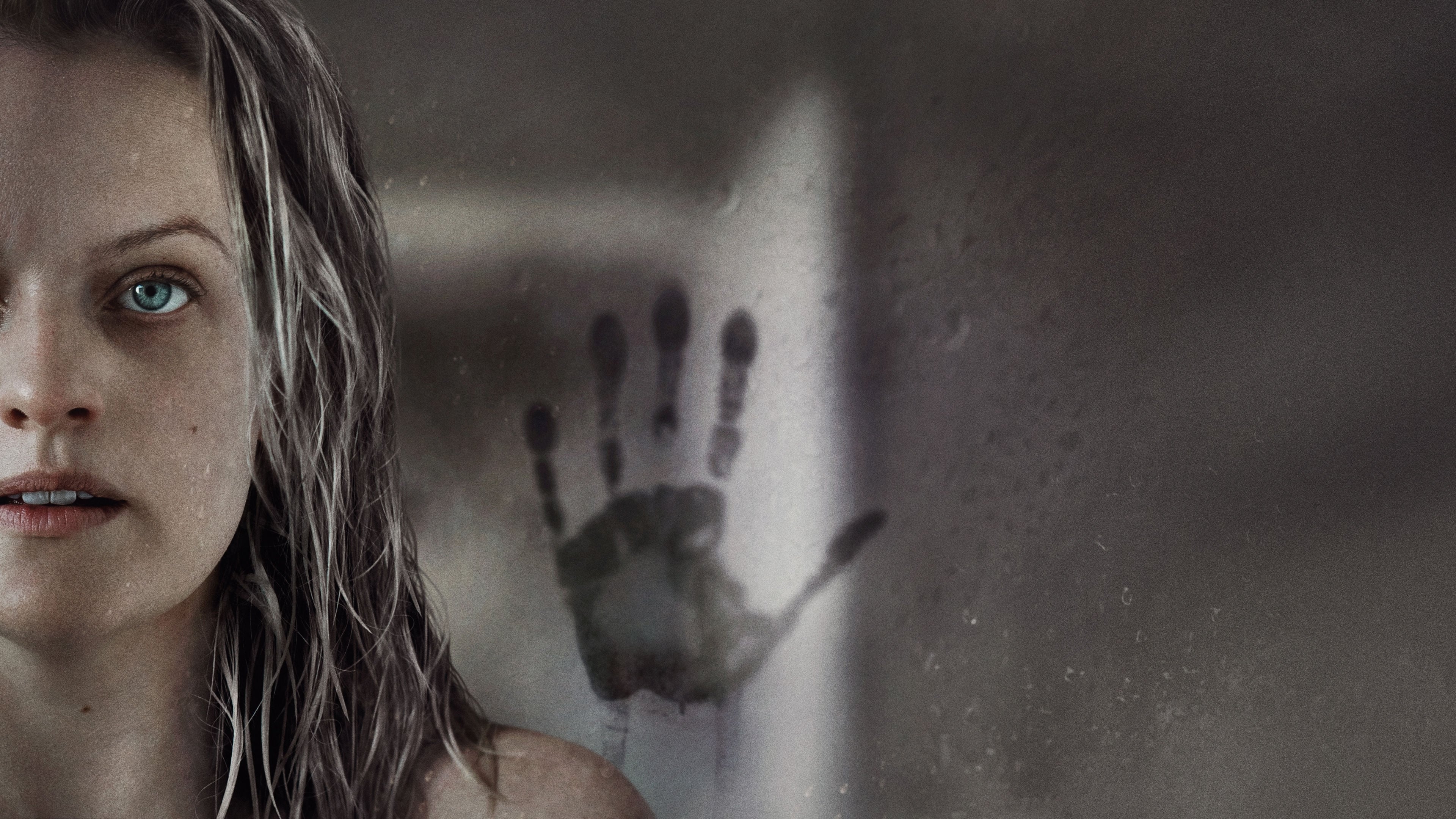
James and his teenage daughter Sydney provide Cecilia with shelter and affection, giving the film a necessary refuge from her former partner’s control. Their home offers warmth, but Whannell refuses to let that warmth become certainty. Safety always feels conditional when neither Cecilia nor the audience can confidently declare a room empty. The threat does not simply enter her new surroundings; it corrupts her ability to experience those surroundings as secure.
Moss is especially effective because she never treats Cecilia’s fear as a request for the audience’s pity. Her performance is angrier and more active than that. Even when Cecilia is cornered by circumstances, Moss keeps showing us the thought behind her reactions. We are watching somebody assess danger, test possibilities and search for a way to regain control. That intelligence keeps the film from turning her suffering into an empty genre mechanism.
Negative space does most of the haunting
For me, the film’s greatest weapon is its empty space. Cinematographer Stefan Duscio uses the widescreen frame to leave suspicious areas around Cecilia, and the compositions train us to inspect blank hallways, vacant corners and open doorways. Duscio explained that the 2.39:1 frame created additional space around the character and enabled deliberately off-center images that encourage viewers to search for a threat.
The camera does not need to show anything unusual. It only needs to look as if it has noticed something. A cut to an apparently empty part of a room becomes an accusation. A held composition makes absence feel occupied. The audience starts doing the antagonist’s work, scanning every patch of negative space and supplying menace to ordinary architecture.
That approach gives the movie an elegant visual language. Cecilia’s former partner does not need to be physically visible to dominate a scene because the framing already expresses his power over her attention. He controls where she looks, and soon he controls where we look too. The effect is more unnerving than a conventional reveal because it denies the relief of identifying the threat. There is no reliably safe edge of the frame.
Whannell also understands the value of waiting. Contemporary horror can become addicted to confirming every disturbance, but this film often lets suspicion hang in the air. The longer an apparently empty composition remains unchanged, the more aggressively I search it. That is a wonderfully economical reversal: a lack of visible information creates more tension, not less.
This patient manipulation of space distinguishes the film from horror that treats a loud appearance as the only possible payoff. It also makes Whannell’s quieter passages more effective than the later expansion in scale. Viewers drawn to similarly idea-driven genre filmmaking can continue with our review of the psychological thriller Heretic, another film whose methods of control matter more than its surface shocks.
The invisible action still has physical weight
When the threat does become openly violent, the action retains a useful sense of resistance. That physicality was not created through digital animation alone. Duscio said the production used a performer in a green suit during interactions with Moss, then combined those performances with clean plates, motion-control passes, digital removal and compositing. His detailed production interview describes a hybrid process that preserved tangible contact before removing the visible body responsible for it.
The technique matters because Cecilia appears to be struggling against force rather than performing beside an effect that will be invented later. Impacts have direction, bodies have weight and the invisible attacker seems to occupy real space. The antagonist may be absent from the finished image, but the action still communicates mass, resistance and intent.
That is essential to the film’s central idea. An invisible threat cannot feel abstract when the story is about the physical consequences of abuse. The hybrid effects give Moss something concrete to resist, and her reactions complete the illusion. Whannell can therefore escalate into forceful thriller mechanics without immediately severing the action from Cecilia’s experience.
There is considerable craft behind the apparent chaos. One major institutional action sequence was rehearsed for weeks and constructed from controlled passes designed to appear continuous. The sequence demonstrates Whannell’s ability to deliver spectacle, but it also reveals the film’s main limitation: once the action grows larger, it cannot equal the precision of Cecilia staring into an apparently empty room.
The escalation is effective but less distinctive
The later movement into broader action remains gripping, yet the film is at its best when stillness does the damage. Its early suspense depends on microscopic changes in attention. The expanding plot requires more machinery, more physical confrontation and a less intimate register. Those choices work as thriller construction, but they make an elegantly focused nightmare feel more mechanical than it needs to be.
The thematic strands do not always lock together with equal neatness either. Coercive abuse, technological surveillance and privacy all belong within the film’s central idea, but the escalation occasionally asks the metaphor to cover more ground than its cleanest passages require. Some of the plotting is easier to admire as engineering than to experience as an organic extension of Cecilia’s psychological confinement.
That reservation does not weaken the central interpretation. If anything, it shows how strong the quieter material is. The film sets such a high standard when it trusts Moss, Duscio’s framing and the possibility of an occupied void that conventional escalation inevitably feels less singular. I like the controlled build-up more than the expanding machinery around it.
The broader action at least remains rooted in Cecilia’s need to be believed and to reclaim control. Whannell never forgets whose film this is, even when his set pieces become louder. That consistency of perspective carries the movie through moments when the plotting itself feels more conspicuous than the horror.
A purposeful reinvention worth enduring
The Invisible Man is highly recommended for viewers who want serious, performance-led psychological horror rather than playful monster entertainment. Its treatment of domestic abuse, gaslighting and violence against women makes it intentionally difficult viewing. The discomfort is not decorative darkness applied to a studio property; it is fundamental to what Whannell is doing.
Most importantly, the film never lets its clever premise push Cecilia out of focus. Moss gives the story emotional credibility, while Whannell and Duscio transform apparently vacant rooms into extensions of an abuser’s control. Even when the final escalation becomes less precise than the build-up, the film remains tense, purposeful and physically immediate.
Whannell understands that the most frightening thing about an invisible attacker is not simply that he cannot be seen. It is that he can dictate what counts as believable. By forcing us to share Cecilia’s certainty while everyone around her searches for proof, The Invisible Man turns absence into evidence—and empty space into a weapon.