

The clearest verdict in this Old 2021 review is that M. Night Shyamalan has made a better nightmare than a mystery. Its secluded beach, accelerated aging and disorienting camera create a genuinely unnerving confrontation with mortality. The trouble begins whenever the screenplay stops letting that nightmare breathe and starts explaining what its images have already communicated.
Our verdict Old is an uneven but genuinely unnerving thriller that turns a sunny beach into an existential trap. Its roaming camera and accelerated-aging premise linger longer than the clunky dialogue and over-explained final stretch.
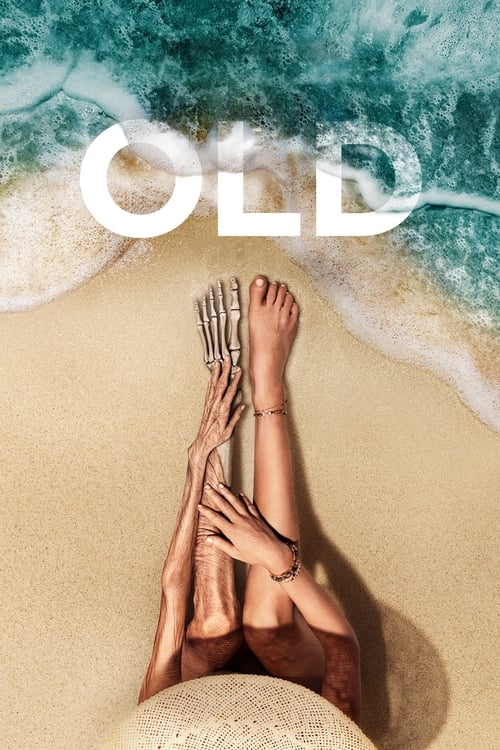
Old (2021)
That imbalance makes Old frustrating, but it does not make it disposable. This is a strange, visually committed horror-thriller with enough personality to survive its clunky dialogue and overextended explanations. I would rather watch Shyamalan take this kind of risky swing than see another anonymous genre film hit every familiar beat without leaving a mark.
Old turns an open beach into a claustrophobic prison
The spoiler-safe setup is brutally efficient. Guy and Prisca, played by Gael García Bernal and Vicky Krieps, visit a tropical resort with their children. An excursion takes the family and several other guests to a secluded beach, where they discover that their bodies are aging at an impossible rate. A lifetime is being compressed into a single day, and leaving the area is not as simple as walking back to the hotel. Universal lists the film at 108 minutes, which gives the premise little room for comfort once the trap closes.
The beach is the film’s masterstroke because it reverses everything the location normally promises. Bright sunlight offers no safety. Open water does not mean freedom. An imposing rock wall and the constant force of the surf make the space feel smaller with every passing minute. Shyamalan does not need conventional action choreography to create urgency; the geography itself becomes the threat.

I especially like the contradiction at the center of the setting. Everyone can see the horizon, yet nobody can reach a future beyond the sand. The location is physically beautiful and psychologically hostile, a holiday postcard transformed into a waiting room for death. That idea gives Old a more distinctive identity than its plot mechanics alone would provide.
The accelerated aging gives Old real existential weight
Rapid aging is an effective thriller device because it supplies an immediate deadline, but Old is most unsettling when it treats time as a bodily experience rather than a countdown clock. Illness develops too quickly to comprehend. Parents watch their children change before they can adjust to the previous version of them. Adult anxieties arrive without the years normally available to understand them.
This is where the film becomes more than an elaborate escape-room scenario. Its central fear is not merely death; it is the possibility that life can change faster than a person can process it. Bodies deteriorate, relationships shift and familiar roles become unstable. Shyamalan makes the ordinary phrase “they grow up so fast” sound less like affectionate nostalgia and more like a curse.
The premise also gives the physical horror emotional meaning. The disturbing transformations are not isolated shocks inserted to wake up the audience. They are exaggerated expressions of anxieties that already follow families through everyday life: sickness, separation, lost time and the fear of failing to protect the people closest to you. Viewers looking for another story built around isolation and mounting dread may also appreciate our review of Virus 32, although Old is more surreal and existential than conventionally survivalist.
The roaming camera understands the nightmare better than the dialogue
Old looks like a film made by someone determined to find an unusual angle even when a straightforward one is available. Cinematographer Mike Gioulakis gives the beach a restless visual language, with mobile compositions that withhold information, drift between people and make the edges of the frame feel dangerous. Production material identifies Gioulakis as the cinematographer, while Kodak’s production account confirms that the movie was photographed on 35mm film using different stocks for daylight exteriors and lower-light material.

That choice contributes to the tactile strangeness of the setting. The tropical light is inviting without becoming comforting, while the moving camera creates the sensation that time is slipping sideways rather than simply passing faster. Shyamalan frequently seems more interested in an obstructed face, an empty patch of sand or a movement just outside clear view than in delivering the most obvious coverage. The result feels like a deliberately composed fable, not generic studio horror.
For me, this visual confidence is the strongest part of Old. The camera recognizes that suggestion can be more disturbing than confirmation. It lets a delayed reveal or an uneasy composition do the work, trusting viewers to feel the wrongness before they can define it. Even when individual dramatic beats wobble, the film maintains the atmosphere of a waking dream whose rules are being rewritten in real time.
The screenplay keeps interrupting its own spell
Unfortunately, the characters rarely receive the same trust as the images. Their dialogue is often stiff, conspicuously explanatory and overloaded with occupational or psychological vocabulary. Instead of allowing behavior to reveal personality, the screenplay repeatedly has people identify what they know, how they think and why a new development matters.
Some artificiality belongs in this heightened world. Naturalistic chatter would not automatically improve a film operating with the logic of a dark fable. The problem is repetition: Old frequently verbalizes an idea after the staging has already made it clear. That turns people into delivery systems for the premise at precisely the moments when their terror should feel immediate. Both RogerEbert.com and Screen Daily identified this direct exposition as a central weakness, and it is the outside criticism that most closely names the film’s self-defeating habit.
The ensemble is consequently fighting an uphill battle. Bernal, Krieps and the wider cast must establish recognizable people while also carrying a large amount of mechanical explanation. The family conflict gives the film an emotional center, but several characters remain more useful as embodiments of illness, profession or fear than as fully individualized people. The themes are substantial; the characterization does not always grow quickly enough to match them.
Old is more powerful before it starts supplying answers
Shyamalan’s instinct to explain the machinery eventually narrows the film. The beach is frightening because its impossible conditions feel larger than any one interpretation. Every added answer makes that uncanny space a little more manageable, and therefore a little less disturbing. The later stretch still has momentum, but it shifts attention from the universal terror of time to the logistics of why this particular nightmare exists.
I like the controlled build-up more than the expanding mythology. Old does not need to remain completely abstract, but its best material works through sensation: the surf that never stops, the rock wall that blocks escape and the horror of realizing that the body has moved ahead while the mind is still trying to catch up. Explanation can clarify a plot without deepening it, and that is the trap Shyamalan walks into here.
Even so, the explanatory turn cannot erase the images that came before it. Old remains the work of a filmmaker willing to make uncomfortable formal choices and risk tonal awkwardness in pursuit of something singular. Its failures are visible, occasionally loud and difficult to excuse, but they are attached to a movie with an actual identity. For another recent horror film that uses isolation as its central pressure point, see our No One Will Save You review.
Is Old worth watching?
Old is worth watching for viewers who enjoy high-concept horror, stylized filmmaking and surreal logic. It is less likely to satisfy anyone who needs natural dialogue, richly individualized supporting characters or a mystery that improves as it is decoded. The film is also built around illness, accelerated bodily deterioration and disturbing imagery; its PG-13 classification specifically notes strong violence and disturbing images among its content.
My reservation is substantial but simple: the screenplay does not know when to stop talking. My recommendation survives because the beach, the camera and the central fear are stronger than that weakness. Old is uneven, sometimes awkward and finally too eager to explain itself, yet its vision of life racing beyond human control lingers. When Shyamalan trusts the nightmare, the movie is difficult to shake.