
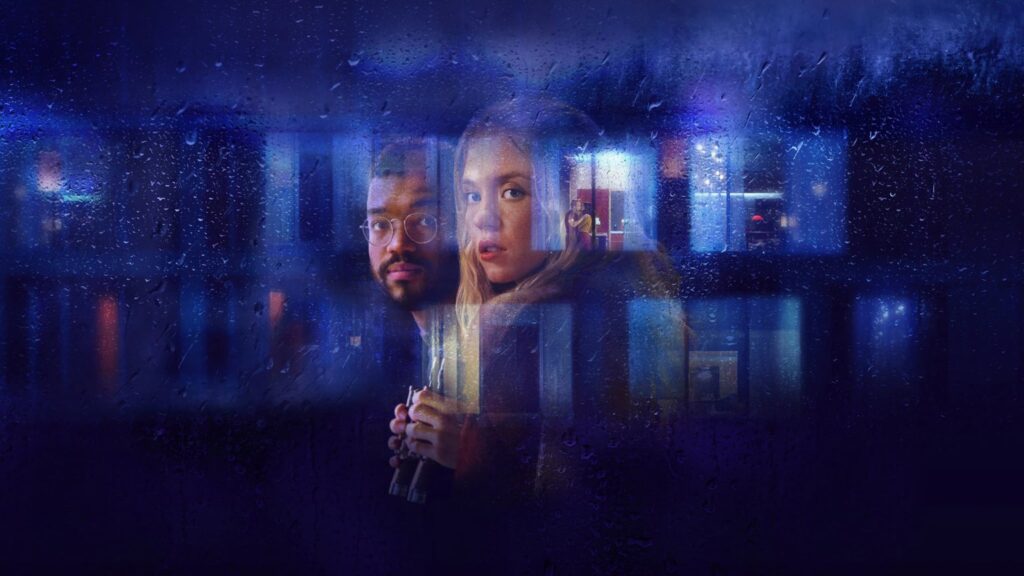
The Voyeurs works best when looking feels dangerous. Michael Mohan’s glossy erotic thriller understands how quickly curiosity can become participation, using opposing apartments, exposed windows, binoculars and camera lenses to erode the distance between watcher and watched. That visual idea gives the film its most seductive tension. Unfortunately, the screenplay eventually decides that a clean, nasty obsession story is not enough and starts piling elaborate reversals onto a foundation that was more effective when it was simpler.
Our verdict A glossy, knowingly lurid erotic thriller whose clever use of apartments, windows and lenses generates genuine unease. The Voyeurs commits to its provocations, but derivative ideas and increasingly contrived plotting keep the obsession from becoming truly gripping.
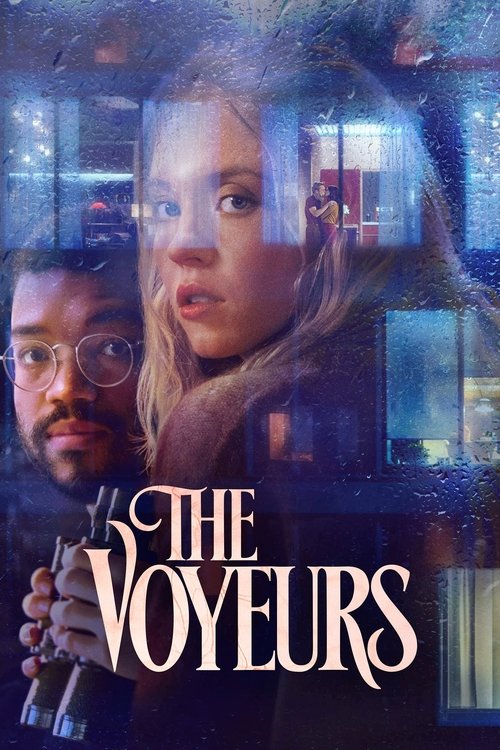
The Voyeurs (2021)
That tension defines this The Voyeurs 2021 review. Released through Prime Video in September 2021, the film stars Sydney Sweeney and Justice Smith as Pippa and Thomas, a young couple whose move into a Montreal loft gives them an unusually intimate view of their neighbors’ private lives. Curiosity becomes routine, routine becomes obsession, and the apparent safety of watching from across the street begins to disappear. Mohan delivers a knowingly lurid revival of the erotic thriller, but his sharp command of space and point of view is ultimately more persuasive than the plot built around it.
The windows make voyeurism feel like participation
The apartment setup is the film’s real star. The two homes are separate, yet the huge windows make that separation feel almost imaginary. Pippa and Thomas can see without initially being seen, creating the illusion that observation carries no responsibility. The movie then introduces binoculars and telephoto lenses, progressively tightening the connection between the apartments until looking no longer seems like a passive activity.
Mohan has described that narrowing distance as a deliberate part of the suspense design, with the architecture and lenses charting the watchers’ movement toward the people they are observing. In his discussion of the film’s visual strategy, he explains how those devices reduce the physical and psychological gap between the two couples. The concept is straightforward, but it gives the film an effective visual grammar: every attempt to see more also makes retreat less plausible.
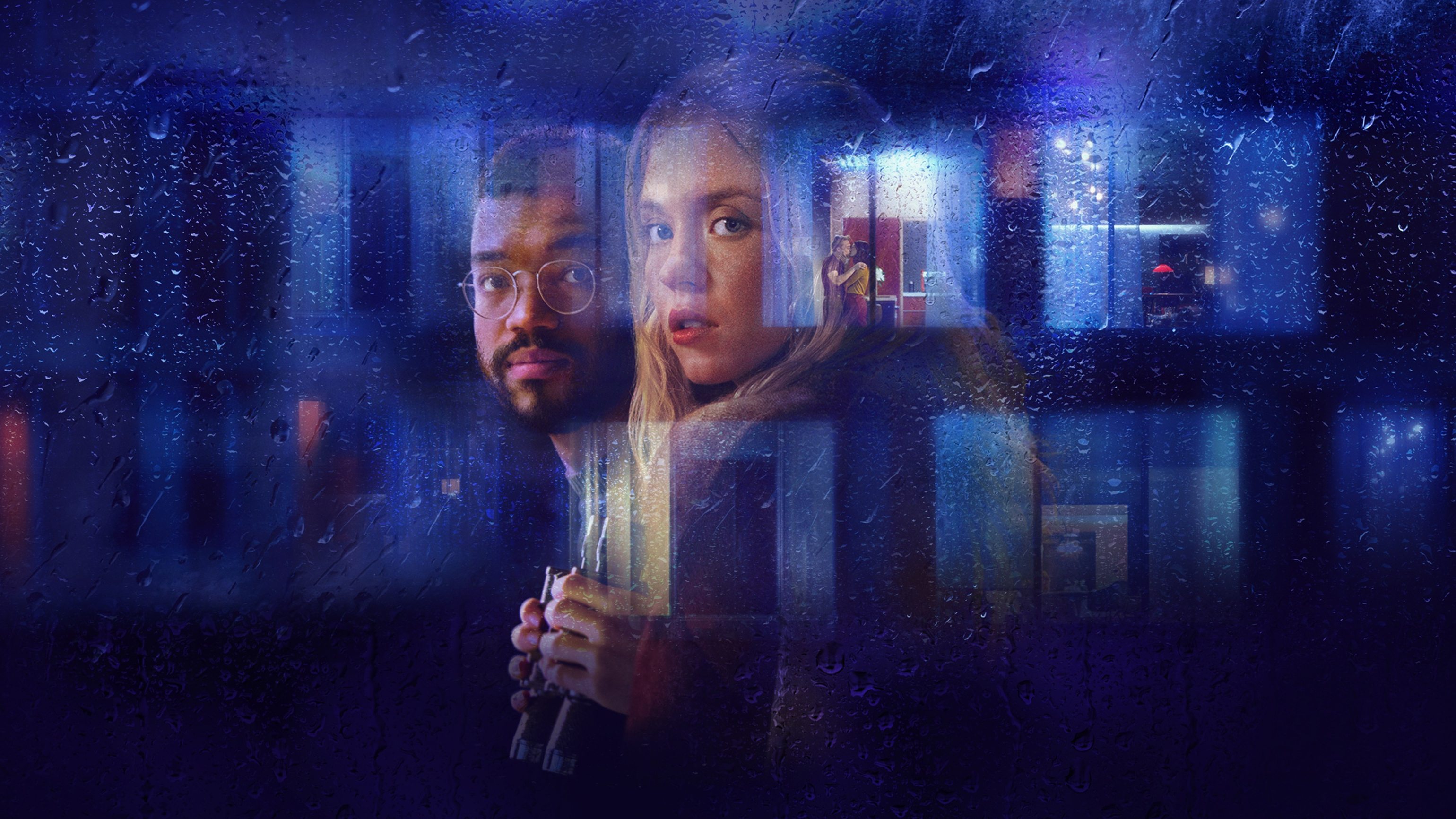
For me, this is where The Voyeurs is most convincing. Its strongest images turn an attractive apartment into a moral trap. The view is initially presented as an accidental perk, then becomes entertainment and finally an excuse for intervention. The danger does not come only from what Pippa sees. It comes from her growing belief that seeing something gives her permission to enter it.
That makes the movie a useful companion to other enclosed psychological thrillers, including MovieBunker’s review of Goodnight Mommy, where domestic space similarly becomes a source of uncertainty rather than comfort. The Voyeurs is brasher and more sexually explicit, but it shares the understanding that a home can stop feeling private long before anybody physically breaks in.
Pippa gives the obsession its uncomfortable charge
The film’s smartest character decision is making Pippa the principal instigator. She is not simply dragged into somebody else’s mystery or positioned as a passive witness waiting for danger to arrive. Her desire, insecurity and moral rationalizations propel the story. Each new boundary crossing can be presented to herself as concern, curiosity or even responsibility, but the accumulation exposes how self-serving those explanations are.
Sweeney’s screen presence suits that contradiction. Pippa can be fascinated, uneasy and convinced of her own good intentions without those impulses canceling one another out. The film is more interesting when it allows her desire to remain morally messy than when it tries to organize every transgression into a piece of thriller machinery. Thomas operates as a more cautious counterweight, but Pippa supplies the movie with its decisive appetite: she wants to know, and knowing is never enough.
Mohan has said he wanted the women in the story to retain agency even when their decisions became self-destructive, linking Pippa’s behavior to repression, insecurity and the addictive pull of idealized images. That intention comes through clearly. The Voyeurs is not merely warning that strangers may be watching. It is interested in the flattering fantasy that observation provides—the chance to project excitement, sophistication or perfection onto somebody else’s life while ignoring everything outside the frame.
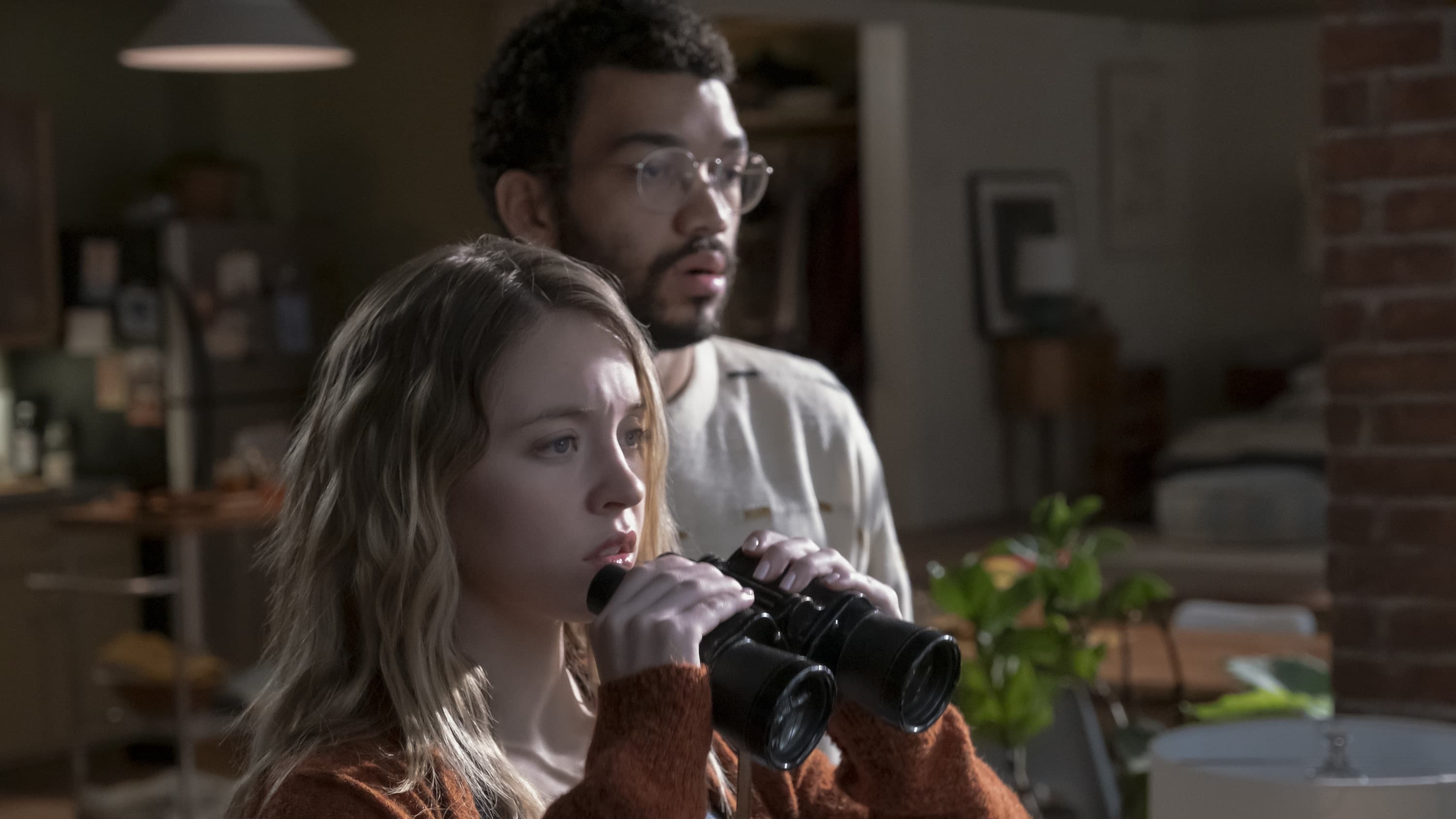
That idea gives the familiar premise a contemporary edge. Pippa’s window is not a social-media feed, but it serves a similar psychological function: it offers a carefully bounded image onto which she can project a more thrilling life. The difference is that this image appears unfiltered and therefore more truthful. The movie understands the seduction of that assumption, even if it does not develop the idea far enough to become a genuinely new statement about modern spectatorship.
The erotic-thriller commitment is refreshing
The Voyeurs at least commits to being an erotic thriller. It does not treat sex as a detachable marketing flourish or become embarrassed by its own premise after the opening act. Desire, infidelity, privacy and control all affect character choices and create danger. Mohan has said his aim was to make sex advance the plot, reveal character and generate tension rather than function as decoration. Whatever the film’s later problems, that commitment gives it more purpose than a tasteful imitation that borrows the genre’s surfaces while removing its provocations.
There is also something welcome about its willingness to be pulpy. The film knows that voyeur thrillers operate through heightened behavior, seductive images and terrible decisions. It does not need documentary realism to work. The problem is not that characters behave recklessly or that the plot becomes outrageous; those qualities are practically part of the admission price. The problem is that the outrageousness eventually becomes more laborious than exciting.
The reversals smother the cleaner suspense
Once the story expands beyond its contained act of watching, The Voyeurs begins asking complicated plotting to produce the tension that its architecture generated almost effortlessly. The late escalation is designed to make the audience reconsider what it has seen, but some of that machinery feels reverse-engineered for surprise. Instead of deepening the film’s moral unease, the twists draw attention to how conveniently people, information and consequences have been arranged.
Mohan has acknowledged that he developed the story backward from its ending and approached parts of it as allegory rather than as a procedural requiring every mechanism to be explained. That helps clarify the intention, but intentional ambiguity and convincing construction are not the same thing. A thriller can leave practical gaps while preserving emotional or thematic logic. Here, the plot’s insistence on outmaneuvering the viewer weakens the more immediate discomfort created by Pippa’s choices.
The derivative quality becomes harder to ignore at the same time. Mohan has cited established voyeur and erotic thrillers among his influences, including The Conversation, while critics have naturally connected the film to Rear Window and Brian De Palma’s work. Those influences are not a problem by themselves; this entire genre thrives on looking back at other movies about looking. Yet The Voyeurs updates familiar machinery more effectively than it reinvents it.
A criticism represented in Metacritic’s review collection—that the film recycles stronger genre predecessors—gets close to my reservation. The divided critical response collected by Metacritic also reflects the central tension in the movie: some reviewers appreciated its visual wit and unapologetically lurid approach, while others objected to its dialogue, performances and familiar influences. I am more receptive to its commitment than its harshest critics, but the homage needs a more distinctive dramatic payoff.
The Voyeurs is attractive pulp, not a gripping reinvention
The Voyeurs is worth considering if glossy erotic thrillers, compromised protagonists and shamelessly heightened twists are already your idea of a good evening. Its explicitness is tied to its themes, its central character is allowed to make active and ugly choices, and its apartment-to-apartment suspense produces genuine unease. Viewers demanding airtight plotting, subtle realism or a fresh reinvention of the voyeur-thriller formula are much more likely to find the final stretch frustrating.
My recommendation comes with substantial reservations. Mohan has a persuasive eye for windows, sightlines and the dangerous confidence of watching from apparent safety. He is less successful when that elegant setup gives way to increasingly visible narrative engineering. The Voyeurs sees exactly how obsession begins; it just cannot resist overexplaining its cleverness through twists. The result is seductive enough to hold the gaze, but not strong enough to justify every place it looks.