

Terminator 2: Judgment Day is the rare blockbuster that can crush a truck, melt a man and contemplate humanity’s instinct for self-destruction without feeling like three different movies have collided. James Cameron’s sequel remains a near-perfect action film because its escalation has purpose. Every chase tightens the relationships, every collision adds weight to the threat, and every spectacular display of machinery returns to one stubbornly hopeful idea: the future changes when someone decides violence is not inevitable.
Our verdict James Cameron’s sequel remains a near-perfect action blockbuster: physically convincing, emotionally sincere and frighteningly urgent. Its occasional tonal clumsiness cannot derail a machine chase powered by trauma, moral choice and spectacularly lucid filmmaking.
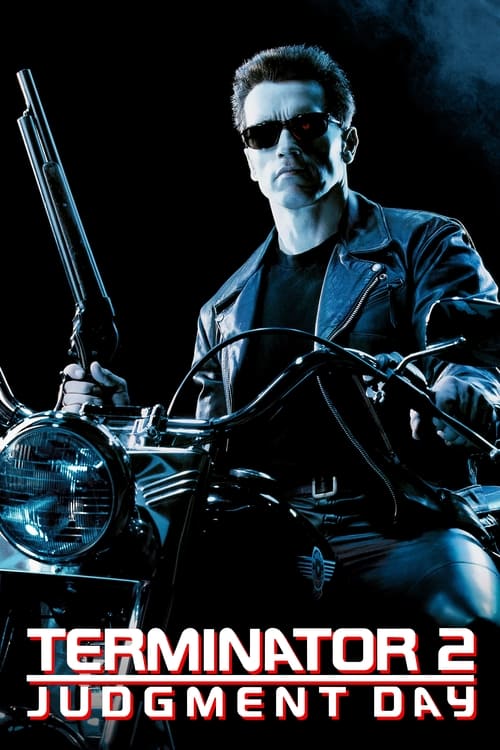
Terminator 2: Judgment Day (1991)
That is the central argument of this Terminator 2: Judgment Day review. The film is bigger, warmer and more openly sentimental than its predecessor, but its ambition rarely becomes empty inflation. Cameron and co-writer William Wisher take the original’s merciless pursuit structure and give it an emotional engine: young John Connor is hunted by the shape-shifting T-1000 while a reprogrammed T-800 becomes his protector. Arnold Schwarzenegger, Linda Hamilton, Edward Furlong and Robert Patrick occupy clearly defined parts in that machine, yet the movie works because none of them feels like a disposable component.
The action is spectacular because it is readable
Cameron understands something too many action directors forget: speed is useless without geography. During the film’s major pursuits, I always understand where John is, where the T-1000 is gaining ground and how much punishment the T-800 can absorb before protection becomes impossible. The editing creates momentum without pulverizing basic spatial relationships. Vehicles enter and leave the frame with purpose, impacts alter the balance of a sequence, and weapons have consequences beyond making noise.
That clarity turns action into storytelling. The first extended chase does more than introduce a larger playground for destruction. It establishes the different physical logic of all three central figures: John is vulnerable and improvisational, the T-800 is durable but limited, and the T-1000 moves with an unnerving efficiency that barely seems to acknowledge obstacles. Later set pieces expand the scale, but Cameron keeps returning to those rules. We are not merely watching expensive objects break. We are watching a contest between distinct forms of intelligence, power and determination.

This is why the movie remains such a useful counterexample to the idea that frantic editing automatically creates excitement. Cameron’s camera lets machinery occupy space. Trucks feel heavy, motorcycles look dangerous and bodies seem vulnerable even when one of those bodies belongs to a nearly indestructible cyborg. The approach recalls the muscular precision of Cameron’s earlier work in Aliens, where spectacle also grows from character pressure instead of interrupting it.
The damage also accumulates. The T-800 may be designed to withstand punishment, but each impact changes how it moves and what it can do. That deterioration gives the action a dramatic shape: protection becomes harder as the threat becomes more adaptable. Cameron can stage enormous destruction without losing the simple emotional equation underneath it. A child is in danger, his protector is running out of options, and the thing pursuing them never seems tired.
Linda Hamilton gives the destruction a psychological cost
The film’s most important performance belongs to Linda Hamilton. Sarah Connor has transformed herself into a weapon because she knows what is coming, but Hamilton refuses to present that transformation as uncomplicated empowerment. Sarah is physically formidable, strategically alert and emotionally ravaged. Her strength does not erase her trauma; it is one of the forms that trauma has taken.
Hamilton makes Sarah frightening even when her fear is understandable. She scans rooms for threats, speaks with apocalyptic certainty and often treats ordinary human connection as a dangerous distraction. Cameron frames her discipline with admiration, but the performance keeps exposing its cost. Sarah has spent so long preparing to prevent dehumanization that she risks dehumanizing everyone around her. That contradiction gives the film moral weight its hardware could never supply on its own.
A nuclear nightmare sequence makes her terror brutally immediate. It is not background mythology or a convenient explanation for why the heroes must keep moving. It is the image governing Sarah’s life: families erased in an instant, human warmth replaced by fire and ash. For me, the film’s finest achievement is the way it connects that dread to sincere hope. Catastrophe feels horribly plausible, but never cosmically ordained. The future remains a product of choices made in the present.

Sarah’s arc also prevents the film from offering an easy distinction between good humans and bad machines. She understands the value of human life in the abstract, yet trauma has taught her to think in targets, probabilities and acceptable losses. Hamilton lets us see the person fighting beneath that tactical shell. The result is not merely a tougher version of the character from the first film. It is a portrait of survival curdling into obsession.
The T-800 learns restraint, and the sequel finds its heart
Schwarzenegger’s role reversal is a terrific sequel idea, but the film gets more from it than a clever inversion. The T-800 is still imposing enough to make every entrance feel dangerous. What changes is the direction of that power. John attempts to teach his protector that winning and killing are not the same thing, turning a programmed machine into the movie’s most direct test of whether violent behavior can be unlearned.
Furlong is crucial to making that idea work. John can be irritating, impulsive and too pleased with his own slang, but he also has the moral imagination the adults have nearly lost. His commands begin as adolescent experiments with authority before developing into something more serious: an insistence that power should answer to empathy. Schwarzenegger plays the T-800’s gradual adjustment with enough stiffness to preserve the comedy and enough responsiveness to make the relationship affecting.
Roger Ebert’s 1991 review is useful as a contemporary record of how quickly this emotional design registered: he identified the bond between the boy and his protector as central rather than treating the characters as delivery systems for effects. Ebert’s original review What matters to me is how thoroughly Cameron builds that bond into the action. John’s lessons change the way later confrontations unfold, while the T-800’s behavior forces Sarah to confront the possibility that humanity is not guaranteed by biology. The machine can learn restraint; the humans must decide whether they will.
The relationship is sentimental, but not cheaply so. The T-800 does not become lovable by suddenly behaving like a conventional father. Its appeal comes from effort: the visible process of interpreting John’s rules and testing them against its programming. Schwarzenegger’s limited emotional register becomes an advantage because tiny adjustments carry enormous weight. A pause, a redirected glance or a clumsy attempt at casual speech can reveal more than a grand monologue would.
The T-1000 still feels present rather than merely digital
Robert Patrick gives the T-1000 a chilling lack of wasted motion. He does not snarl, posture or explain himself. His stillness is as threatening as his speed because it suggests total confidence: every person and barrier is merely material waiting to be passed through. Patrick’s controlled physical performance also gives the visual effects something tangible to extend. The character remains an actor-driven threat, not a software demonstration hovering above the scene.
The effects endure because the movie uses a hybrid vocabulary. Production accounts describe computer-generated character work and digital compositing operating alongside extensive physical-effects techniques; American Cinematographer’s account of the production and ILM’s own record support treating the T-1000 as a combined achievement rather than lazily calling everything CGI. That mixture gives transformation shots their impossible fluidity while preserving the weight, texture and physical damage surrounding them.
Crucially, the effects establish rules. The T-1000’s abilities are astonishing, but they do not become a license for random magic whenever the screenplay needs an escape. Its transformations express its identity: adaptable, invasive and superficially human, yet empty beneath the imitation. The visual trickery is inseparable from the character. Its body has no stable shape because it has no self beyond the mission.
The film’s four Academy Award wins included Visual Effects, Makeup, Sound and Sound Effects Editing, recognition that reflects how completely its technical departments reinforce one another. The imagery attracts the attention, but Patrick’s movement, the metallic sound design and the physical staging sell the danger. The T-1000 feels frighteningly present because the movie never asks one technique to do all the work.
Terminator 2’s contradictions make it richer—and occasionally clumsier
The obvious tension is that Terminator 2 condemns dehumanizing violence while making industrial destruction feel magnificent. Cameron wants us to fear the machinery and cheer when it smashes through another wall. I do not think that contradiction invalidates the film’s moral argument. Its heroes cannot simply opt out of force while pursued by a relentless killer, so restraint must be practiced inside a violent world rather than preached from a safe distance.
Still, the movie occasionally enjoys the wreckage so much that its warning becomes muffled. There are stretches where one more explosion produces diminishing returns, and the sheer competence of the spectacle can numb the very sensitivity the story wants to recover. The film never fully resolves that problem. It barrels through it with such conviction that the human argument survives, but the appetite for destruction remains impossible to ignore.
The comedy has aged less gracefully than the action. Some of John’s slang-heavy instruction scenes are funny and necessary because they give the T-800’s transformation an everyday rhythm. Other lines land with a thud between Sarah’s trauma and the movie’s visions of annihilation. The tonal whiplash is the price of Cameron broadening the original film’s lean horror pressure into mass-audience entertainment.
I prefer the sequel’s expanded emotional reach overall, although it sacrifices some sustained dread. The original behaves like a nightmare closing every exit; Terminator 2 sometimes pauses to ensure the nightmare can also function as a crowd-pleasing buddy movie. Schwarzenegger’s established action persona makes that mixture easier to accept, especially when placed beside the more straightforward physical dominance explored in Predator. Here, his size becomes morally interesting because John must teach that power where to stop.
That broader tone will be the dividing line for viewers who prefer the first film’s ruthless economy. Terminator 2 is longer, more sentimental and much more eager to please a crowd. Yet its warmth is not merely commercial padding. By allowing John and the T-800 to become funny together, Cameron gives their later choices emotional force. The occasional clumsy joke is a real weakness, but removing all the humor would leave the film technically immaculate and dramatically colder.
The verdict: essential blockbuster filmmaking
Terminator 2: Judgment Day remains essential viewing for science-fiction and action fans, particularly anyone exhausted by blockbusters that mistake visual confusion for momentum. Its chases have geography, its effects have physical credibility and its performances give the destruction a human cost. Hamilton is the wounded center, Patrick is an almost perfectly controlled threat, and the Schwarzenegger-Furlong relationship supplies warmth without neutralizing the danger.
More importantly, the film uses sequel escalation to deepen rather than abandon its central idea. Superior machinery cannot save humanity from the habits that created it. Survival depends on people—and, pointedly, one machine—recognizing that violence is a choice rather than destiny. Cameron may deliver that message while gleefully demolishing half the scenery, but the contradiction does not make the hope insincere. It makes the hope difficult, which is why this enormous, noisy and surprisingly tender blockbuster still matters.
References
- Terminator 2: Judgment Day | Rotten Tomatoes
- Terminator 2: Judgment Day (1991) directed by James Cameron • Reviews, film + cast • Letterboxd
- Terminator 2: Judgment Day movie review
- Terminator 2:For FX, The Future Is Now
- Terminator 2: Judgment Day | Industrial Light & Magic
- 1992 Academy Awards | Oscars.org | Academy of Motion Picture Arts and Sciences