
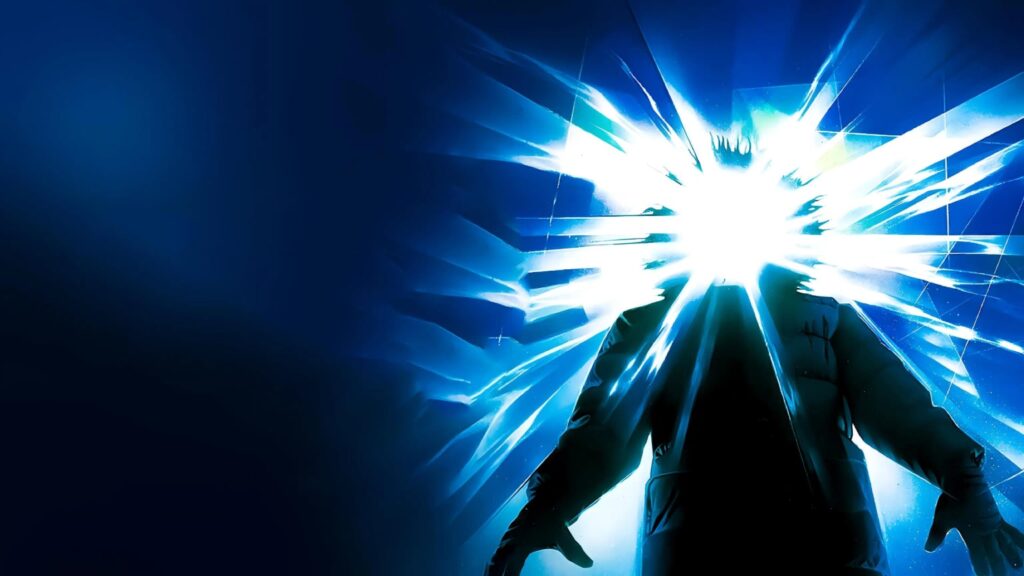
The short answer to “The Thing 1982 review why it still works” is uncertainty. John Carpenter’s film remains a brutally effective paranoia machine because its frozen setting, suspicious ensemble, minimalist score and revolting creature effects all attack the same fragile assumption: that appearances can be trusted. More than four decades after its 1982 release, it is still essential horror—not because every illusion is seamless, but because every creative decision makes certainty feel impossible.
Our verdict John Carpenter’s The Thing remains a brutally effective paranoia nightmare, unifying Antarctic isolation, patient suspense and grotesquely tactile creature work. Some supporting characters blur together, but the film’s refusal of certainty or comfort still cuts deep.
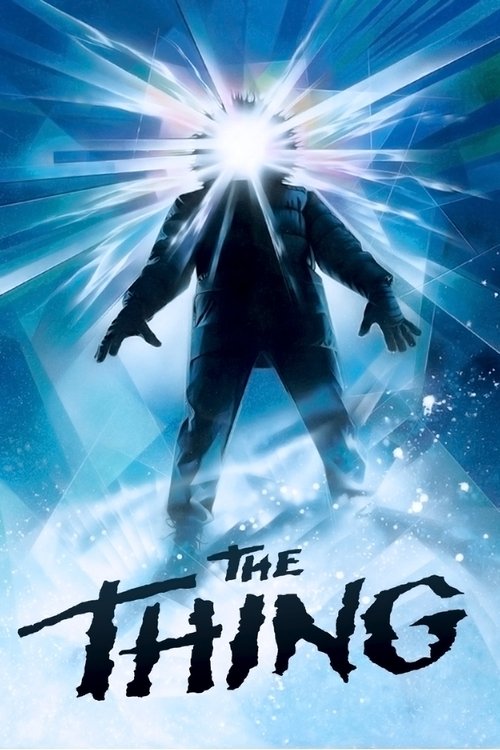
The Thing (1982)
Carpenter directs Bill Lancaster’s adaptation of John W. Campbell Jr.’s Who Goes There? as both a creature feature and an interrogation nobody can safely conduct. An isolated Antarctic research crew encounters an alien organism capable of imitating other living beings, turning identification into a matter of survival. The setup is beautifully cruel. The men need one another to survive the environment, yet survival also requires them to suspect everyone around them. For me, the creature is terrifying, but uncertainty is the film’s real monster.
The Antarctic isolation is the engine, not decoration
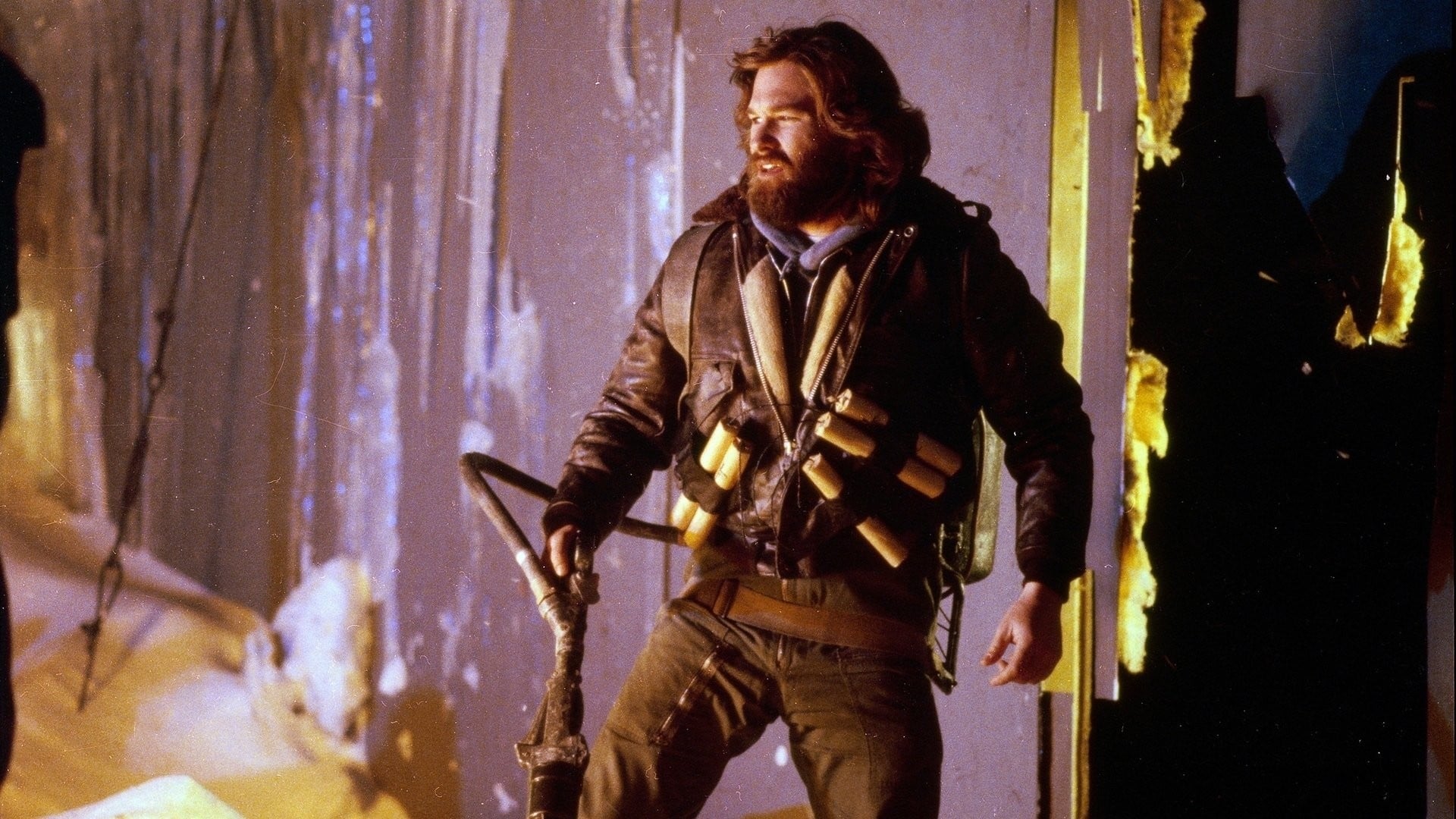
The Thing would lose much of its power in a setting with easy exits, functioning phones or a nearby population. Antarctica is the mechanism that seals suspicion inside the station. Beyond the walls lies a vast white emptiness that should suggest open space, yet Dean Cundey’s widescreen cinematography turns it into another kind of prison. The men look exposed against the snow and boxed in by it at the same time.
Inside, narrow corridors, storage rooms and dim communal spaces offer no real relief. The station has enough rooms for people to disappear from view but nowhere that feels reliably secure. Carpenter understands that claustrophobia does not require a tiny set; it requires the removal of meaningful escape. He can cut from an enormous frozen landscape to a crowded room and preserve exactly the same trapped feeling.
That use of isolation distinguishes the film from horror that treats location as atmospheric wallpaper. Here, the weather changes every decision. Nobody can simply leave, call for help or put a potentially dangerous person safely beyond reach. For a more contemporary variation on one person confronting an extraterrestrial intruder, No One Will Save You uses isolation very differently. Carpenter’s harsher insight is that company may be more frightening than solitude.
The station also creates a nasty contradiction between visibility and knowledge. Characters can watch one another, lock doors and search rooms, but none of those actions establishes trust. The environment forces everyone together while the organism’s talent for imitation makes proximity unbearable. The film keeps tightening that contradiction until even a room full of witnesses feels like a hiding place.
A suspicious ensemble matters more than elaborate backstories
Kurt Russell gives R.J. MacReady enough competence to hold the narrative together without turning him into a reassuring action hero. He observes, improvises and takes control when the situation demands it, but his authority remains provisional. In another film, the capable lead might become the audience’s stable point of trust. Here, competence can look threatening because it gives one man power over everyone else.
Russell plays that tension without making MacReady unreadably blank. There is irritation in his authority and strain beneath his decisiveness. He behaves like someone trying to solve an emergency rather than someone destined to conquer it. That distinction is crucial: MacReady can organize the group’s response, but he cannot promise that his evidence is complete—or that the group still includes everyone it appears to include.
The ensemble works because every conversation becomes a test with no dependable control group. Questions that would normally establish facts only generate more possibilities. Equipment checks, accusations and shifting alliances accumulate tension before violence erupts. A glance held for a second too long can matter as much as an effects sequence because Carpenter has made ordinary behavior unreadable.
There is a cost to this design. Several supporting characters are difficult to distinguish during the early stretch, and that complaint appeared in the film’s divided contemporary reception. Their anonymity suits a pressured work crew and strengthens the identity game, but it means some moments of danger register as strategic shocks rather than deeply personal losses. The film understands these men as functions within a collapsing group more clearly than it understands all of them as individuals.
For me, that reservation limits the emotional range without damaging the central mechanism. The Thing is cold by design. It is less interested in revealing who these men were before the crisis than in watching identity itself become unreliable. The ensemble does not provide a warm human center; it gives the alien a collection of masks and gives the audience a room full of possible lies.
The practical effects make deception horrifyingly physical
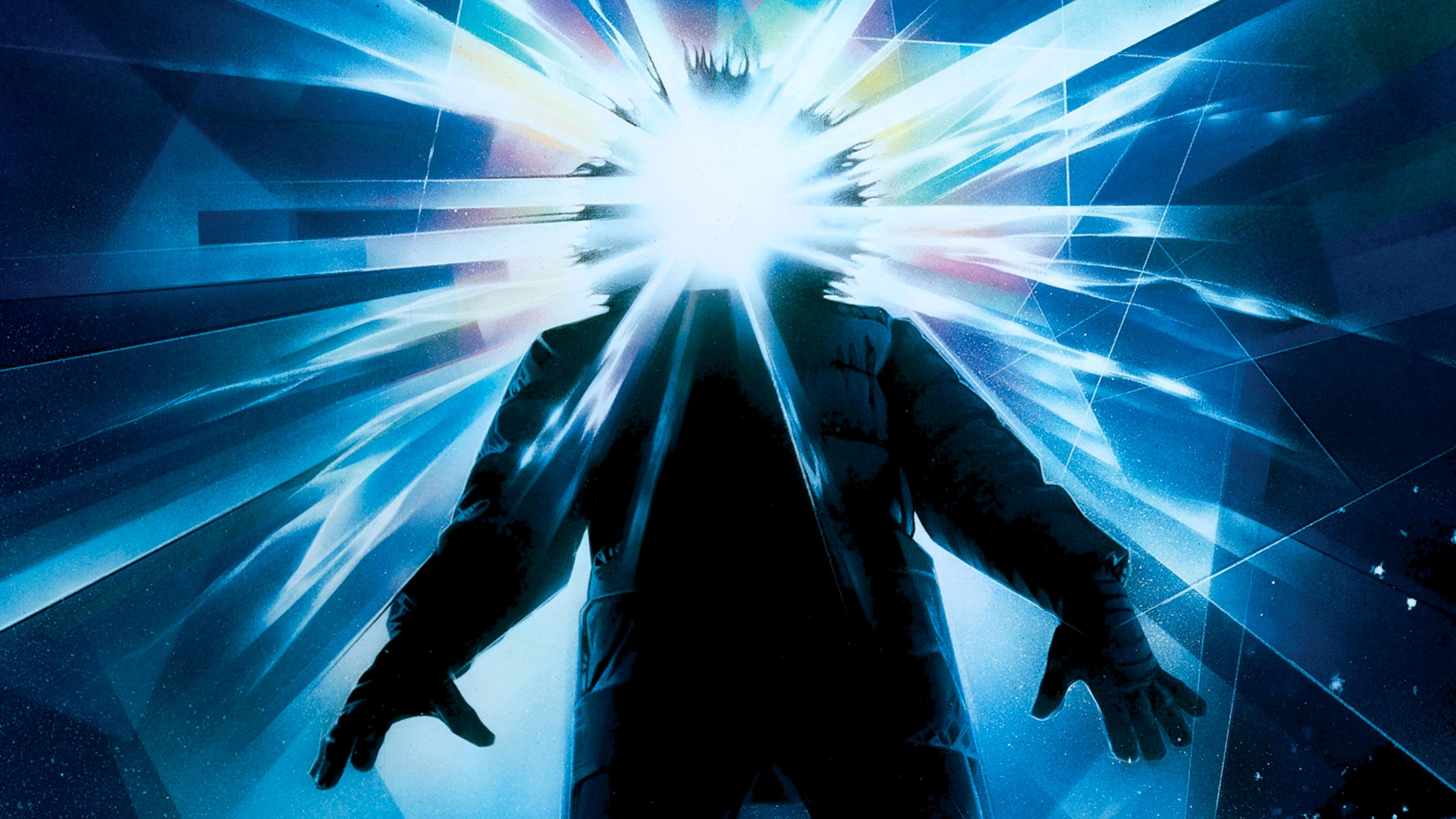
Rob Bottin’s creature work is indispensable because the transformations do not merely show an alien attacking. They show the familiar body becoming untrustworthy. The effects used physical techniques including puppets, cables and copious goo, while Carpenter’s central conception allowed the organism to assume wildly different forms. SYFY Wire’s oral history of the production documents the elaborate practical work behind those transformations. The result feels wet, heavy and distressingly present.
Some individual illusions reveal their age, but the sequences remain potent because they have imagination, weight and dramatic purpose. Flesh opens where it should not. Anatomy appears to improvise escape routes. A body is never merely destroyed; it is reorganized into something that mocks the original shape. The creature has no reassuringly recognizable design that the audience can study and contain. Every revelation expands what it might be capable of doing next.
That is why reducing The Thing to a practical-effects showcase misses the point. The effects are storytelling. Their tactile ugliness makes imitation horrifyingly physical, while their variety prevents the monster from becoming a stable object. This is not body horror included primarily as a dare. The transformations are spectacular, but each one supplies evidence that makes the survivors less certain rather than more informed.
Contemporary horror can learn from that integration without pretending practical effects are automatically superior to digital work. The useful lesson is not simply “use rubber.” It is that an effect should alter the story’s emotional conditions. Carpenter and Bottin make every eruption change how the characters understand the room, the threat and one another. Even the wildest image serves the film’s disciplined argument about distrust.
Patient pacing gives every silence a pulse
The investigative middle is deliberate, and viewers expecting a continuous creature assault may find it slow. Carpenter spends time on damaged equipment, imperfect procedures, strained conversations and people waiting for information that may already be compromised. I like that controlled build-up more than I would a faster procession of attacks. The waiting is where paranoia takes root.
The procedures matter because they briefly promise objectivity. If the men can create the right test, isolate the right evidence or impose the right rules, perhaps the threat can be reduced to a solvable problem. Carpenter repeatedly lets that hope emerge before showing how vulnerable every method is to panic, missing information and distrust. The suspense comes from watching reason struggle in circumstances where nobody can agree on the reliability of the evidence.
Ennio Morricone’s ominous minimalism supports that patience. The music does not promise heroic release; it seems to mark time until an unavoidable collapse. Morricone’s score, Cundey’s stark images, Todd Ramsay’s editing and Bottin’s special makeup effects are principal credited elements of the production. More importantly, they operate less like separate attractions than parts of the same pressure system.
When the film explodes, the abrupt body horror feels more violent because the preceding quiet has taught us to inspect every movement. Carpenter understands restraint as active tension rather than an absence of incident. He gives the audience enough time to form theories, then makes the act of theorizing feel dangerous. A faster version might provide more immediate stimulation, but it would sacrifice the suspicion that lingers between shocks.
Its emotional coldness is both strength and warning label
The Thing offers little warmth, catharsis or moral reassurance. It never suggests that courage will make the truth visible or that good leadership can restore order. Intelligence helps, but every method depends on observations that may be false and cooperation that may already have failed. This severity is the film’s greatest achievement, though it also explains why some viewers may admire the craft more than they enjoy the experience.
The historical critical split is useful because it exposes the argument at the center of the film’s reputation. Preserved contemporary reviews include objections that the effects overwhelmed story and character alongside praise for the claustrophobic suspense. I land firmly on the latter side because the spectacle and paranoia are not competing elements. Bottin’s excess gives physical form to Carpenter’s central fear: a recognizable person can become an appalling violation of the category “person” without warning.
That relationship also helps explain the film’s later reassessment. Bloomsbury’s description of Anne Billson’s BFI Film Classics study traces its movement from a negative 1982 reception toward recognition as a major science-fiction and horror classic. Time did not make the movie warmer or its characters more conventionally inviting. It made the unity of its choices easier to appreciate. What once looked to some critics like effects overwhelming drama now reads as effects doing the dramatic work.
Viewers wanting richly developed backstories or an emotionally restorative survival story should take that coldness seriously. Carpenter is almost perversely unwilling to reassure. Horror fans who enjoy slow-building dread, graphic transformations and questions that remain dangerous after the plot stops should consider that refusal a feature rather than a defect.
Spoilers: The ending refuses to cure the paranoia
The final scene is memorable because it carries the crisis of trust to its logical endpoint. The station has been devastated, the survivors are exhausted, and the immediate action gives way to one last exchange in which neither character—and neither viewer—can verify what remains. The film ends without identifying a safe future or supplying a definitive answer about infection.
Attempts to solve the ending can be entertaining, but treating one theory as settled canon weakens what Carpenter achieves. The uncertainty is not a puzzle piece accidentally left on the floor. It is the point. After spending the film demonstrating that sight, behavior and apparent identity are unreliable, a tidy confirmation would provide precisely the comfort The Thing has worked to remove.
The ending also denies MacReady the usual reward for becoming the de facto protagonist. Competence cannot restore certainty, and survival is not presented as triumph. What remains is exhaustion, mutual suspicion and the possibility that the fight has already been lost. The monster may be an organism, but the film’s final surviving force is doubt.
The Thing still earns an emphatic recommendation
The Thing endures because its craft is unusually unified. The Antarctic setting removes escape, the ensemble turns dialogue into interrogation, Morricone’s music gives silence a pulse, and Bottin’s transformations make deception disgustingly physical. Even the weaknesses—the thinness of some supporting characters, the demanding pace and a few visibly dated effects—never pull the film away from its purpose.
This is essential viewing for horror fans who value atmosphere, practical creature work and endings that preserve uncertainty. It is less accommodating to anyone seeking rapid action, emotional warmth or a clean explanation. Carpenter does not merely place a monster among a group of people. He destroys the group’s ability to agree on what a person is, then leaves that fear alive after the credits. Every effect, silence and suspicious glance reinforces the same terrible conclusion: nobody in the room can be fully trusted.